Ask the questions that force the visit to name a cause. The three that matter most are “What pattern do my symptoms follow?”, “What is this evaluation ruling in and ruling out?”, and “What would each test change about my plan?” Neuropathy is a category, not a diagnosis. So an evaluation that ends at the word “neuropathy” has not finished its job.
Peripheral neuropathy shows up in many ways. It can bring numbness, tingling, aching, burning, weakness of the limbs, hyperalgesia (extra pain), allodynia (pain from light touch) and pain, in varying degrees.1 That range is exactly why the symptom label alone cannot guide treatment. It is also why the questions below are built around finding the driver instead.
It is worth asking, because a careful workup finds an underlying cause in roughly 50 to 75 percent of patients with peripheral neuropathy.2 The rest of this checklist is what “careful” looks like from the patient’s side of the table.
What symptoms should I describe to my doctor?
Where symptoms started, how they spread, and whether both sides match are the first clues a clinician works from. Your job is to describe that pattern exactly. Do not boil it down to “my feet hurt.”
Questions that establish the pattern
Where did this start, and in what order did it spread?
Is it burning, numbness, weakness, or a combination?
Are both sides affected equally, or is one side worse?
What makes it worse and what makes it better across a normal day?
Do I have balance changes, falls, or a change in how I walk?
A pattern that starts in both feet and creeps upward points one way. A sudden, one-sided, or fast-moving pattern points another. Say which of those describes you, and say it early in the visit.
Questions that make the evaluation commit
What category are you most concerned about today?
What finding would change your mind about that?
What is this evaluation trying to rule in, and what is it trying to rule out?
If this is small fiber involvement, how would you confirm it?
Having diabetes does not settle the question. It raises a second one: is diabetes the whole driver, or one of several stacked on top of each other?
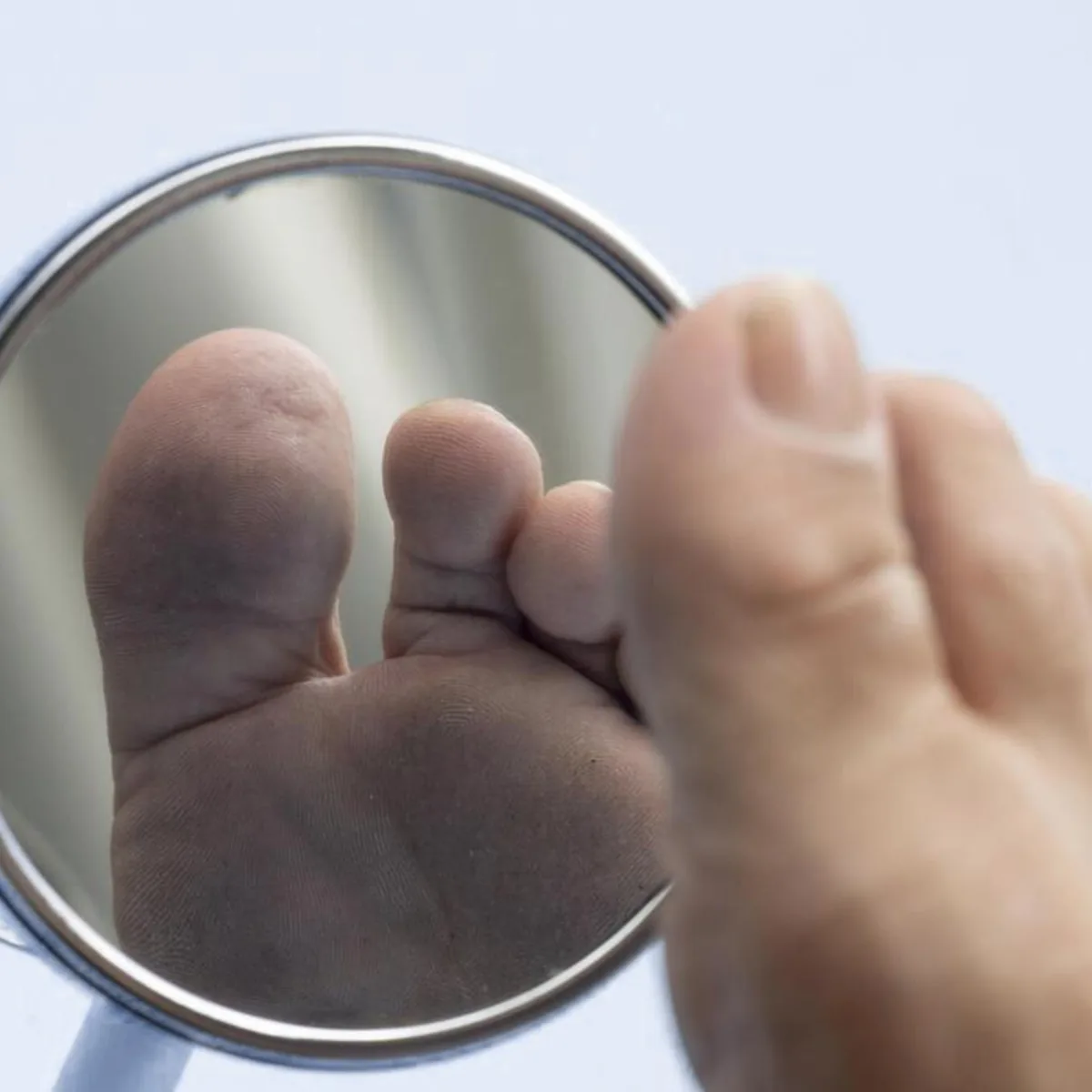
Peripheral neuropathy is mainly diagnosed in the exam room. It rests on your history and a neurological exam. Small fiber feeling is tested with temperature or pinprick. Large fiber feeling is tested with vibration. Ulcer risk is tested with 10 g monofilament pressure.1 Nerve conduction studies and intraepidermal nerve fiber density testing are called for when features are atypical. Examples are fast symptom onset, severe neuromotor impairment, or abnormal feeling that is worse on one side.1
Questions about testing purpose
Does anything about my case count as atypical (unusual)?
When would electrodiagnostic testing change what we do, rather than just confirm what we already suspect?
If my nerve study is normal but my symptoms persist, what does that mean for the next step?
How do my glucose history, A1c trend and kidney function change your concerns?
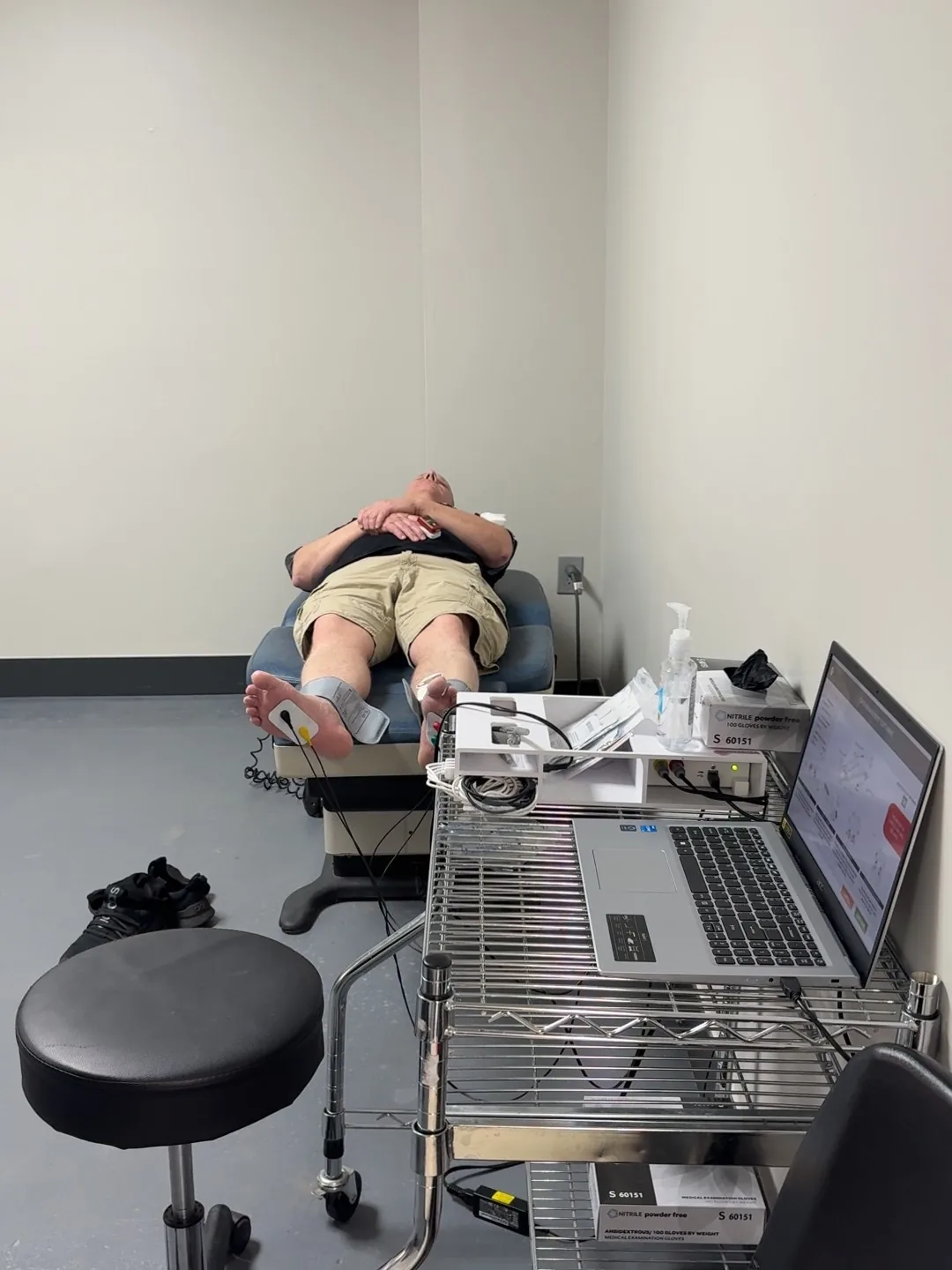
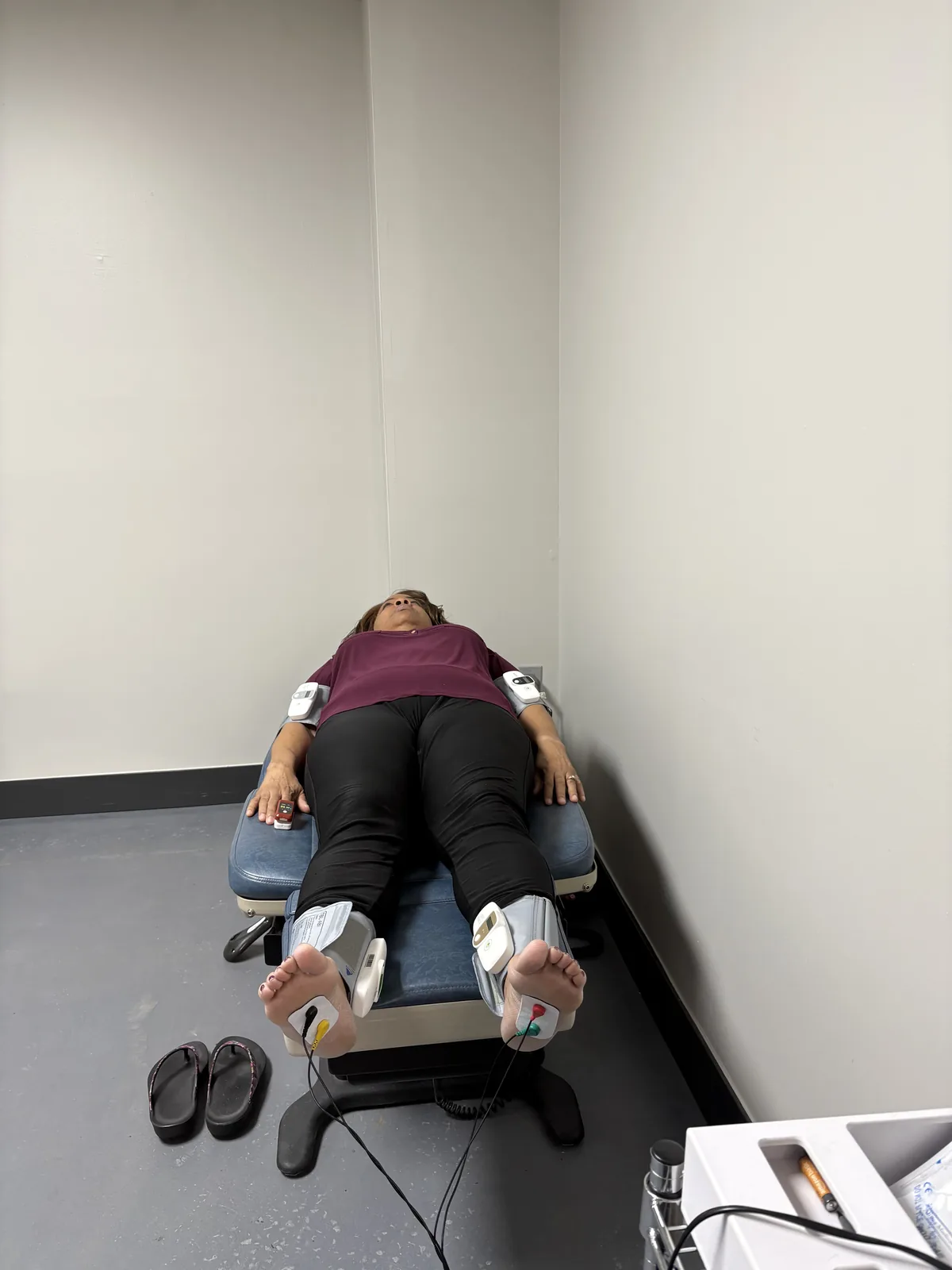
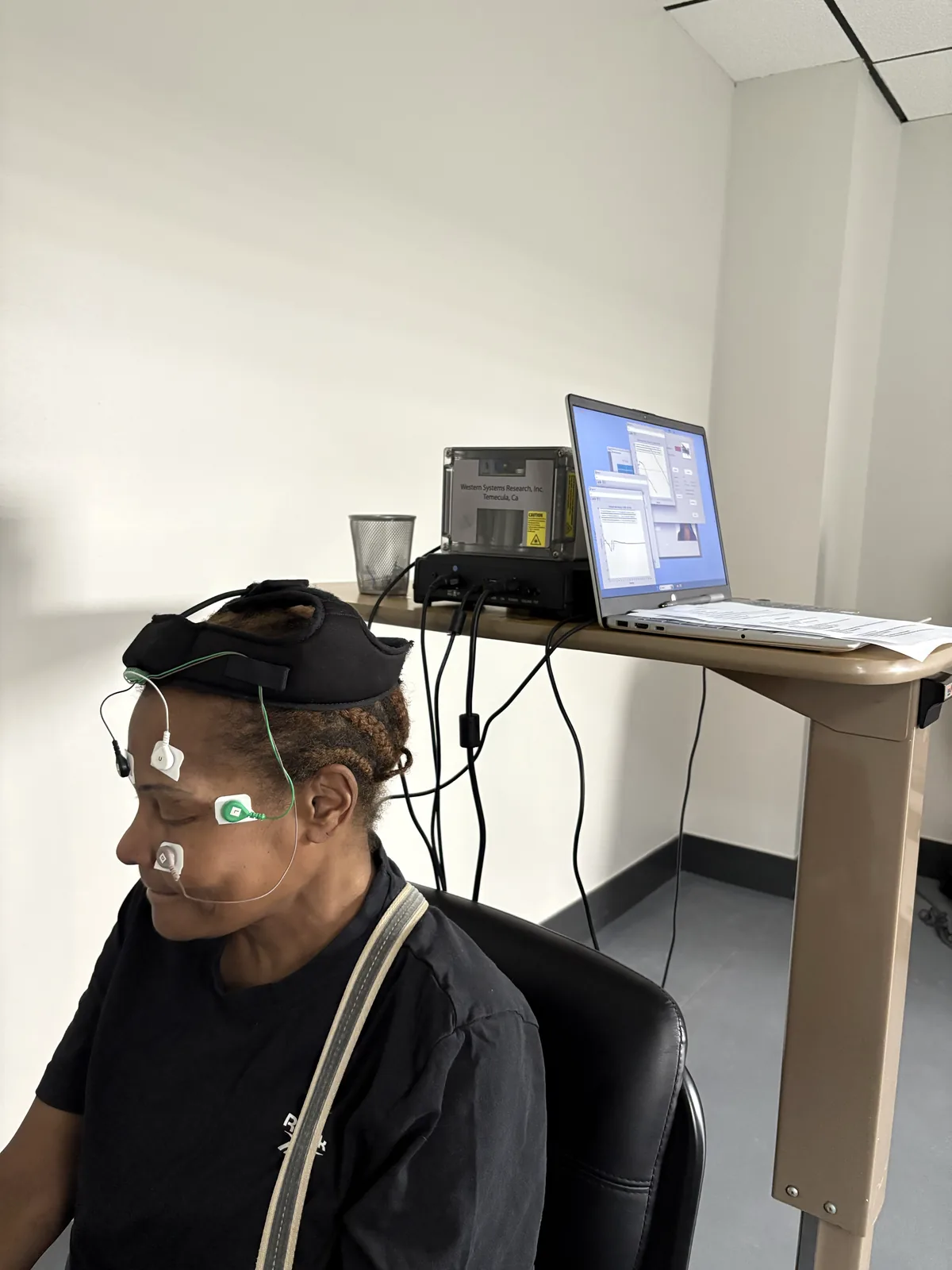
Regenerve performs electrodiagnostic testing (EMG/NCS) on site. That means the result is read against your history in the same building. It is not mailed back weeks later as a number without a plan.
What else causes neuropathy besides diabetes?
Nutritional, autoimmune, toxic and structural drivers can sit alongside a metabolic one, and they often do. If you have ever been told “nothing else explains it,” ask what exactly was checked. That is the useful follow-up.
Hidden-driver questions
Besides diabetes, what other drivers are you looking at today?
Could nutrient absorption be contributing, and how would you test that?
Could a medicine, your drinking history, or something you were exposed to at work be involved?
Did this begin after chemotherapy, surgery, or a shingles episode?
If serum B12 is reported as normal, does that fully exclude a B12-related driver?
Our longer discussion of the drivers that get missed is in the hidden drivers of peripheral neuropathy. It is a fair list to bring with you to any evaluation, here or elsewhere.
What should I bring to a neuropathy appointment?
The best questions come out of your own timeline. A clinician can map the mechanism far faster when the details are on paper. Otherwise they get pieced together from memory in a fifteen-minute visit.
What to write down before you go
The month and year symptoms began, and anything that happened around that time.
Every prescription, store-bought medicine and supplement, with doses.
Past surgeries, especially belly or weight-loss (bariatric) surgery.
Alcohol history, stated honestly, because it changes the list of possible causes.
Any prior nerve testing, lab work, or imaging, with the actual reports if you have them.
Ask what each treatment is aimed at
Once a driver is named, the questions shift from diagnosis to mechanism. The single most useful question about any proposed treatment is what it is meant to change. Is it the symptom, or the process producing the symptom?
Treatment questions worth asking
What is the dominant driver in my case, and what does that imply for treatment?
What is each proposed therapy targeting, and how will we know whether it worked?
Which parts of this plan address the ongoing injury rather than the pain signal?
How will the plan change if the driver map changes?
Regenerve offers class 4 photobiomodulation, class 3B cold laser and whole-body infrared. It also offers metabolic and nutritional care. Orthobiologic injections (PRP and BMAC) are offered too. Whatever is proposed, ask what it is aimed at before you agree to anything.
If shingles is in your history, ask about Qutenza specifically
Qutenza (capsaicin 8% patch) is FDA-approved in adults for neuropathic pain associated with postherpetic neuralgia and for neuropathic pain associated with diabetic peripheral neuropathy of the feet.3
Questions about the patch
Does my diagnosis fall inside the approved indication?
How long is the application, and how long is the visit?
How often can it be repeated?
What monitoring happens during and after the application?
It is applied in clinic by a clinician, never dispensed for home use, and repeated no more often than every three months.3
Questions that test the quality of the evaluation itself
The last set is about the clinic, not your nerves. A good evaluation should be able to answer these without pausing.
How do you document which driver you believe is dominant, and what evidence supports it?
What testing do you perform on site, and what gets sent out?
When is the next touchpoint, and what should I bring to it?
What would make you tell me this is not the right clinic for my problem?
Being evaluated in St. Louis
Regenerve is at 4477 Woodson Rd #104, St. Louis, MO 63134, minutes from St. Louis Lambert International Airport, and is led by Dr. Gurpreet Singh Padda, MD, MBA, MHP. The practice serves the St. Louis region, Missouri and Illinois.
Call (314) 886-5739 or text (314) 886-5902, or email info@regenerve.com. Office hours are Monday through Thursday 9 a.m. to 4 p.m. and Friday 9 a.m. to 1:30 p.m.
Want your answers organized before the visit? The Nerve Damage Score is a free five-question assessment. It produces a large-print report you can hand to any physician.
Frequently asked questions
What should I ask if my main symptom is numbness rather than pain?
Ask which fiber types the numbness pattern points to, and what test would confirm it. Then ask what loss of protective feeling means for foot care in the meantime. Numbness without pain still needs a driver named. See small fiber neuropathy symptoms and testing.
How do I prepare if my feet burn at night?
Write down when the burning starts, whether both sides match, and what changes it. Then ask which mechanism the clinician thinks is causing it. Bring that description, not a one-word summary. See burning feet and nerve pain.
Is a nerve conduction study always necessary?
No. Peripheral neuropathy is mainly a clinical diagnosis, made in the exam room. Nerve conduction studies are called for when features are atypical. Examples are fast onset, severe neuromotor impairment, or sensory findings that differ between sides. Ask what the result would change before you agree to it. See how to choose a neuropathy specialist.
What should I ask if I think a B12 problem was missed?
Ask how functional B12 status is checked when the blood level reads normal, and what would be measured alongside it. Then ask what treatment decision that testing would drive. See functional B12 deficiency and neuropathy.
What if gluten or celiac disease is a possibility for me?
Ask whether a gluten-related driver is on your list of possible causes. Ask what testing supports or rules it out. And ask what happens if celiac testing is negative but symptoms fit. See the gluten and neuropathy connection.
What tests confirm neuropathy?
Most peripheral neuropathy is diagnosed in the exam room, from your history and a neurological exam. Temperature or pinprick tests small fibers. Vibration tests large fibers. A 10 g monofilament checks ulcer risk. Nerve conduction studies and skin biopsy nerve fiber counts are added when features are atypical. Examples are fast onset, severe weakness or uneven feeling between sides. Regenerve performs EMG/NCS on site.
Can doctors find the cause of neuropathy?
Often, yes. A careful workup finds an underlying cause in roughly 50 to 75 percent of patients with peripheral neuropathy. That is why an evaluation that ends at the word “neuropathy” is not finished. Ask what the visit is ruling in and ruling out. Ask what finding would change the clinician’s mind.
What symptoms does peripheral neuropathy cause?
Numbness, tingling, aching, burning, weakness in the arms or legs, and pain. That includes extra sensitivity to pain (hyperalgesia) and pain from a touch that should not hurt (allodynia). The same symptoms come from many causes, so the list alone cannot guide treatment. The pattern matters more: where it started, how it spread, and whether both sides are affected equally.
Two published trials have tested laser photobiomodulation in people who already have peripheral neuropathy. Both were run in neuropathy caused by chemotherapy. One compared a very low-power laser against a sham device. At twelve weeks, the laser group’s response rate held while the control group’s fell.1 The other used a class 4 laser. It reported improvement in nerve score and walking distance, and it had no control group at all.2 Neither reports nerve regeneration, reversal, or a cure. Neither enrolled patients whose neuropathy comes from diabetes or metabolic disease.
That is a thin evidence base. The honest thing to do with thin evidence is not to shrink from it. It is to read it carefully: what each trial measured, who it let in, who it kept out, and what its design was never built to answer. That is what the rest of this page does.
The short version
Two trials, two very different lasers. The only sham-controlled trial used a class 2M laser rated in milliwatts. The only trial that used a class 4 laser had no control group.
Dose is the variable, not the word “laser”. Wavelength, power density, energy density and treated area differ hugely between the two trials. Light therapy also has a documented biphasic dose response: a low dose can help more than a high one.3
Order of events matters. In the sham-controlled trial, the control arm responded slightly more often at six weeks. The two arms pulled apart only at twelve weeks. That raises a question about how long a course needs to be.1
Both trials studied cancer survivors. Neither enrolled diabetic, nutritional, autoimmune or idiopathic neuropathy.
The registered diabetic neuropathy laser trials screened out the harder patients. They screened out peripheral vascular disease, open wounds on the treatment area, and recent diabetic ketoacidosis. One protocol also screened out anyone who had taken gabapentin, pregabalin, tramadol or an opioid in the previous month.4,5
Coverage is a payer decision, not a clinical finding. The 2006 Medicare determination that gets quoted here is about infrared diode pads. It is not about laser photobiomodulation.6
Map the driver first. Which mechanism is active decides whether light-based therapy belongs in the plan at all.
Does class 4 laser therapy work for neuropathy?
When people ask whether class 4 laser helps neuropathy, they usually mean one thing. Does laser light improve neuropathy symptoms in humans? The evidence base is real, but it is small. And it does not carry over evenly across neuropathy types.
Neuropathy is a category, not a diagnosis
The same burning-feet complaint can come from many places. It can be metabolic injury, a vitamin deficiency, a toxic exposure, chemotherapy, an autoimmune process, or a structural cause. Those are different diseases that happen to share a symptom.
A trial run in one of those groups says very little about the others. That is not a criticism of the trials. It is a statement about how far a trial in one defined group can be stretched to cover others.
What is a class 4 laser?
Laser safety classes run from 1 up to 4. They describe how dangerous a beam is to the eye and skin. They are a regulatory hazard rating. They do not tell you the wavelength, the power density at the tissue, the energy delivered, or the area treated. Those are the things that decide what happens in the body.
This matters more here than usual. The two published trials sit at opposite ends of that scale. The one with a control arm is the one at the bottom.
Dose is the variable that separates these trials
Both trials are described as photobiomodulation. In the light they actually delivered, they have almost nothing in common.
The parameters that define a photobiomodulation dose
A photobiomodulation dose has many parts. It is defined by wavelength, power, power density at the tissue surface, energy density (fluence), and the size of the treated area. It also depends on whether the beam is continuous or pulsed, how long each session lasts, and how many sessions are given over what period. Change any one of those, and you have changed the treatment.
The sham-controlled trial used a class 2M continuous-wave diode laser. It delivered 8 milliwatts through a 3.2 millimeter aperture (opening), applied point by point. There were sixteen points in the interdigital spaces (the gaps between fingers and toes) of the hands and feet. There were ten more points over the skin landmarks for the C6–T1 and L5–S1 nerve roots on both sides. The dose was 1 joule per point, rising to 2 joules per point in later sessions as tolerated. Treatment ran twice a week for six weeks.1
The class 4 trial used a device that combined two diodes at 905 nanometers and 808 nanometers. One was pulsed and one was continuous. Peak powers were 25 watts and 1.1 watts. The power density was 0.168 watts per square centimeter. The beam spot was 150 square centimeters, covering the plantar surfaces of the hands and feet on both sides. The dose was set as an energy density of 6 or 8 joules per square centimeter. Treatment ran twice weekly for three weeks.2
Notice that the two doses are not even reported in the same units. One is joules per point at twenty-six separate points. The other is joules per square centimeter across a large field. There is no clean way to convert one into the other. That means the two trials cannot be pooled, compared, or averaged in any meaningful way.
The biphasic dose response
This is not a bookkeeping problem. It is the main reason results in this field disagree.
A 2009 review in the journal Dose-Response came from the Wellman Center for Photomedicine at Massachusetts General Hospital. It described a biphasic dose response seen again and again in low-level light therapy. Low levels of light stimulate and repair tissue better than higher levels do. The authors describe this pattern using the Arndt-Schulz curve.3 More is not better, and past a point more is worse.
The same review makes a point that bears directly on this page. Light therapy has many settings: wavelength, fluence, power density, pulse structure and treatment timing. Choosing among them rationally is hard. That difficulty has produced a body of research with both negative and positive studies.3 So a negative photobiomodulation trial can mean the therapy does not work. Or it can mean that particular dose did not work. From outside the trial, those two look identical.
So when you see mixed results in light therapy, do not conclude the field is unserious. Ask what dose was tested, in whom, and for how long.
The sham-controlled trial: 44 cancer survivors, 2022
This is the only randomized, sham-controlled trial of photobiomodulation in established neuropathy discussed here. It deserves a close reading, not selective quoting.
Who was studied
Teng and colleagues published in Supportive Care in Cancer. They enrolled 44 cancer survivors who still had neuropathy symptoms. Each was at least three months past finishing potentially neurotoxic chemotherapy (chemotherapy that can damage nerves). Participants were randomized 2:1, with 29 to laser and 15 to sham. They were treated twice weekly for twelve sessions over six weeks. Assessments came at baseline, six weeks and twelve weeks.1
The group was 61 percent female, with a mean age of about 62. Just under half had colorectal cancer, and about a third had breast cancer. On average, roughly fifteen months had passed since chemotherapy. Neuropathy was grade 1 in 64 percent and grade 2 in 36 percent. That is mild to moderate.1
Who was screened out
The trial listed six specific exclusions. They are worth reading as a description of who was not in the room.1
Anyone unable to lie flat on their back (supine) for a thirty-minute period.
Anyone with an open wound or ulcer over the treatment area.
Anyone with a clinical diagnosis of peripheral neuropathy from another cause. The paper notes that diabetes without neuropathy was not itself an exclusion. But diabetes with neuropathy was, because that is a second cause.
Anyone with uncontrolled psychiatric illness or cognitive dysfunction (problems with thinking or memory) that could get in the way of completing assessments.
Anyone with a life expectancy under three months.
Anyone using a concurrent complementary therapy for neuropathy during the study.
Read together, this describes a fairly well, fairly mobile group. They had one identified cause of neuropathy, intact skin on the feet, no other treatments running alongside, and mild to moderate severity. That is a clean trial population. It is not the population that walks into a neuropathy clinic. That patient has type 2 diabetes, an old foot ulcer, three prescriptions for nerve pain and fifteen years of symptoms.
What the response rates showed, and in what order
At six weeks, response rates were 48 percent in the laser group and 53 percent in the sham group. At twelve weeks, they were 45 percent and 33 percent, in the same order.1 In plain terms, the sham group responded slightly more often at the end of treatment. The two arms pulled apart only at follow-up. The laser group held its gains, and the control group’s declined.
That finding must stay on the page. It also has to be read with three facts attached.
First, this was a non-comparative trial by design. Each arm was tested against a fixed statistical threshold. It was not tested against the other arm. The published null hypothesis was that the true response rate is 5 percent. The sample size was set to give 80 percent power if the true response rate on treatment were 20 percent.1 The authors state plainly that the design did not allow a statistical comparison between the treatment and control arms.
Second, the control arm had fifteen people in it. In an arm of fifteen, one person is worth about seven percentage points. So the five-point gap at six weeks is smaller than a single person’s response.
Third, the laser arm’s response rate did beat the trial’s preset threshold at both time points. Reported side effects were low grade.1 The authors’ own conclusion is measured. They say the result warrants evaluation in a properly powered phase III trial.
Why a sham arm is hard to build in a light-therapy trial
The paper describes its sham honestly. Sham patients got the same visit schedule and the same eye mask. They got the same equipment and the same application points. An opaque aluminum cover blocked the laser aperture. That way the sensory experience would match the active treatment.1 That is a careful design. And with a device delivering 8 milliwatts, there is little heat or sensation to give the difference away.
Blinding was still incomplete, and the authors say so. The trial was single-blinded. The physician investigator who did the clinical neuropathy assessment was unblinded. The paper’s own list of limitations names the unblinded clinical assessor and therapist as a weakness.1 An unblinded assessor knows which group a patient is in. That can shift a clinician-rated score in either direction.
None of this is a reason to discount the trial. It is a reason to hold both arms’ numbers loosely, including the six-week ones.
What this design could not capture
The authors list the limitations themselves. The sample was small, and the treatment period was short. The assessor and therapist were unblinded. COVID-19 restrictions caused unavoidable delays to study visits. The authors also note that no neurophysiological testing (nerve testing) was done because of limited resources. They suggest it as an objective measure for a future trial.1
Three more things follow from the design, not from any fault in it. First, the trial tested laser alone. So it cannot say anything about laser used alongside metabolic correction, nutritional repletion (restoring missing nutrients) or exercise. Second, follow-up stopped at twelve weeks, which is six weeks after the last session. Nothing in it speaks to how long results last beyond that. Third, there was no nerve conduction testing. So the trial measured symptoms and function, not the nerve itself.
The NEUROLIGHT pilot trial: 60 patients, a class 4 laser, 2026
The second trial is the one that actually used a class 4 device. It is a pilot (a small early study) without a control group.
Who was studied
Claes and colleagues published in Lasers in Medical Science. They treated 60 cancer patients with chemotherapy-induced peripheral neuropathy. The work took place at Jessa Hospital in Hasselt, Belgium, between February 2022 and November 2023. Twenty-eight received six sessions at 6 joules per square centimeter. And thirty-two received six sessions at 8 joules per square centimeter. Both groups were treated twice weekly over three weeks.2
Most participants were women, with mean ages around 61 to 64. Breast cancer was the most common primary cancer. Next came colorectal, head and neck, ovarian, endometrial, bladder, lung and prostate.2
Who was screened out
The entry rules were narrower than they first appear. A patient needed a physician diagnosis of chemotherapy-induced neuropathy. They had to be at least 18. They had to have had one of a specific list of neurotoxic agents: paclitaxel, docetaxel, oxaliplatin, cisplatin, thalidomide, bortezomib or vincristine. The last dose had to be at least two weeks earlier. And they needed a Fitzpatrick skin type between I and V.2
That last rule excluded Fitzpatrick type VI, the most deeply pigmented skin. Pigment absorbs light. So this is a real limit on who the reported doses have been tested in.
The stated exclusions were two. One was skipping more than two treatment sessions in a row. The other was having neuropathy symptoms before receiving chemotherapy.2 That second one is the important one. It removes exactly one kind of patient. That patient arrives at a neuropathy clinic with pre-existing diabetic or idiopathic (no known cause) neuropathy that chemotherapy then made worse. That is a common and difficult case, and this trial cannot speak to it.
What moved and what did not
The modified Total Neuropathy Score improved significantly over time (P = 0.048). So did the six-minute walk test (P < 0.001). Walking distance improved about 13 percent in the lower-dose group and about 18 percent in the higher-dose group. Pain scores on the numeric rating scale improved over time (P < 0.001), with better scores in the lower-dose group (P = 0.034). Patient satisfaction improved (P = 0.003). No adverse events were reported.2
Not everything moved. There was no significant change in the FACT/GOG-NTX total score or in its neurotoxicity subscale. That means the broader quality-of-life questionnaire did not pick up the same signal.2
That split between a walking test and a questionnaire is common in neuropathy research. It is a practical reason to track what you can do, such as how far you can walk and how steady you are. One overall score is not enough.
Note also that the lower dose, not the higher one, produced the better pain scores. On that basis, the authors decline to name an optimal fluence.2 That is the biphasic dose response showing up inside a single trial.
What this design could not capture
The central limitation is built into the design. Both groups received photobiomodulation, and there was no sham arm. So improvement over time cannot be separated from natural recovery. Nor can it be separated from regression to the mean (extreme scores drifting back toward average) or from a placebo effect. The authors say this plainly. They accept that a placebo effect could partly explain the results.2
The authors also report that the sample was too small to sort results by key factors. These included chemotherapy type, number of cycles, and time since chemotherapy ended. They also included prior lines of neurotoxic treatment and neuropathy-inducing comorbidities (other conditions) such as diabetes. The effect of other drugs taken at the same time, like duloxetine and pregabalin, was not assessed.2 In other words, the trial could not tell you whether a diabetic patient in the group did better or worse than a non-diabetic one.
Twenty of the sixty patients were lost to follow-up, twelve in the lower-dose group and eight in the higher-dose group.2 That is a third of the sample. It is one more reason to read the later time points with caution.
How long does a course need to be?
The timeline in the sham-controlled trial is the most useful thing on this page. The laser arm did not lead at six weeks. It led at twelve.1
Two readings are possible, and the trial cannot tell them apart. Either the laser effect takes longer to appear than a treatment course lasts. Or the control group’s early response was a short-lived placebo response that faded on schedule, while the laser group’s did not. Both fit the numbers.
Either way, the practical lesson is the same. Judging a course of photobiomodulation the moment the last session ends is judging it too early. It also makes follow-up length a fair question to ask of any trial in this field. The sham-controlled trial stopped at twelve weeks. The class 4 pilot collected data at baseline, after the six sessions, three weeks later, and again at six months and one year. But with no control arm, its long-term numbers cannot be credited to the laser.1,2
Does laser therapy work for diabetic neuropathy?
Diabetic peripheral neuropathy is the clearest gap in this evidence. Neither trial above enrolled that population. The mechanisms also differ. Metabolic and microvascular injury (damage to the tiny blood vessels) varies from patient to patient. A single fixed protocol is unlikely to address that evenly. Several of those drivers are covered in our review of the hidden drivers behind peripheral neuropathy.
Two registered sham-controlled trials, and what they excluded
Laser trials in diabetic neuropathy have been registered and run. Two sham-controlled trials of the same device were registered on ClinicalTrials.gov. The device was a 635-nanometer, three-diode, 17-milliwatt laser. Both trials applied it fifteen minutes per foot, twice weekly for six weeks.4,5
The first was completed with 30 participants.4 The second was terminated after enrolling 18, because it could not recruit. Summary results are posted on its registry record.5 Neither is a peer-reviewed publication, and neither is large enough to settle anything. What they do record precisely is who was allowed in.
Both protocols required foot pain that was chronic, bilateral (in both feet), and roughly the same on each side. The pain had to be rated at least 50 on a 0–100 visual analog scale. Patients also had to be on a stable diabetes medication plan for the preceding 30 days.4,5
The exclusions are the striking part. Across the two records, people were excluded for any of the following:4,5
Foot pain that was unilateral or noticeably different between the two feet.
Pain rated below 50 on the visual analog scale — that is, milder cases.
Foot pain not clearly linked to diabetes, or linked to diabetes plus something else.
Serious organ disease or other serious primary disease.
Diabetic ketosis, ketoacidosis or severe infection within the previous two weeks.
An active chronic pain condition. The second record names chronic fatigue syndrome, fibromyalgia, endometriosis, inflammatory bowel disease, interstitial cystitis and peripheral vascular disease.
Cancer, or treatment for cancer, in the previous six months.
An active infection, wound or other external trauma anywhere on the treatment area.
Previous surgery or an implanted device for diabetic neuropathy foot pain.
Analgesics or NSAIDs within seven days. Antidepressants within 30 days. Gabapentin, pregabalin, tramadol or opioid medicines within 30 days. Local anesthetic injections within 30 days.
Ongoing litigation or disability benefits related to the study parameters.
Why that matters for a patient with metabolic disease
Line those rules up against a real clinic waiting room. A patient with peripheral vascular disease is out. A patient with a healing ulcer is out. A patient whose neuropathy is part metabolic and part something else is out. A patient with fibromyalgia alongside their neuropathy is out. A patient on gabapentin or pregabalin is out unless they stop for a month. That is a large share of people who have been treated for painful neuropathy. A patient whose pain is bad in one foot and mild in the other is out.
This is not sharp practice by the investigators. Trials are built this way on purpose, to cut noise and isolate a single effect. But it has a consequence that gets skipped over all the time. A modest or null result in such a tightly selected group does not establish that the treatment fails in the patients who were screened out. It establishes what happened in the patients who were let in.
The patients screened out here had vascular disease, unstable glycemic control (blood sugar control) or open wounds. Others had several pain conditions, polypharmacy (many medicines at once) or mixed causes. They are exactly the patients a metabolic neuropathy practice sees most days. The evidence is truly silent about them. Silence is not a negative finding. It is not a positive one either.
Does Medicare cover laser treatment for neuropathy?
A national coverage determination in effect since October 24, 2006 states that infrared therapy devices are not covered by Medicare for treating diabetic or non-diabetic peripheral sensory neuropathy, or wounds or ulcers of the skin and subcutaneous tissues, including for pain arising from those conditions.6,7
The determination is specific about what it is describing. It defines an infrared therapy device as an array of juxtaposed infrared diodes affixed to a flexible pad held in contact with the skin, which can also produce local warming as a secondary effect.6 That is a different piece of equipment from a laser, and the determination was written about the evidence for those pad devices.
It is a payer decision about a device category. It is not a clinical conclusion about laser photobiomodulation. It should not be read as either an endorsement or a verdict. Because it dates from 2006, it also predates both trials on this page. Local coverage rules may differ. Nothing here is a benefits determination for any individual.
Where a service is not covered, patients sign an Advance Beneficiary Notice before it is provided. That way the financial side is settled in writing in advance, not discovered afterward. It is fair to ask any clinic which device it is using. It is also fair to ask which coverage language it is relying on.
How light-based therapy fits into an evaluation-first plan
Class 4 photobiomodulation, class 3B cold laser, and whole-body infrared are offered here. They are part of a plan built around whichever driver the evaluation identifies. They are not offered as nerve regeneration or reversal, and no success rate is published for them.
Before any of it is discussed, the evaluation looks for which mechanism is active. Electrodiagnostic testing (EMG/NCS) is performed on site. VNG (videonystagmography) is also available. It is a diagnostic test of inner-ear balance function, used when dizziness or unsteadiness is part of the picture. It is a test, never a treatment.
The published trials tested light on its own. That is the only way to isolate its effect, but it is not how neuropathy is usually treated. Here, light-based therapy sits alongside metabolic and nutritional care aimed at the driver itself. That combination has not been tested in a randomized trial. Saying so is more useful than implying it has.
Orthobiologic injections (PRP and BMAC) are offered here as well.
What all of this adds up to is a conversation, not a protocol. The risks of photobiomodulation reported in these trials were low: mild, low-grade events in one and none in the other. The potential benefit in a patient like you is truly uncertain. Both halves of that picture belong in the discussion before anyone starts a course of treatment.
What to ask before you commit to a course of treatment
Which neuropathy driver do you believe is dominant in my case, and what did you base that on?
Is the plan supported by trial evidence in a population like mine, or extrapolated from a different one?
If it is extrapolated, what specifically about my case makes you think it transfers?
How many sessions, over what period, at what wavelength and what energy density?
When will we judge whether it is working, and why then rather than at the last session?
What function will we measure, not just what pain score?
Which device is this, what class is it, and what coverage language applies to it?
Where we are and how to start
Regenerve is located at 4477 Woodson Rd #104, St. Louis, MO 63134, minutes from St. Louis Lambert International Airport, and we see patients from across the St. Louis region, Missouri and Illinois. You can call (314) 886-5739 or text (314) 886-5902, or email info@regenerve.com.
The free Nerve Damage Score is a five-question starting point for the driver question. That is the question that decides whether light-based therapy belongs in your plan at all.
Is the evidence for photobiomodulation in neuropathy strong enough to rely on?
On its own, no. There are two published trials in established neuropathy, both in chemotherapy-induced cases. One is small and sham-controlled, and one has no control group at all.1,2 That is a reason to treat it as one part of a plan aimed at an identified driver, not as the plan. It is not a reason to call it disproven, because the trials that exist have not studied most of the people asking the question. See the treatments offered here.
Does that evidence transfer to diabetic neuropathy?
Not automatically. Diabetic peripheral neuropathy involves metabolic and microvascular (small blood vessel) drivers. These vary between patients. Neither published trial on this page enrolled that population. Registered diabetic neuropathy laser trials do exist. But they excluded peripheral vascular disease, open wounds on the feet, and recent ketoacidosis. They also excluded patients taking common nerve pain medications. So they say little about a complex metabolic patient either.4,5 See how diabetic peripheral neuropathy is approached here.
The sham group did better at six weeks. Does that mean the laser did nothing?
It means the trial did not show a laser advantage at the end of treatment, which is worth knowing. It does not mean nothing happened, for three reasons. First, the trial was designed as non-comparative, and its authors state it could not statistically compare the arms. Second, the control arm had only fifteen people, so a five-point gap is smaller than one participant’s response. Third, by twelve weeks the laser group had held its response while the control group’s had fallen.1 See which specialist to see when neuropathy has not improved.
How is photobiomodulation different from Qutenza?
They are unrelated mechanisms with very different evidence. Qutenza (capsaicin 8% patch) is FDA-approved in adults only for neuropathic pain from postherpetic neuralgia and from diabetic peripheral neuropathy of the feet. It is applied in clinic by a clinician, never dispensed for home use, and repeated no more often than every three months. See how Qutenza is used in clinic.
Will Medicare cover light therapy for neuropathy?
A national coverage determination in effect since October 2006 makes infrared therapy devices non-covered for peripheral sensory neuropathy, wounds and ulcers.6 That determination describes arrays of infrared diodes on a flexible pad. It does not describe laser photobiomodulation. And coverage is a payer decision, not a statement about whether something works. Where a service is not covered, an Advance Beneficiary Notice is signed before treatment. Contact us with coverage questions.
Can laser therapy reverse neuropathy?
No published trial shows that. Neither of the two trials in established neuropathy reports nerve regeneration, reversal or a cure. That is why light-based therapy is not offered here as nerve regeneration or reversal. No success rate is published for it. It is used alongside metabolic and nutritional care aimed at whatever driver the evaluation finds.
What are the side effects of class 4 laser therapy?
In the published trials, very few. The class 4 pilot trial in 60 patients reported no adverse events, and the sham-controlled trial reported only mild, low-grade side effects. One limit matters: the class 4 trial excluded the most deeply pigmented skin, Fitzpatrick type VI. Pigment absorbs light, so the reported doses have not been tested in that skin type.
How many laser sessions does neuropathy treatment take?
The two trials used different schedules: twelve sessions over six weeks with a low-power laser, and six sessions over three weeks with a class 4 laser. In the sham-controlled trial, the laser group did not pull ahead until twelve weeks, six weeks after the last session. So a course should not be judged the day it ends. Ask when progress will be measured, and why then.
What are the drawbacks of laser therapy for neuropathy?
The main drawback is a thin evidence base. Only two trials have tested it in established neuropathy, both in people whose nerve damage came from chemotherapy. The class 4 trial had no control group and lost a third of its patients to follow-up. Neither trial enrolled diabetic neuropathy. Medicare does not cover infrared pad devices for neuropathy, though that rule was not written about lasers.
Sources
Teng C, Egger S, Blinman PL, Vardy JL. Evaluating laser photobiomodulation for chemotherapy-induced peripheral neuropathy: a randomised phase II trial. Supportive Care in Cancer. 2022;31(1):52. https://pmc.ncbi.nlm.nih.gov/articles/PMC9758032/ (44 cancer survivors at least 3 months after neurotoxic chemotherapy; randomized 2:1, 29 laser and 15 sham; class 2M continuous diode laser, 8 mW through a 3.2 mm aperture, 1–2 J per point at 26 points, twice weekly for 12 sessions; response rates 48% laser and 53% sham at 6 weeks, 45% and 33% at 12 weeks; non-comparative design; null hypothesis of a 5% true response rate; sham delivered with the aperture occluded by an opaque aluminum cover; limitations include small sample, short intervention period and unblinded clinical assessor and therapist).
Claes M, Lodewijckx J, Robijns J, Hermans S, Peeters P, Mebis J. Evaluating the efficacy of photobiomodulation therapy in the management of chemotherapy-induced peripheral neuropathy: a pilot trial (NEUROLIGHT trial). Lasers in Medical Science. 2026;41(1):57. https://pmc.ncbi.nlm.nih.gov/articles/PMC12988979/ (60 cancer patients with chemotherapy-induced peripheral neuropathy at Jessa Hospital, Hasselt, Belgium, February 2022 to November 2023; class IV MLS M6 laser, 905 nm and 808 nm, peak power 25 W and 1.1 W, power density 0.168 W/cm², 150 cm² beam spot; 6 sessions at 6 J/cm² (n = 28) or 8 J/cm² (n = 32); Fitzpatrick skin types I–V only; exclusions were interruption of more than two consecutive treatments and neuropathy symptoms preceding chemotherapy; mTNS P = 0.048, 6MWT P < 0.001, NRS pain P < 0.001 favoring the 6 J/cm² group P = 0.034, no significant difference in FACT/GOG-NTX total score or neurotoxicity subscale; no control group; 20 of 60 lost to follow-up).
Huang YY, Chen AC, Carroll JD, Hamblin MR. Biphasic dose response in low level light therapy. Dose-Response. 2009;7(4):358–383. https://pmc.ncbi.nlm.nih.gov/articles/PMC2790317/ (low levels of light stimulate and repair tissue more effectively than higher levels, described by the Arndt-Schulz curve; the difficulty of choosing among wavelength, fluence, power density, pulse structure and treatment timing has produced both negative and positive studies).
ClinicalTrials.gov. Study of Low Level Laser Therapy to Treat Diabetic Peripheral Neuropathy Foot Pain (NCT02461225). Erchonia Corporation. https://clinicaltrials.gov/study/NCT02461225 (double-blind, placebo-controlled randomized evaluation of the Erchonia FX-635; completed with 30 participants; three 17 mW 635 nm diodes, 15 minutes per foot, twice weekly for 6 weeks; full inclusion and exclusion criteria as summarized above).
ClinicalTrials.gov. An Evaluation of the Effect of Low Level Laser Therapy on Diabetic Peripheral Neuropathy Pain (NCT04006392). Erchonia Corporation. https://clinicaltrials.gov/study/NCT04006392 (double-blind, placebo-controlled randomized evaluation of the Erchonia FX-635; terminated for inability to recruit after enrolling 18 participants; results posted March 14, 2023; exclusions include peripheral vascular disease, active infection or wound on the treatment area, serious organ disease, and recent diabetic ketosis or ketoacidosis).
Centers for Medicare & Medicaid Services. National Coverage Determination 270.6: Infrared Therapy Devices. Effective October 24, 2006. https://www.cms.gov/medicare-coverage-database/view/ncd.aspx?ncdid=315&ncdver=1 (infrared and near-infrared light and heat, including monochromatic infrared energy, non-covered for diabetic and non-diabetic peripheral sensory neuropathy, wounds and ulcers of the skin and subcutaneous tissues, including pain arising from those conditions; the determination describes an array of juxtaposed infrared diodes affixed to a flexible pad held against the skin).
Centers for Medicare & Medicaid Services. Decision Memo for Infrared Therapy Devices (CAG-00291N). 2006. https://www.cms.gov/medicare-coverage-database/view/ncacal-decision-memo.aspx?proposed=N&ncaid=176 (the national coverage analysis underlying NCD 270.6).
Orthobiologic injections, meaning platelet-rich plasma (PRP) and bone marrow aspirate concentrate (BMAC), are offered in selected situations. No one has shown that they can reliably regrow nerve. No one has shown that they reverse peripheral neuropathy or consistently keep it from getting worse. Within the treatment options we have, these injections help patients’ symptoms. They ease pain and numbness and improve day-to-day function.
Here is the evidence behind both of those statements. There are published human studies of orthobiologics in nerve conditions. They are small and short. The way the injections are prepared is not standardized. And much of the work studied people who were screened for being uncomplicated. Saying only “not established” and stopping there leaves something out. It leaves out the part a patient with diabetes and fifteen years of burning feet most needs to hear.
So this page sets out what those studies found and who was in them. It shows who was kept out on purpose. And it shows what a clinician can and cannot honestly conclude from that. This is the talk we have with patients across the St. Louis region, Missouri and Illinois before anything is injected.
Key points
A 2024 consensus guideline drew on many specialties. It found that “very limited evidence” suggests perineural PRP (PRP injected around the nerve) may improve pain and numbness in diabetic peripheral neuropathy. That was compared with conventional medical management [2].
A systematic review looked at injectable biologics across nerve pain (neuropathic pain) conditions. It rated the overall certainty of evidence as very low by GRADE criteria [3].
Every human study of PRP in diabetic peripheral neuropathy that we found added PRP to medical management. None tested it as a stand-alone treatment [4][5].
These trials, as a rule, exclude diabetes, systemic (whole-body) disease, severe disease and overlapping neuropathies. That covers much of the patient profile this practice actually treats [8][9][10].
Peripheral neuropathy covers at least seven distinct types, each with its own disease process (pathophysiologic phenotypes) [1]. The driver decides what belongs in a plan.
Not proven to regrow nerve is not the same as unhelpful. Within the treatment options available, these injections help patients’ symptoms. Both statements carry the same weight here.
First, the condition is not one thing
Burning, numbness and electric sensations are the alarm. They are not the wiring fault. A 2026 review sorts peripheral neuropathy into types (phenotypes). One is distal “dying-back” axonopathy. Others are neuronopathy (ganglionopathy) and demyelinating neuropathies. Then come small-fiber neuropathy and autonomic neuropathy. Next are ischemic, infiltrative or inflammatory axonopathies. Last are focal compressive or entrapment neuropathies [1].
Seven mechanisms, one set of symptom words. That is why a general claim about “injections for neuropathy” is not a claim about anything in particular. It is also why the studies below cannot simply be added together. A trial in carpal tunnel syndrome and a trial in diabetic polyneuropathy are not studying the same disease.
What are PRP and BMAC injections?
PRP is the patient’s own blood. It is drawn and spun in a centrifuge to concentrate platelets and the growth factors they carry. BMAC is bone marrow drawn from the patient. It is then spun to concentrate the mononuclear cell fraction. That fraction includes mesenchymal cells that have not been grown in a lab (culture-expanded).
The 2024 consensus guideline calls these the pillars of regenerative medicine in pain practice. It also notes the rules they fall under. These are Section 361 of the Public Health Service Act and the related federal regulations. Under them, only minimally manipulated products in homologous use (doing the same job in the body) are permitted. Nothing may be added to the product. And it should not have a systemic (whole-body) effect. Growing cells in a lab (culture-expanding) is more than minimal manipulation. It is not permitted on that pathway [2].
That matters for reading claims. A rule that allows a same-day autologous product (made from your own body) is not a finding that the product works. Those two things are easy to blur. Advertising blurs them all the time.
What does the research show about PRP for neuropathy?
The formal guideline position
In 2024, a working group from many specialties published guidelines on regenerative medicine for chronic pain. They are clinical practice guidelines based on evidence. Their Consensus Point 27 covers nerve injections. It says very limited evidence suggests that perineural injection of PRP (PRP injected along certain nerves) may be associated with improvements in pain intensity and in neurological (nerve) symptoms such as numbness. The nerves include the median, ulnar, radial, peroneal, tibial, saphenous and sural nerves. The patients had diabetic peripheral neuropathy. The comparison was conventional medical management [2].
That is the strongest formal statement in this field. And it is hedged on purpose. The same guideline reports on a systematic review. It covered 27 human studies of injectable biologics for nerve pain. The conditions were post-spinal-cord-injury pain, diabetic peripheral neuropathy, painful scars, pudendal neuralgia, trigeminal neuralgia, carpal tunnel syndrome, peripheral neuropathy and radiculopathy. The review found very low certainty of evidence by GRADE criteria [2][3]. Its authors called for a standard preparation, dose and route. They said this must come first, before higher-quality trials could be run [3].
Diabetic peripheral neuropathy: two small studies, both combination designs
The first is a randomized trial of 60 adults with type 2 diabetes. Each had diabetic peripheral neuropathy for at least six months. It ran at a university hospital in Egypt, in its pain clinic and its rheumatology and rehabilitation departments. One group got ultrasound-guided perineural PRP plus medical treatment. The other got medical treatment alone. Patients were checked at one, three and six months. At every visit, pain and numbness scores (visual analog scales) improved more in the PRP group than in the control group. So did the modified Toronto Clinical Neuropathy Score [4].
The honest reading: 60 people, one center, six months. The comparison was PRP plus medication against medication alone. It was not PRP against a sham injection. The full text sits behind a subscription, and we could not verify its exclusion criteria. The published abstract does not state them, and we are not going to guess at them.
The second is a prospective case-control study of 80 people with type 2 diabetic peripheral neuropathy. Of these, 40 got ultrasound-guided perineural PRP with medical treatment. The other 40 got medical treatment alone. At three months in the PRP group, tibial motor nerve conduction velocity (how fast the nerve carries a signal) rose from 38.5 ± 5.2 to 45.3 ± 4.8 m/s. Peroneal motor conduction rose from 36.2 ± 4.9 to 42.7 ± 5.1 m/s. The modified Toronto score fell from 12.4 ± 2.1 to 6.3 ± 1.8. Pain fell from 8.2 ± 1.0 to 3.5 ± 1.2. The control group worsened on both scores over the same period [5].
The honest reading: this was a case-control design, not a randomized one. Participants were not assigned by chance. So a difference between the groups that nobody measured can produce a result like this. Follow-up was three months. This paper is also behind a subscription, and its exclusion criteria could not be verified.
Those two studies hold roughly 140 people between them, at two centers, over three to six months. That is the clinical evidence base for PRP in diabetic peripheral neuropathy that we were able to find. That is not a reason to dismiss them. It is a reason not to build a promise on them.
Bone marrow cells: studied, but not as BMAC and not around the nerve
A 2024 systematic review and meta-analysis screened 5,431 records. It found seven controlled trials of stem cell therapy in diabetic peripheral neuropathy. They covered 400 patients with a mean age of 62.4 ± 8.5 years. Six were done in China in people with type 2 diabetes. One, in Egypt, included both type 1 and type 2. Five used bone marrow-derived mononuclear cells. Two used umbilical cord-derived mesenchymal stromal cells. All but one delivered the cells by intramuscular injection (into muscle) in the leg. The remaining study used intravenous delivery (into a vein) [6].
Pooled results favored treatment. Motor nerve conduction velocity improved by 2.2 m/s (95% CI 1.6 to 2.8). Sensory conduction improved by 1.9 m/s (95% CI 1.1 to 2.6). Vibration perception threshold fell by 2.9 V (95% CI −4.0 to −1.8). The Toronto Clinical Scoring System fell by 3.6 points (95% CI −5.0 to −2.2). Reported complications were pain and swelling at the injection sites, which cleared within days [6].
The honest reading, in the review authors’ own terms: only one of the seven trials was randomized. Four of the seven raised risk-of-bias concerns. Follow-up ran only to 3, 6 or 12 months. And the field lacks high-quality controlled trials with large sample sizes. It also lacks any long-term safety follow-up [6].
There is also a design point that matters directly to a patient asking about an injection. Those cells went into leg muscle, not around a nerve. Bone marrow-derived mononuclear cells are a close relative of BMAC. BMAC is bone marrow aspirate spun to concentrate that same cell fraction [2]. But the preparations are not standardized across studies, and neither is the route. This evidence does not transfer cleanly to a perineural BMAC injection, and we do not present it as though it does. A 2026 review of orthobiologics in type 2 diabetes speaks to this. It states that evidence for BMAC and mesenchymal stromal cell outcomes specifically in diabetic patients remains sparse [11].
Entrapment neuropathy: the best-studied nerve indication, and where its ceiling shows
Carpal tunnel syndrome is a focal compressive neuropathy (one nerve squeezed in one spot). It has more PRP data than any other nerve condition. A 2025 meta-analysis pooled seven randomized trials covering 365 patients. Of these, 183 got PRP and 182 got conventional non-surgical care. All had mild to moderate disease [7].
Symptom severity got better with PRP at one, three and six months. Functional status got better at three and six months. Pain scores were lower at three months but not at one. Meanwhile, the nerve measures showed no statistically significant difference between groups at any time point. Those were the cross-sectional area of the median nerve, sensory nerve conduction velocity and distal motor latency. No serious adverse reactions were recorded in the four studies that tracked them [7].
Both halves of that are true at once. In the nerve condition with the most PRP evidence, what got better was how people felt and functioned. The electrical and ultrasound measurements of the nerve did not follow. Neither half should be dropped when the result is quoted.
A 2025 randomized controlled trial adds a harder finding. It enrolled seventy-five patients with mild to moderate idiopathic carpal tunnel syndrome. Idiopathic means no known cause. They were assigned in equal groups. One got perineural bupivacaine with methylprednisolone. One got pulsed radiofrequency with bupivacaine. One got perineural PRP. All three groups improved in pain, symptoms, function, median nerve cross-sectional area and nerve conduction. Pulsed radiofrequency and steroid produced greater improvement than PRP. The PRP group improved least of the three over the four-month study [8].
That is a modest-to-negative result for PRP, and we are not going to soften it. What we will do is say who was in that trial, because it changes what the result can be used to conclude.
Other nerve conditions: small, and mostly uncontrolled
An open-label interventional study gave a single 1 mL perineural PRP injection to 30 patients. They had Hansen’s disease (leprosy) and ulnar or common peroneal neuropathy. Of those, 27 completed 12 weeks of follow-up. Several things got better. They were two-point discrimination, area of sensory loss, hand dynamometry (grip strength) and foot muscle power. Activity-limitation scores got better at 12 weeks. At 12 weeks, motor nerve conduction amplitude also rose. Sensory latency fell and sensory conduction velocity rose. No adverse effects were recorded beyond one to two days of injection-site pain [9].
There was no control group. This was a single-arm open-label study over 12 weeks. The patients were also on multidrug therapy for the underlying infection. In that setting, treatment effect cannot be separated from natural recovery or expectation. The authors say as much. They also note that long-term effects could not be assessed.
A single-blind randomized comparative trial studied 30 men. Each had an incomplete traumatic sciatic nerve injury. One group got five weekly ultrasound-guided 5 mL perineural PRP injections plus 12 weeks of rehabilitation (rehab). The other got rehab alone. Follow-up lasted six months. At one month, PRP had not improved the motor or sensory function scales. By three and six months, motor function ratings and conduction velocities favored the PRP group over rehab alone. The authors’ own conclusion is that PRP “may be partially effective” in the early repair of incomplete sciatic nerve injuries [10].
Why these studies do not answer the question a complex patient is asking
The people who were screened out
This is the part that decides how much weight any of the above can carry. You can check it in the papers themselves.
Start with the carpal tunnel trial where PRP did worst. In the authors’ words, it excluded “secondary CTS due to systemic disease including thyroid disease, diabetes mellitus, or acromegaly.” It also kept out severe carpal tunnel syndrome. Severe meant any of these: distal motor latency to abductor pollicis brevis above 6.5 ms, absent median sensory potentials, or a nerve cross-sectional area above 15.0 mm². The trial also kept out “other neuropathies overlapping with CTS,” and past median nerve release or wrist surgery. Pregnancy kept people out. So did steroids taken at the same time, and known allergy to the study drugs. So did any carpal tunnel injection in the past six months. Only ages 20 to 60 could enroll. Their disease had to be mild to moderate and idiopathic. It had to have failed at least three months of conservative care [8].
The sciatic nerve trial enrolled only men aged 18 to 60. Each had an incomplete injury three weeks old and no other treatment. The authors state that “patients without other diseases were included,” and they kept out pre-existing bilateral sciatic dysfunction. They also kept out severe cardiopulmonary, hematological, skin, infectious, oncological and psychiatric disorders [10].
The Hansen’s disease study also had a long list. It kept out uncontrolled diabetes mellitus. It kept out known severe cardiac, hepatic or renal disease. It kept out people on antiplatelet drugs. It kept out anyone who took non-steroidal anti-inflammatory drugs within a week. The same went for systemic steroids above 20 mg daily and local steroid injection within six months. It kept out disease found more than three years earlier, and active lepra reactions. It also kept out anyone with a platelet count below 50 × 10³, hemoglobin below 10 g/dL or mean platelet volume above 12.3 fL [9].
The carpal tunnel meta-analysis pooled only mild to moderate disease treated without surgery. Severe disease was not in the pool. Surgical patients were excluded by design [7].
Now read that list against the person who usually walks into this clinic. That person has type 2 diabetes or insulin resistance, and often obesity. They are frequently on an antiplatelet agent (a drug that keeps platelets from clumping). They have ten or twenty years of symptoms and more than one driver at once. They have already tried several treatments without success. Most of them would not have been enrolled in most of these studies.
Two conclusions follow, and they point in opposite directions. Both are true, and we state both.
First, look at a modest or negative result in a screened, uncomplicated group. It does not establish that a treatment fails in the patients who were screened out. That is the usual external-validity problem: results in one group may not hold in another. It is why we do not treat the carpal tunnel finding as a verdict on orthobiologics in metabolic neuropathy.
Second, and just as important, it means the trials did not measure these injections in those patients either. Our position rests on our own clinical use. Within the treatment options available, they help patients’ symptoms. We do not claim they regrow nerve.
What a short single-modality study cannot measure
Every diabetic neuropathy study we found tested PRP added to medical management [4][5]. None tested PRP against a sham. None tested it inside a step-by-step plan that also corrects perfusion (blood flow), blood sugar control and the raw materials repair requires. A study of one treatment cannot report on a combination it never put together.
Follow-up across this entire literature ran from three to twelve months [6][7][8][9][10]. Nothing here speaks to what happens after a year. Peripheral neuropathy is measured in decades.
Outcome measures also disagree with each other. In carpal tunnel, symptoms and function moved while nerve conduction and nerve size did not [7]. In diabetic neuropathy, conduction velocities moved [5]. Those are different questions, and they can truly diverge. A study that measures one is silent about the other. Function is often not measured at all: walking, balance, sleeping through the night.
Efficacy is how well something works in a trial. Effectiveness is how well it works in practice. Those are also different questions. These studies did not standardize preparation protocols, platelet doses, white cell (leukocyte) content, injection volumes, nerve targets or number of sessions. That is exactly what the 2022 systematic review asked the field to fix before running larger trials [3].
Does diabetes make PRP less effective?
There is a complication in this literature that nobody advertises. It deserves stating plainly because it cuts against easy optimism.
A 2026 narrative review looked at orthobiologic therapy in type 2 diabetes. It reports that people with type 2 diabetes respond less to PRP, BMAC and mesenchymal stromal cell preparations. It attributes this to several causes. One is a buildup of advanced glycation end-products. Others are NF-κB-driven chronic inflammation and impaired Nrf2 antioxidant signaling. Still others are mitochondrial dysfunction and lasting epigenetic changes it calls “diabetic memory.” The review also sums up published reports. PRP from donors with diabetes can carry more VEGF (a growth signal) and still give worse clinical results. Bone marrow mobilization failure has been documented at 15.6% in patients with diabetes. In controls without diabetes, the rate was 6.4%. The review says its own framework is hypothesis-generating: it raises ideas to test. It is not a clinical protocol [11].
That is a caution, not a selling point. If metabolic terrain is the rate-limiting step, then treating the terrain is the treatment. Anything injected into unchanged terrain is being asked to do a job the surrounding tissue cannot support. That is one of the reasons metabolic and nutritional care is the foundation here, not an add-on to a procedure.
How evidence strength varies across other options
It helps to see what stronger evidence looks like in the same condition. Take painful diabetic peripheral neuropathy. One randomized trial added 10 kHz spinal cord stimulation to optimized medical management. Responder rates were markedly higher at six months. The benefit held through 24 months [1]. Ultrasound-guided pulsed radiofrequency for focal entrapment-type nerve pain is a different case. Its reported benefits are mostly short to mid-term, with mixed protocols, so certainty varies by indication [1].
The 2026 review that describes both of those calls itself a narrative review. It is not a formal practice guideline [1]. “Described in the literature” and “standard of care” remain different statements. Use the same test with orthobiologics. Ask about the specific phenotype and the specific indication, not about “neuropathy” in general.
What is still unproven about PRP and BMAC for neuropathy?
No one has shown that orthobiologic injections can reliably regrow nerve, in any type of neuropathy. No one has shown that they reverse peripheral neuropathy. No one has shown that they consistently keep it from getting worse.
Autologous PRP and same-day BMAC are used under minimal-manipulation, homologous-use rules [2]. That is a regulatory pathway, not a finding that they work.
We found no head-to-head trial comparing PRP with BMAC in any peripheral neuropathy.
We found no study of this exact mix. It would test orthobiologics in a length-dependent polyneuropathy, alongside photobiomodulation and metabolic correction. That mix is the only way the question would ever come up here.
Insurance coverage is a payer decision, not a clinical finding. Patients sign an advance beneficiary notice for non-covered services. Whether something is covered says nothing about whether it works.
What would actually settle the question
A patient has a right to know what a real answer would require. It would take the following, and none of it exists yet.
A randomized trial with a credible sham injection, not a group that only gets medication.
Trials that enroll people with metabolic dysfunction on purpose. That includes obesity, long-lasting symptoms, many medicines (polypharmacy) and failed past treatment. Plans made in advance to study those subgroups, not exclude them.
A standard preparation, fully reported. That means platelet dose, white cell (leukocyte) content, volume, nerve target and number of sessions [3].
Outcomes that cover both what patients feel and what can be measured. That matters since symptom scores and nerve conduction have already been shown to move on their own, apart from each other [5][7].
Follow-up well beyond twelve months, which nothing in the current literature provides [6].
Trials that test the injection inside a combination plan, because a combination is the only setting where it would be used.
What we do instead of guessing
Map the driver before choosing a therapy
Metabolic, nutritional, autoimmune, toxic and structural drivers overlap and often occur together. Finding the dominant one changes what belongs in the plan more than any single treatment does.
We perform electrodiagnostic testing (EMG/NCS) on site. It shows large-fiber involvement and pinpoints where a problem is. It can be normal in small fiber neuropathy, so a normal study does not end the evaluation.
Videonystagmography (VNG) is a diagnostic test of inner-ear balance function. We use it when unsteadiness is part of the picture. It is not a treatment for neuropathy or for anything else.
Treat the terrain the nerve depends on
The foundation comes first. Restore perfusion (blood flow) so oxygen reaches the nerve. Reduce the metabolic pathways that keep causing glycation injury (damage from sugar sticking to tissue). Supply the raw materials repair requires. Class 4 photobiomodulation, class 3B cold laser and whole-body infrared are part of that, matched to the clinical picture.
Qutenza (capsaicin 8% patch) is FDA-approved in adults for neuropathic pain from postherpetic neuralgia and from diabetic peripheral neuropathy of the feet. It is applied in clinic by a clinician, never dispensed for home use, and repeated no more often than every three months.
What are the downsides of PRP injections?
We do not promise nerve regeneration or reversal of established nerve damage.
We state what is known about safety apart from what is known about benefit. Across this literature, the reported adverse effects were injection-site pain, swelling and bruising that cleared within days [6][7][9][10]. The 2024 consensus panel described PRP and mesenchymal cell products as having minimal injection-related adverse effects, with rare severe reactions [2]. Safety is not efficacy. A treatment can be safe and still not help.
We offer an injection once the workup is finished and the dominant driver has been identified, as one part of the plan, never in place of it. When a service is not covered, we discuss that as a payer decision and document it before anything happens. We do not present it as a comment on whether the treatment works.
“My ethos is to treat all of my patients as I would my own family, with the goal of giving them back their quality of life.” — Dr. Gurpreet Singh Padda, MD, MBA, MHP
Questions worth bringing to the visit
Which neuropathy phenotype do you think I have, and what supports that?
Which driver is dominant in my case, and how did you establish it?
Which parts of this plan are established, and which are less certain?
If you are recommending an injection, which study are you relying on, and were patients like me eligible for it?
What are we doing about the metabolic terrain, and in what order relative to any procedure?
How will progress be measured, and over what period?
Do my test results and my symptoms actually agree? If not, what explains the gap?
A clinician who cannot answer the third and fourth questions in plain language is the reason to slow down.
For context on what is used here: Regenerve prepares platelet-rich plasma leukocyte-poor, with no white cells and no red cells. It is activated with calcium chloride. It is made at two to three times baseline platelet concentration, with higher dosing in the six to twelve times range. The target is a measured dose above ten billion platelets per joint.
Frequently asked questions
Are PRP or BMAC injections approved for peripheral neuropathy?
No.Orthobiologic injections are offered in selected situations. Autologous PRP and same-day BMAC are used under federal minimal-manipulation rules. That is a regulatory pathway, not a finding that they work. See the Regenerve Protocol for peripheral neuropathy.
Is there any published research on PRP for diabetic neuropathy?
Yes, but very little. A randomized trial of 60 people reported improvement when PRP was added to medical treatment. So did a non-randomized case-control study of 80 people. Both ran over three to six months. A 2024 consensus guideline calls that “very limited evidence.” Neither study tested PRP on its own against a sham injection. See diabetic peripheral neuropathy treatment in St. Louis.
Why do you say trials may not apply to me?
Because these studies routinely screen out the people this clinic treats. One carpal tunnel trial excluded diabetes, thyroid disease, severe disease and any overlapping neuropathy. A sciatic nerve trial enrolled only men aged 18 to 60 with no other diseases. So a weak result in those groups does not prove failure in complex patients. It also means nobody has shown benefit in them. See the hidden drivers of peripheral neuropathy.
Can an EMG and nerve conduction study confirm small fiber neuropathy?
Not on its own. Nerve conduction studies assess large-fiber function. They can be normal in small fiber neuropathy, so a normal result does not close the question. The symptom pattern still has to be matched to the right test. See small fiber neuropathy symptoms and testing.
Does VNG balance testing treat neuropathy?
No. Videonystagmography is a diagnostic test of inner-ear balance function. It helps tell a vestibular (inner-ear) contribution apart from a nerve contribution when someone is unsteady. It treats nothing. See VNG balance testing.
Does PRP help with neuropathy in the feet?
Within the treatment options we have, PRP helps patients’ symptoms. It eases pain and numbness. It improves day-to-day function. It does not regrow nerve. A 2024 multispecialty guideline found very limited evidence that PRP may improve pain and numbness in diabetic neuropathy, compared with medical management alone. That PRP was injected along nerves, including the tibial, peroneal, saphenous and sural nerves. At Regenerve it is offered in selected situations, once the driver is identified.
Can PRP or BMAC regenerate nerves?
No. No orthobiologic injection has been shown to reliably regenerate nerve. None has been shown to reverse peripheral neuropathy or consistently prevent its progression. We do not claim nerve regrowth. Within the options available, these injections help symptoms. That means less pain and numbness and better function. That is why they sit inside a plan that also treats the metabolic terrain the nerve depends on.
What is the most successful treatment for peripheral neuropathy?
There is no single winner, because peripheral neuropathy covers at least seven different mechanisms. The driver decides what belongs in the plan. Evidence strength also varies by option. For painful diabetic neuropathy, a randomized trial added 10 kHz spinal cord stimulation to medical management. Responder rates were markedly higher at six months. The benefit lasted through 24 months. At Regenerve, mapping the driver comes first.
Next step
Before any injection question is worth asking, the driver has to be identified. Five questions start that map, and it takes a couple of minutes.
Yuba T, Dabbagh A, Sabouri AS. Peripheral neuropathy: a phenotype-driven review for diagnosis and management. Rev Neurol. 2026;81(4):48384. doi:10.31083/RN48384. PMID 42052783. https://pmc.ncbi.nlm.nih.gov/articles/PMC13129557/
D’Souza RS, Her YF, Hussain N, et al. Evidence-based clinical practice guidelines on regenerative medicine treatment for chronic pain: a consensus report from a multispecialty working group. J Pain Res. 2024;17:2951-3001. doi:10.2147/JPR.S480559. PMID 39282657. https://pmc.ncbi.nlm.nih.gov/articles/PMC11402349/
Bies M, Ashmore Z, Qu W, Hunt C. Injectable biologics for neuropathic pain: a systematic review. Pain Med. 2022;23(10):1733-1749. doi:10.1093/pm/pnac066. PMID 35482528. https://pubmed.ncbi.nlm.nih.gov/35482528/
Hassanien M, Elawamy A, Kamel EZ, et al. Perineural platelet-rich plasma for diabetic neuropathic pain, could it make a difference? Pain Med. 2020;21(4):757-765. doi:10.1093/pm/pnz140. PMID 31298289. https://pubmed.ncbi.nlm.nih.gov/31298289/
Elsayed AA, Eldeen ES, Osman MA, Elazab SA. Role of platelet rich plasma in management of diabetic peripheral neuropathy: a case-control study. J Ultrasound. 2025. doi:10.1007/s40477-025-01042-7. PMID 40624430. https://pubmed.ncbi.nlm.nih.gov/40624430/
Alizadeh SD, Jahani S, Rukerd MRZ, et al. Human studies of the efficacy and safety of stem cells in the treatment of diabetic peripheral neuropathy: a systematic review and meta-analysis. Stem Cell Res Ther. 2024;15(1):442. doi:10.1186/s13287-024-04033-3. PMID 39563393. https://pmc.ncbi.nlm.nih.gov/articles/PMC11577959/
Du Y, Jiang X, Fu K, Cui C. Efficacy and safety of platelet-rich plasma in the treatment of carpal tunnel syndrome: a meta-analysis. Medicine (Baltimore). 2025;104(44):e45010. doi:10.1097/MD.0000000000045010. PMID 41261653. https://pmc.ncbi.nlm.nih.gov/articles/PMC12582690/
Hashem EY, Shamandy FS, Elmulla AF, Mansour MA. Ultrasound-guided pulsed radiofrequency versus perineural platelet rich plasma injection for the treatment of idiopathic carpal tunnel syndrome: a prospective randomized controlled study. BMC Anesthesiol. 2025;25(1):406. doi:10.1186/s12871-025-03257-x. PMID 40804365. https://pmc.ncbi.nlm.nih.gov/articles/PMC12351916/
Saha A, Kothari SY, Sonune S, et al. Effect of single perineural injection of platelet rich plasma on nerve function in Hansen’s disease with truncal neuropathy: an interventional study. Cureus. 2026;18(1):e102127. doi:10.7759/cureus.102127. PMID 41732637. https://pmc.ncbi.nlm.nih.gov/articles/PMC12925252/
Yang C, Wang C, Wang C, Yang G, Wu W. The effectiveness of platelet-rich plasma in the treatment of sciatic nerve injury: a single-blind randomized comparative trial. Neural Plast. 2025;2025:7540054. doi:10.1155/np/7540054. PMID 41306443. https://pmc.ncbi.nlm.nih.gov/articles/PMC12646722/
Santos MDS, Costa FR, Protasio Netto J, et al. Nutritional interventions to optimize orthobiologic therapy quality in type 2 diabetes mellitus: molecular mechanisms and clinical framework: a narrative review. Int J Mol Sci. 2026;27(9):3749. doi:10.3390/ijms27093749. PMID 42123336. https://pmc.ncbi.nlm.nih.gov/articles/PMC13164227/
Get numbness in your feet checked promptly in these cases: it comes on suddenly, it is much worse on one side, it comes with real weakness, there are autonomic changes such as lightheadedness on standing, or it is getting worse over days to weeks. American Family Physician names those same features as reasons to refer a patient for electrodiagnostic studies. So does a first workup that is normal while symptoms go on.1 Slow, even numbness in both feet is less urgent. But it still deserves a workup, because it is usually pointing to a cause somewhere else in the body.
What to notice before your visit
Numbness that is spreading or getting worse. A changing pattern suggests the cause is still active.
Numbness plus weakness or autonomic changes. These are the features that move a workup up the line.
A diabetes or prediabetes history. Peripheral neuropathy affects 25% to 50% of patients with diabetes. It depends on age, years with diabetes, and control.1
Known abnormal labs. B12, thyroid, and metabolic results shape which cause is most likely.
Burning, heat, and night symptoms. Small-fiber patterns can be intense while standard testing looks normal.
Balance changes. Dulled protective feeling makes missteps more likely.
When should you worry about numbness in your feet?
Numbness means nerve signals are impaired. When it gets worse, it stops being only a feeling problem and becomes a safety problem. Walking, heat sensitivity, and balance all depend on that feedback.
Worrisome patterns that support earlier evaluation
American Family Physician advises referral for electrodiagnostic studies when symptoms are worrying. Its examples are sudden onset, a lopsided pattern, mostly motor or autonomic symptoms, and a fast-worsening course. It also advises referral when the first workup is normal and symptoms go on.1
Sudden or fast-developing numbness
Clearly lopsided, much more on one side than the other
Prominent weakness rather than numbness alone
Autonomic signs such as lightheadedness on standing or changed sweating
Getting worse over days to weeks
Is numbness in the feet without pain still serious?
A survey of 5,682 Japanese people, published in 2023, looked at numbness that comes without pain. Using the EQ-5D-3L, it found that quality of life fell as numbness got stronger.2 Notably, in that survey, numbness of the feet and numbness in younger people were less likely to affect quality of life than numbness elsewhere.
That detail is worth saying plainly. No pain, and even a small effect on quality of life, is not proof that the nerve is unhurt. It only means the symptom is quiet.
How common is peripheral neuropathy?
American Family Physician reports that peripheral neuropathy affects 1% to 7% of the general population, with higher rates among those older than 50 years.1 The range is wide, but the direction is steady: age raises the risk.
What if no cause is found for the numbness?
The same source notes that peripheral neuropathy is idiopathic in 25% to 46% of cases, and that this becomes more common with age.1 A clear explanation may not show up at the first visit. That is what makes a structured workup worth the effort, not a formality.
The diabetes context
Peripheral neuropathy affects 25% to 50% of patients with diabetes, depending on age, number of years with diabetes, and level of control.1 If diabetes is part of your history, numbness in the feet calls for a plan, not watching and waiting, because metabolic causes tend to get worse quietly.
What we are actually mapping
Neuropathy is a category, not a diagnosis. The cause decides the direction of treatment. So the workup is built to name it, not to confirm a label. Several of the causes that get missed on a first pass are covered in our review of the hidden drivers behind peripheral neuropathy.
The questions that organize the map
Does the pattern start in the toes and move up, hitting the longest nerves first?
Are the symptoms mostly added feelings, such as burning and tingling, or mostly lost feeling?
Does the picture fit small-fiber damage, with burning and changed temperature feeling?
Is there metabolic risk that points to a diabetic or prediabetic cause?
Is there a nutrition, medicine, or toxic exposure history that points somewhere else?
What tests are done for numbness in the feet?
A workup is about making decisions. We want to know which nerves are involved, what is damaging them, and whether the cause looks metabolic, nutritional, toxic, autoimmune, or structural.
Initial laboratory evaluation
American Family Physician describes first tests that include a complete blood count, a comprehensive metabolic profile, and fasting blood glucose, thyroid-stimulating hormone, and vitamin B12 levels.1 We read those results alongside the symptom pattern, never on their own.
Electrodiagnostic testing: what it can and cannot do
Electrodiagnostic studies measure how well the larger nerve fibers carry signals. They do not replace reading the symptom pattern, and they cannot see the smallest fibers. But they can tell a normal-looking report apart from a measurable signal failure. We do electrodiagnostic testing (EMG/NCS) on site at Regenerve.
Why burning feet at night can still matter when testing looks normal
In metabolic neuropathy, small-fiber symptoms often come first, including burning and changed temperature feeling. That is the case people find most confusing, because the report can look normal while the feeling is severe.
VNG balance testing when numbness comes with dizziness
VNG (videonystagmography) is a test of inner-ear balance, not a treatment. When numbness comes with dizziness or unsteadiness, it helps separate an inner-ear cause from a nerve cause, so the plan targets the right system.
Why cause-first planning changes what you do next
The feet report first, because the longest nerves carry the heaviest load and depend on the longest supply route for oxygen and nutrients. When that supply weakens, those fibers misfire first.
Diabetic peripheral neuropathy behaves as a tiny-vessel and metabolic problem that happens to show up in the feet. That is why treatment aimed only at the feeling tends to leave the cause untouched.
What is offered here, described accurately
Class 4 photobiomodulation, class 3B cold laser, and whole-body infrared are offered in clinic alongside metabolic and nutrition care, guided by what the workup finds. Orthobiologic injections (PRP and BMAC) are offered as well. We do not promise nerve regeneration, reversal, or a cure. We publish no success rate for any of it.
What you can do before your visit
Check your feet daily with a mirror if protective feeling is dulled, so skin breakdown is found early.
Write down the timing and how it is changing, including whether burning is worse at night and whether symptoms are spreading.
Note exposures, medicines, and metabolic history, including diabetes status, nutrition, and any chemotherapy.
Where we are and how to start
Regenerve is located at 4477 Woodson Rd #104, St. Louis, MO 63134, minutes from St. Louis Lambert International Airport, and we see patients from across the St. Louis region, Missouri and Illinois. You can call (314) 886-5739 or text (314) 886-5902, or email info@regenerve.com.
The free Nerve Damage Score is a five-question starting point. It sorts out the cause question before your visit. If your numbness is new, getting worse, or paired with any of the red flags above, do not wait on it.
How do I know whether numbness in my feet is urgent?
Treat it as urgent in these cases: the onset is sudden, the numbness is clearly worse on one side, there is real weakness and not only numbness, there are autonomic signs such as lightheadedness on standing, or the change is getting worse over days to weeks. American Family Physician lists exactly those features as reasons to refer for electrodiagnostic studies.1 See the symptom patterns we look for in the feet.
Do I need an EMG or nerve conduction study if I only have numbness?
Not always. Electrodiagnostic testing earns its place when the symptoms are worrying, or when the first workup is normal and the symptoms go on. We do that testing on site here, so the question is whether the result will change the plan. See which specialist to see when neuropathy has not improved.
What laboratory tests are usually part of the first workup?
American Family Physician describes first tests that include a complete blood count, a comprehensive metabolic profile, and fasting blood glucose, thyroid-stimulating hormone, and vitamin B12 levels.1 Those results point to a metabolic, nutrition, or thyroid cause, instead of just confirming a label. See why a “normal” B12 result can still be misleading.
Can burning feet at night be small fiber neuropathy?
It can. Burning and changed temperature feeling often show up early in metabolic neuropathy. Standard nerve conduction studies can look normal while symptoms are intense, because those studies do not measure the smallest fibers. See small fiber neuropathy symptoms and testing.
Where does Qutenza fit into treating numb or burning feet?
Qutenza (capsaicin 8% patch) is FDA-approved in adults only for neuropathic pain from postherpetic neuralgia and from diabetic peripheral neuropathy of the feet. It is applied in clinic by a clinician, never dispensed for home use, and repeated no more often than every three months. See how Qutenza is used in clinic.
How long is too long for your feet to be numb?
Do not wait it out. Numbness that is new, getting worse, or worsening over days to weeks should be checked promptly. So should numbness that is sudden, one-sided or paired with weakness. Slow numbness in both feet is less urgent. But it still deserves a workup, because it is usually pointing to a cause somewhere else in the body.
Is numbness in the feet dangerous?
It can be. Walking, heat sensitivity and balance all depend on feedback from your feet. So numbness becomes a safety problem, not just an odd feeling. Missteps get more likely, and a blister or burn can go unnoticed until the skin breaks down. If protective feeling is dulled, check your feet daily with a mirror so problems are found early.
What can a doctor do for numb feet?
The first job is naming the cause: metabolic, nutritional, toxic, autoimmune or structural. That starts with labs such as a blood count, metabolic profile, fasting glucose, thyroid and B12. On-site EMG/NCS is added when it will change the plan. At Regenerve, class 4 photobiomodulation, class 3B cold laser, whole-body infrared, metabolic and nutrition care and PRP or BMAC injections are then guided by what the workup finds.
Sources
Castelli G, Desai KM, Cantone RE. Peripheral Neuropathy: Evaluation and Differential Diagnosis. American Family Physician. 2020;102(12):732-739. https://www.aafp.org/pubs/afp/issues/2020/1215/p732.html (general-population prevalence of 1% to 7%; idiopathic in 25% to 46% of cases; 25% to 50% of patients with diabetes; initial laboratory evaluation; criteria for electrodiagnostic referral).
Nagai S, Niwa H, Terajima Y, et al. The Relationship between Numbness and Quality of Life. Journal of Clinical Medicine. 2023;12(4):1324. https://doi.org/10.3390/jcm12041324 (epidemiological survey of 5,682 Japanese respondents; quality of life declined as the intensity of numbness without pain increased, with foot numbness and numbness in younger respondents less likely to affect quality of life).
B12 is not the only nutrient whose absence damages peripheral nerves. A 2026 review in Current Nutrition Reports describes how a thiamine (vitamin B1) shortage causes conditions such as beriberi and Wernicke’s encephalopathy. It concludes that thiamine and B12 shortages are established risk factors for neuropathy. Vitamin B6 behaves differently: too much B6, not too little, is what correlates with nerve effects.1 That is why “it must be B12” is often the wrong starting guess. The practical work is naming which cause is active before anything is prescribed.
The short version
Beyond B12 means B1 and B6 first. Too little thiamine and too much B6 are both known nerve problems.
More supplement is not the answer. With B6, more is the mechanism of injury.
Nutrition rarely acts alone. It sits alongside metabolic, autoimmune, toxic, and structural causes.
Absorption matters as much as intake. Alcohol use, weight-loss surgery, and metformin are all in the picture.
Idiopathic is not a stopping point. It usually means the active cause has not been named yet.
Is B12 deficiency the only vitamin problem that causes neuropathy?
Vitamin B12 deficiency is a real and important pathway. A cobalamin (B12) shortage impairs DNA building and myelin formation. That is why it causes nerve and brain problems.1 But it is one pathway among several.
This matters because medicine that quiets the signal does not repair the wiring. If the cause is nutritional, metabolic, toxic, autoimmune, or structural, the nerve stays under stress while the symptom is managed.
Which B vitamins besides B12 cause neuropathy?
The common mistake is assuming a low vitamin is always the same vitamin. B-vitamin balance can fail in both directions. The direction changes what you should do next.
Vitamin B1 (thiamine): shortage with real neurologic consequences
A thiamine shortage causes conditions including beriberi and Wernicke’s encephalopathy.1 The practical point for nerves is that nutrition causes beyond B12 can be serious. They are not just a slightly abnormal number on a panel.
Diet, alcohol use, poor absorption, and times of higher nutrient need all belong in the history, because they are what put thiamine at risk in the first place.
Vitamin B6 (pyridoxine): excess is the nerve problem
Here the direction flips. The review reports that too much pyridoxine (B6), not too little, correlates with nerve effects. It adds that the B6 link remains uncertain overall, but extra B6 carries a risk of nerve poisoning.1
This is what a supplement-first approach tends to miss. If you take a high-dose B6 product, the nutrition part of your neuropathy may come from too much, not too little. Then the plan changes right away.
Absorption and metabolism travel together
Gut and metabolic problems disrupt how nutrients are absorbed and used. That is why nutrition is treated here as part of the whole workup, not as a one-time supplement fix.
Who is most at risk for nutritional neuropathy?
A 2026 review in Neurological Research and Practice describes polyneuropathy as a common nerve disorder that is becoming more frequent, especially among older people. It names B-vitamin deficiencies, prediabetes, diabetes mellitus, obesity, and treatment-induced neuropathies as key risk factors.2 It also notes that these factors often interact, which makes care harder.
That is the real-world reason behind mapping causes. More than one is usually at work. Naming only the loudest one leaves the rest in place. Several of the causes that get overlooked are covered in our review of the hidden drivers behind peripheral neuropathy.
What does vitamin deficiency neuropathy feel like?
Timing and location give useful clues. An even pattern that hits the longest nerves first, toes first and then up the foot, points to a whole-body or metabolic cause, not a single local injury.
Nutrition causes can also show small-fiber features: burning, hot-coal feelings, and symptoms that are worse at night. When the pattern and the lab results do not line up, that mismatch is itself a clue.
Why standard testing can look unremarkable
Standard nerve conduction studies measure the larger fibers. Someone with strong burning and normal-looking studies is not a contradiction. It is a limit of what that test was built to see.
Medication, surgical, and medical history belong in the evaluation
Some situations raise nutrition risk directly. The Current Nutrition Reports review notes that these shortages are still common in developing regions. In wealthier nations, alcohol abuse, weight-loss surgery, and metformin use increasingly drive them.1
So the history has to cover medicines, gut and surgery history, and what you actually eat, not only the nerve symptoms. None of that is a reason to stop a prescribed medicine on your own.
Chemotherapy and nutritional status together
Chemotherapy can injure nerves directly, and nutrition levels often change during and after cancer treatment. When both are present, they are treated as two causes, not one.
How we evaluate a suspected nutritional driver
Neuropathy is rarely caused by blood sugar alone. It is rarely explained by a single lab value. The workup is built to decide which cause is doing the most damage right now.
We do electrodiagnostic testing (EMG/NCS) on site. VNG (videonystagmography) is available as a test of inner-ear balance when dizziness or unsteadiness is part of the picture. It is a test, never a treatment. Metabolic and nutrition checks run alongside both.
How is nutritional neuropathy treated?
We do not promise nerve regeneration, reversal, or a cure. The work is cutting what is damaging the nerve and supporting the conditions in which function can improve.
Depending on the cause, the plan may include class 4 photobiomodulation, class 3B cold laser, or whole-body infrared alongside metabolic and nutrition care. Orthobiologic injections (PRP and BMAC) are offered here. No success rate is published for any of it.
When nutrition is the main cause, the goal comes in three steps, in this order. Find the specific pattern. Avoid a supplement that makes things worse. Then support the conditions for repair.
Where we are and how to start
Regenerve is located at 4477 Woodson Rd #104, St. Louis, MO 63134, minutes from St. Louis Lambert International Airport, and we see patients from across the St. Louis region, Missouri and Illinois. You can call (314) 886-5739 or text (314) 886-5902, or email info@regenerve.com.
The free Nerve Damage Score is a five-question starting point. It will not diagnose a vitamin problem. But it sorts out the cause question, so the first visit can go somewhere useful.
Which nutritional deficiencies besides B12 can damage peripheral nerves?
Thiamine (vitamin B1) is the clearest one. A 2026 review in Current Nutrition Reports describes how a thiamine shortage causes beriberi and Wernicke’s encephalopathy. It lists thiamine and B12 deficiencies as established risk factors for neuropathy.1 Vitamin B6 is the opposite problem, because too much, not too little, is what correlates with nerve injury. See why a “normal” B12 result can still be misleading.
Can too much vitamin B6 really cause neuropathy?
That is what the review reports. Too much pyridoxine, not too little, correlates with nerve effects. The B6 link overall remains uncertain, but extra B6 poses a risk of nerve poisoning.1 It is worth reviewing every supplement you take before adding another one. See the drivers that are most often missed.
Can gluten sensitivity affect nerves even if my celiac test was negative?
A negative celiac test rules out celiac disease, but not every gluten-related process. Immune and absorption pathways can overlap. We look at the whole picture instead of stopping at one result. See what a negative celiac test does and does not settle.
Do statins, metformin, or weight-loss surgery matter here?
The Current Nutrition Reports review notes that alcohol use, weight-loss surgery, and metformin use are increasingly driving B-vitamin shortages in higher-income countries.1 That is a reason to review medicine and surgery history, not a reason to stop a prescribed medicine on your own. See how statins and metformin intersect with nerve health.
Why do my feet still burn when my labs look normal?
One normal value does not settle the nutrition question, and mixed causes are common. A nutrient gap can sit alongside a metabolic, autoimmune, or toxic cause. Burning at night in particular often reflects small-fiber damage, which standard nerve conduction studies do not measure. See small fiber neuropathy symptoms and testing.
What are you lacking if you have neuropathy?
It may be thiamine (vitamin B1) or B12, since shortages of both are established risk factors for neuropathy. With vitamin B6, the problem can run the other way: too much, not too little, is what correlates with nerve injury. Nutrition also rarely acts alone. It usually sits beside blood sugar, autoimmune, toxic, or structural causes. So we name every active cause before anything is prescribed.
What vitamin helps stop neuropathy?
No single vitamin stops neuropathy, and adding supplements blindly can backfire. With vitamin B6, more is what causes the injury, so a high-dose B6 product can be part of the problem. When nutrition is the main cause, the plan is to find the specific pattern and avoid any supplement that makes things worse. Then we support the conditions in which nerve function can improve.
What are the most common causes of neuropathy?
A 2026 review in Neurological Research and Practice names B-vitamin deficiencies, prediabetes, diabetes, obesity, and treatment-induced neuropathies as key risk factors. It notes that polyneuropathy is becoming more common, especially in older people.2 These causes often overlap, so more than one is usually at work at the same time. Naming only the loudest one leaves the rest in place.
Can nerve damage from a vitamin deficiency be reversed?
We do not promise nerve regeneration, reversal, or a cure, and no success rate is published for any treatment we offer. What we can do is find the cause that is still injuring the nerve, such as a thiamine shortage or too much B6 from a supplement. Then we correct it and support the conditions in which function can improve. Stopping the ongoing damage comes first.
Sources
B Vitamin Deficiencies and Associated Neuropathies. Current Nutrition Reports. 2026. https://doi.org/10.1007/s13668-025-00723-3 (thiamine shortage producing beriberi and Wernicke’s encephalopathy; cobalamin deficiency impairing DNA synthesis and myelin formation; excess rather than inadequate pyridoxine correlating with neuropathic effects; alcohol abuse, weight-loss surgery, and metformin use increasingly driving these deficiencies in wealthier nations).
Targeting risk factors and strategies for prevention of peripheral neuropathy: focus on B-vitamin deficiencies and metabolic diseases. Neurological Research and Practice. 2026. https://doi.org/10.1186/s42466-026-00466-8 (rising incidence of polyneuropathy, especially among older people; B-vitamin deficiencies, prediabetes, diabetes mellitus, obesity, and treatment-induced neuropathies as key risk factors).
If neuropathy balance problems are making you unsteady and raising your falls risk, the useful next step is to find which cause is damaging your nerves. It may be metabolic, nutritional, autoimmune, toxic, or structural. Then match testing and rehab to that cause. Balance depends on accurate feeling coming back from your feet. When that signal fades, ordinary walking gets harder to control. Mapping the cause first is what keeps a falls-prevention plan from turning into guesswork.
Falls are the leading cause of injury for adults ages 65 years and older in the United States. More than 14 million of those older adults, about 1 in 4, report falling every year.1 Neuropathy is one of the reasons that number stays high.
What we look at first
Which driver is active. Different causes create different failure patterns, so the plan changes with the cause.
Metabolic and microvascular strain. When less oxygen reaches the small vessels that feed a nerve, its signals become less reliable.
Nutritional contributors. Vitamin-related drivers, including B12, can affect both sensation and coordination.
Toxic and environmental exposures. Heavy metals and other exposures can injure nerves apart from blood sugar.
Objective testing rather than assumption. We do electrodiagnostic testing (EMG/NCS) on site. It can clarify the nerve pattern.
Function, not just pain. Steadiness while walking, turning, and stepping down is the result that matters for falls.
Why does neuropathy cause balance problems?
Balance uses several systems at once: feeling from the feet, muscle control, vision, and signals from the inner ear. When peripheral neuropathy dulls that feedback, the brain loses part of its information about how the foot meets the ground.
Many neuropathy causes also injure the fibers that help with timing. That is why unsteadiness in neuropathy is usually not simple weakness. It is the nervous system misreading the ground in real time.
The wiring problem behind numbness and unsteady stepping
Medicine that quiets the signal does not repair the wiring. The alarm keeps ringing because the real problem is still going on. Walking is the moment in the day when that error shows itself.
This is especially true in diabetic peripheral neuropathy. It behaves as a tiny-vessel and metabolic problem that happens to show up in the feet. When blood flow drops, nerves work with less oxygen and send less reliable signals.
How does numbness in the feet lead to falls?
If protective feeling is dulled, a foot can feel normal while pressure, temperature, and position information are all degraded. That mismatch is what turns a small stumble into a fall.
So the goal of treating numbness is not only less burning. It is more accurate information reaching the brain while you walk.
What causes the nerve damage behind balance problems?
Neuropathy is a category, not a diagnosis. Naming the specific cause is what decides which tests are worth doing and what treatment should target.
Diabetic and metabolic drivers
Diabetic neuropathy is rarely a feet-only problem. It usually combines less tiny-vessel blood flow with metabolic damage that affects both nerve function and the coordination of stepping.
A systematic review and meta-analysis published in 2025 pooled 32 studies covering 23,666 older adults with diabetes. It found that 29.5% of that group had fallen.2 That is the group in which a talk about balance should start early, not after an injury.
Nutritional drivers, including B12
Vitamin B12 deficiency can affect both feeling and coordination, and it can make burning or numbness worse. When a nutrition cause is present, unsteadiness can get worse faster than the pain does.
That is why diet, digestion, and lab results belong in the workup. Treating the symptom while the cause keeps running does not change the course.
Autoimmune, toxic, and treatment-related contributors
Immune-driven processes can make nerve signals more erratic. That shows up when you change pace, step off a curb, or turn quickly. Chemotherapy is a well-known cause of nerve injury that causes both loss of feeling and timing problems.
Toxic and environmental exposures can damage nerves and small vessels as well. When the exposure history fits, it belongs in the cause map with everything else. Several of these are covered in our review of the neuropathy drivers that are most often missed.
When the label says idiopathic
“Idiopathic” does not mean no cause. It often means the workup did not find the active one. Mixed cases are common, such as metabolic plus nutritional, or autoimmune plus structural.
If you have been told nothing can be done about the cause, that is a reason to recheck the cause map, not a reason to stop.
How are neuropathy balance problems tested?
When someone comes in worried about falling, the first question is not which medicine they take. It is which cause is active, and what failure of function it is causing.
On-site electrodiagnostic testing
We do electrodiagnostic testing (EMG/NCS) on site at Regenerve. It can help show which nerves are involved and what pattern is present. Those findings guide decisions, so the plan does not rest on a symptom description alone.
VNG balance testing is diagnostic, not a treatment
VNG (videonystagmography) checks inner-ear balance. It is a test, never a treatment. Its value here is separating an inner-ear cause from a nerve cause.
Unsteadiness often has more than one cause in older adults. That separation is what keeps the plan from targeting the wrong system.
Small-fiber and autonomic contributors
Small fiber damage can cause burning and hot-coal feelings. It can also affect autonomic function, the body’s automatic controls. When those signals are involved, blood pressure control can shift. That changes how steady you are when standing and turning.
How treatment and rehabilitation fit together
Treatment has to do two things at once. It has to cut the injury still being done to the nerve. And it has to support the function that keeps you upright.
In-clinic modalities
Class 4 photobiomodulation, class 3B cold laser, and whole-body infrared are offered in clinic as part of a wider, cause-based plan. We do not present them as nerve regeneration, reversal, or a cure. We do not publish a success rate for them.
Orthobiologic injections and the honest framing
Orthobiologic injections (PRP and BMAC) are offered here. Nothing about them should be described as a repair of nerve injury.
Metabolic and nutritional care matched to the driver
Metabolic and nutrition care is built around whichever cause is active. That is why the same symptom can lead to two different plans. The point is to stop the ongoing injury while we work on function.
How can you lower your risk of falling with neuropathy?
Remove trip hazards and keep lighting consistent, especially on the route you walk at night.
Wear supportive shoes and avoid going barefoot when protective feeling is dulled.
Slow down your turns and changes in position, especially when standing up from sitting.
Check your feet often, since dulled feeling means an injury may not make itself known.
Where we are and how to start
Regenerve is located at 4477 Woodson Rd #104, St. Louis, MO 63134, minutes from St. Louis Lambert International Airport, and we see patients from across the St. Louis region, Missouri and Illinois. You can call (314) 886-5739 or text (314) 886-5902, or email info@regenerve.com.
The free Nerve Damage Score is a five-question starting point. It helps sort out the cause question before your visit. Bring the result with you, and we will build the workup around it.
Can balance problems from neuropathy be caused by something other than diabetes?
Yes. Balance trouble can follow a nutrition cause, an autoimmune process, a toxic exposure, chemotherapy, or a structural problem. More than one can be active at once. That is why we map the cause instead of assuming diabetes is the only one. See how a “normal” B12 can still be a driver.
Does VNG balance testing treat my dizziness?
No. VNG (videonystagmography) is a test of inner-ear balance, not a treatment. It is useful when you have both numbness and dizziness. It helps separate an inner-ear cause from a nerve cause. See what VNG balance testing measures.
Can class 4 photobiomodulation or cold laser fix my balance?
Neither is a balance treatment, and we do not present them as nerve regeneration or reversal. They are in-clinic treatments we may use alongside cause-based metabolic and nutrition care. Any balance benefit would come from the overall plan, not the device. See the treatments we offer.
I have burning feet at night as well as unsteadiness. Are those related?
They can be. Burning and dulled feeling both come from the same nerve terrain. Small-fiber damage can also affect the automatic control of blood pressure. That changes how steady you feel when you stand or turn. See small fiber neuropathy symptoms and testing.
I was told my neuropathy is idiopathic. Is there anything left to check?
Often yes. “Idiopathic” means no cause was found, not that no cause exists. Mixed cases are common. We reopen the cause map so the balance plan is built on a cause, not a label. See the drivers that are commonly missed.
Can neuropathy affect your ability to walk?
Yes. Walking depends on accurate feeling from your feet. Neuropathy dulls that signal, so the brain misreads how the foot meets the ground. The trouble usually shows up when you turn, change pace, step down or step off a curb. When small fibers affect blood pressure control, standing up and turning can feel less steady too.
Why do I feel off balance but not dizzy?
Balance draws on feeling from the feet, muscle control, vision and the inner ear. Neuropathy can take away part of the foot signal without causing any spinning. So you feel unsteady, not dizzy. When both are present, VNG testing of the inner ear helps separate an inner-ear cause from a nerve cause, so the plan targets the right system.
What is the best thing to do about neuropathy and balance?
Find out which cause is damaging the nerves first: metabolic, nutritional, autoimmune, toxic or structural. That decides which tests are worth doing and what treatment should target. In the meantime, remove trip hazards and keep lighting steady on your night route. Wear supportive shoes instead of going barefoot. Slow your turns and check your feet often.
Sources
Centers for Disease Control and Prevention. Older Adult Falls Data. https://www.cdc.gov/falls/data-research/index.html (falls as the leading cause of injury, and more than 14 million adults ages 65 and older in the United States reporting a fall each year).
Journal of the American Medical Directors Association. Prevalence and Risk Factors for Falls in Older Adults With Diabetes: A Systematic Review and Meta-Analysis. 2025. https://www.jamda.com/article/S1525-8610(25)00529-8/fulltext (pooled falls prevalence of 29.5% across 32 studies and 23,666 older adults with diabetes).
The quickest way to tell them apart is timing plus feeling. Plantar fasciitis is usually described as sharp pain under the heel. It is worst with the first few steps out of bed and eases as you warm up. Pressing on the inner heel sets off the pain [2]. Nerve pain in the foot is more often burning, tingling or numbness. It tends to involve the toes and forefoot, and it often gets worse at night instead of better with movement.
Key takeaways
Location: plantar fasciitis centers on the inner and under side of the heel, where the fascia attaches [2]. Nerve symptoms usually start in the toes and work upward.
Timing: morning pain on the first steps that improves with movement suggests the fascia [2]. Burning that is worse at rest and at night suggests nerve.
Feeling: tingling, numbness and electric or hot-coal feelings describe nerves. The fascia does not cause them.
Both can be present at once. So having one does not close the question.
A 2013 survey looked at 75,000 US adults aged 18 and older. Of them, 0.85% (95% CI 0.77–0.92) reported diagnosed plantar fasciitis with pain in the past month [1].
Numbness is a safety problem no matter the cause, because an injury you cannot feel goes untreated.
What does plantar fasciitis feel like?
Plantar fasciitis is a mechanical problem in the tissue that runs along the sole and attaches at the heel. The description clinicians hear most is sharp pain that is worst on the first few steps in the morning or after sitting. It then settles somewhat with activity [2].
On exam, pressing the inner underside of the heel, where the fascia attaches, usually sets off the pain [2]. It is one spot you can find, not a spreading feeling.
It is also common. A 2013 internet panel survey looked at 75,000 US adults aged 18 and older. Of them, 0.85% reported diagnosed plantar fasciitis with pain in the previous month. The reported figures were higher in women than men. They were higher in adults aged 45 to 64 than in younger adults. And they were higher at a BMI of 30 or above than below 25 [1].
What are the first signs of neuropathy in the foot?
Nerve pain reads differently. People describe burning, pins and needles, numbness, or a sense that the foot is padded or not fully theirs. The feelings often do not sit over one spot you can find.
Where it shows up is the other clue. The longest nerve fibers fail first. So symptoms usually begin in the toes and spread upward over time, often in both feet, not one. That is what makes the pattern useful: mechanical pain does not travel that way.
Why is nerve pain in the feet worse at night?
Mechanical pain usually responds to load. It is worse when you use the foot and better when you rest it. Nerve symptoms often do the opposite and are most noticeable when you are still. That is why burning feet at night is such a common complaint.
How do I know if my foot pain is plantar fasciitis or neuropathy?
Worst moment. Plantar fasciitis: first steps out of bed. Neuropathy: evening and night, at rest.
Where. Plantar fasciitis: a focal spot at the inner heel. Neuropathy: toes and forefoot, spreading upward, usually both sides.
Response to movement. Plantar fasciitis: eases as you warm up. Neuropathy: mostly unchanged, or worse when you stop.
Other findings. Plantar fasciitis: none beyond the foot. Neuropathy: often balance changes, less feeling, and symptoms in the hands later.
Use this to describe your symptoms accurately, not to reach a verdict. Mixed pictures are common, and the two can happen together.
Will plantar fasciitis treatment help nerve pain?
Fascia care and nerve care do not overlap much. Months of stretching, orthotics and night splints aimed at a fascia problem will not treat a nerve problem. And the delay costs more than the time.
Neuropathy is a category, not a diagnosis. So finding it is the start of the work, not the end. The next question is which cause is to blame: metabolic, nutritional, autoimmune, toxic or structural.
Numbness changes the urgency
Dulled protective feeling means blisters, burns and pressure injuries can go unnoticed until the skin has broken down. Check both feet daily. Treat an open area or a hot, swollen foot as a reason to be seen, not to wait.
Sudden severe weakness, numbness that gets worse fast, or new loss of bladder or bowel control is an emergency. Go to emergency care, not to a clinic visit.
How the evaluation works at Regenerve
Plantar fasciitis is diagnosed clinically, mostly from the history and from where pressing sets off the pain [2]. Nerve damage needs measuring. We do electrodiagnostic testing (EMG/NCS) on site here.
Conduction studies map the larger fibers. Sometimes the story is burning and temperature change, not numbness and weakness. Then the small fibers are the likely target, and a different check is needed. That is why we also use in-office small-fiber and blood-vessel checks.
What treatment addresses, and what it does not promise
Regenerve offers class 4 photobiomodulation, class 3B cold laser, whole-body infrared, electrodiagnostic testing and metabolic and nutrition care. We apply them as parts of a plan built around the cause we find. Orthobiologic injections such as PRP and BMAC are offered in selected situations.
We do not promise nerve regeneration or reversal. We do not publish success percentages for our protocols.
Frequently asked questions
What is the single fastest way to tell them apart?
Ask what the first steps out of bed feel like. Sharp pain under the heel that is worst on the first few steps and eases as you move is the classic plantar fasciitis description. Burning, tingling or numbness that is worse at night and involves the toes points to nerve damage. See small fiber neuropathy symptoms and testing.
Can I have both at the same time?
Yes. It is common enough that assuming one rules out the other is how people end up treating the wrong problem for months. Mechanical heel pain and nerve symptoms can exist together, and each needs its own answer. See peripheral neuropathy treatments for the feet.
Which test settles it?
No single test covers both. Plantar fasciitis is diagnosed clinically, mostly from where pressing sets off the pain on exam. Nerve damage is checked with electrodiagnostic testing. When the story is burning, not weakness, a small-fiber check is added. See peripheral neuropathy of the feet symptoms.
My balance is off along with the foot pain. Is that related?
It might be a separate problem worth measuring, not part of the foot pain. Videonystagmography is a test of inner-ear balance, used to look into unsteadiness. It is not a treatment for anything. See VNG balance testing.
Where can I be evaluated for this in the St. Louis area?
Tingling, numbness and electric or hot-coal feelings describe nerves, and the fascia does not cause them. Plantar fasciitis is sharp pain in one spot on the inner underside of the heel. If your toes are numb or tingling, nerve damage is the likely reason, and it can sit alongside heel pain. Numbness is also a safety issue, so check both feet every day.
What is commonly mistaken for plantar fasciitis?
Nerve pain in the foot is often mixed up with it, because both show up on the sole and both can hurt. The difference is the pattern. Fascia pain is sharp, sits at one spot on the inner heel and eases as you warm up. Nerve pain burns or tingles, starts in the toes, spreads upward in both feet and is often worse at rest.
What gets rid of neuropathy in the feet?
Treatment depends on the cause, so the first step is finding it: metabolic, nutritional, autoimmune, toxic or structural. Regenerve builds the plan around that cause using class 4 photobiomodulation, class 3B cold laser, whole-body infrared and metabolic and nutrition care, with PRP or BMAC injections in selected situations. We do not promise nerve regeneration or reversal. And stretching and orthotics aimed at the fascia will not treat it.
Start with the Nerve Damage Score
The starting point at Regenerve is the free five-question Nerve Damage Score. It takes a few minutes. It tells us which cause to look at first, so your visit starts with a plan instead of a guess.
Take the free Nerve Damage Score assessment. Then bring the result to a physician-led visit at Regenerve, 4477 Woodson Rd #104, St. Louis, MO 63134, minutes from St. Louis Lambert International Airport. We see patients from the St. Louis region, Missouri and Illinois.
Nahin RL. “Prevalence and Pharmaceutical Treatment of Plantar Fasciitis in United States Adults.” The Journal of Pain, 2018;19(8). doi:10.1016/j.jpain.2018.03.003. https://pmc.ncbi.nlm.nih.gov/articles/PMC6066406/ — referenced for the 0.85% (95% CI 0.77–0.92) of 75,000 US adults aged 18 and older in the 2013 National Health and Wellness Survey who reported diagnosed plantar fasciitis with pain in the past month, and for the reported differences by sex, age band and BMI.
Buchanan BK, Sina RE, Kushner D. “Plantar Fasciitis.” StatPearls. StatPearls Publishing; updated January 7, 2024. https://www.ncbi.nlm.nih.gov/books/NBK431073/ — referenced for the first-step morning pain pattern, for pain at the inferior and medial heel reproduced on palpation at the plantar fascial insertion, and for plantar fasciitis being a clinical diagnosis.
Nerve symptoms can begin before anyone tells you that you have diabetes, and there are two separate reasons for that. The first is that a lot of diabetes has simply not been found yet. The CDC estimates that 27.6% of US adults aged 18 and older who have diabetes are undiagnosed. That is about 11.0 million people [1]. The second is that nerve injury is reported in people whose sugar handling is impaired but has not crossed the diabetes line [2].
Key takeaways
An estimated 27.6% of US adults with diabetes do not know they have it. That is roughly 11.0 million people, based on 2023 data [1].
An estimated 115.2 million US adults aged 18 and older have prediabetes [1].
Peripheral neuropathy has been reported more often in people with impaired glucose tolerance than in people with normal glucose tolerance [2].
About 20% of people with type 2 diabetes already have diabetic peripheral neuropathy when the diabetes is diagnosed [2].
Neuropathy is a category, not a diagnosis. Sugar is one cause among several, and more than one is often active at once.
Dulled protective feeling is a safety problem before it is a comfort problem. Daily foot checks start now, not after testing.
Why can neuropathy start before diabetes is diagnosed?
People fairly assume the order is diagnosis first, complications later. In practice, the metabolic changes come before the label, sometimes by years. The label arrives when someone happens to run the right test.
That is why “my sugar was normal” is weaker comfort than it sounds. It describes one measurement on one day. The CDC estimate of 11.0 million US adults with undiagnosed diabetes shows how often the measurement has simply not been made [1].
How common is neuropathy in prediabetes?
A 2017 review in the Journal of Diabetes Investigation looked at peripheral neuropathy in prediabetes and the metabolic syndrome. It reports that neuropathy has been found more often in people with impaired glucose tolerance than in people with normal glucose tolerance. It draws on population studies that looked at all three groups [2].
The same review notes that roughly 20% of people with type 2 diabetes already have diabetic peripheral neuropathy when the diabetes is diagnosed [2]. In those cases, nerve damage is not a late complication. It is there from the start.
What this does not prove is a line below which nerves are safe. What it shows is that sugar handling short of diabetes is worth taking seriously when someone has foot symptoms.
How does prediabetes damage nerves?
Nerves in the limbs are fed by very small blood vessels. They depend on steady oxygen delivery and steady metabolic conditions. Both can be disturbed while a person is still described as not diabetic.
Glycation
Over time, sugar reacts with proteins, and the products of that reaction build up in tissue. This is the chemistry behind how sugar damages nerves. It does not switch on at a diagnostic cutoff.
Perfusion and metabolic strain
Nerve tissue needs a lot of energy compared with the blood supply it gets. When delivery and demand stop matching, the longest fibers, the ones reaching the toes, show it first. That is why symptoms usually start at the feet.
What does prediabetic neuropathy feel like?
The pattern matters more than how strong it is. What people describe most often is burning at night, pins and needles, numbness that spreads slowly upward from the toes, or a sense that the foot is less responsive than it used to be.
Numbness is a safety issue first
Loss of protective feeling means a blister, a seam, a pebble or a burn can go unnoticed until the skin has broken down. Check both feet daily, including between the toes and across the soles. Use a mirror or a second pair of eyes if you cannot see them easily.
Any open area, or a foot that is hot and swollen, needs a checkup, not watching and waiting.
Glucose is one driver, not the whole list
Even when sugar handling is clearly involved, it is rarely the only thing acting on the nerve. A workup that stops at the metabolic answer will miss the causes that are easiest to correct.
Nutritional, including B12 status and poor absorption after stomach or bowel surgery.
Autoimmune and inflammatory, including gluten-related and connective tissue processes.
Toxic, including alcohol, heavy metal exposure and medicine effects such as chemotherapy.
Structural, including trapped nerves and spine-related causes.
How is neuropathy tested at Regenerve?
The order is on purpose. Pin down the symptom pattern, then measure, then decide. We do electrodiagnostic testing (EMG/NCS) on site. It maps conduction in the larger nerve fibers.
Sometimes the story is burning and temperature change, not numbness and weakness. Then the small fibers are the likely target, and conduction studies are not the right tool. In those cases we use in-office small-fiber and blood-vessel checks, along with a metabolic and nutrition workup.
What care addresses, and what it does not promise
Regenerve offers class 4 photobiomodulation, class 3B cold laser, whole-body infrared and metabolic and nutrition care as parts of a plan built around the cause we find. Orthobiologic injections such as PRP and BMAC are offered in selected situations.
We do not promise nerve regeneration or reversal. We do not publish success percentages for our protocols.
Can nerve damage start before diabetes is diagnosed?
It can. A review of peripheral neuropathy in prediabetes and the metabolic syndrome reports that neuropathy has been found more often in people with impaired glucose tolerance than in people with normal glucose tolerance. It also reports that roughly 20% of people with type 2 diabetes already have diabetic peripheral neuropathy when the diabetes is first found. See how blood sugar damages nerves.
My A1c is normal. Does that rule out a metabolic cause?
Not by itself. A single value in the normal range describes that moment, not the years behind it. And sugar is only one of several metabolic inputs a nerve depends on. The more useful question is what else is on the list. See the hidden drivers of peripheral neuropathy.
What else causes neuropathy when blood sugar looks fine?
Nutrition, autoimmune, toxic and structural causes all produce foot symptoms that look like the metabolic pattern. More than one is often present at the same time. B12 status is one of the first to check because it is common, testable and correctable. See functional B12 deficiency and neuropathy.
Should I be checked for celiac disease or gluten sensitivity?
It belongs in the workup when the pattern does not fit a metabolic neuropathy that hits the longest nerves first. It also belongs there when gut symptoms come with the nerve symptoms. Standard screening does not close the question in every case. See the gluten and neuropathy connection.
My feet are numb. What should I be doing at home right now?
Check both feet daily, including between the toes and the soles, because dulled protective feeling means an injury can go unnoticed until it is infected. Use a mirror or ask someone to look. Get any open area or hot, swollen foot checked, not watched. See small fiber neuropathy symptoms and testing.
How can you tell if neuropathy is from diabetes?
You cannot tell from the symptoms alone, because nutrition, autoimmune, toxic and structural causes produce foot symptoms that look like the metabolic pattern. More than one is often active at once. At Regenerve we start with the symptom pattern, then measure. That means EMG/NCS on site for the larger nerve fibers. It means in-office small-fiber and blood-vessel checks when burning is the main complaint. And it means a metabolic and nutrition workup.
What are the symptoms of prediabetes in the feet?
Nerve symptoms from impaired sugar handling usually start at the toes, because the longest nerve fibers are the first to show strain. People describe burning at night, pins and needles, numbness that creeps slowly upward, or a foot that feels less responsive than it used to. Dulled feeling also means a blister or small cut can go unnoticed, so check both feet every day.
Does neuropathy from prediabetes go away?
Nobody can honestly promise that, and Regenerve does not promise nerve regeneration or reversal. What we do is find the cause first, because sugar is rarely the only one. Then we build the plan around it. That plan can include metabolic and nutrition care, class 4 photobiomodulation, class 3B cold laser and whole-body infrared, with PRP or BMAC injections in selected situations. Daily foot checks start now.
Start with the Nerve Damage Score
The starting point at Regenerve is the free five-question Nerve Damage Score. It takes a few minutes. It tells us which cause to look at first, so your visit starts with a plan instead of a guess.
Take the free Nerve Damage Score assessment. Then bring the result to a physician-led visit at Regenerve, 4477 Woodson Rd #104, St. Louis, MO 63134, minutes from St. Louis Lambert International Airport. We see patients from the St. Louis region, Missouri and Illinois.
Centers for Disease Control and Prevention. National Diabetes Statistics Report, updated January 21, 2026 (2023 data). https://www.cdc.gov/diabetes/php/data-research/index.html — referenced for the estimate that 27.6% of US adults aged 18 or older with diabetes are undiagnosed, representing 11.0 million people, and for the estimate of 115.2 million US adults aged 18 or older with prediabetes.
Stino AM, Smith AG. “Peripheral neuropathy in prediabetes and the metabolic syndrome.” Journal of Diabetes Investigation, 2017. https://pmc.ncbi.nlm.nih.gov/articles/PMC5583955/ — referenced for the higher reported frequency of neuropathy in people with impaired glucose tolerance compared with people with normal glucose tolerance, and for the finding that approximately 20% of people with type 2 diabetes have diabetic peripheral neuropathy at the time of diagnosis.
The most useful question to ask an insurer is not “do you cover neuropathy testing.” It is “what documentation would support medical necessity for this specific test, for this specific suspected cause, in my case.” Coverage choices turn on whether the record shows a medical reason for the request. Neuropathy is a category, not a diagnosis. So a chart that names only the category gives a reviewer very little to work with.
Key takeaways
Ask about documentation and medical necessity, not about coverage in the abstract.
Ask whether the request is for diagnosis or for monitoring, because plans often handle those differently.
VNG is a test of inner-ear balance. It does not treat neuropathy, and it should not be described to a plan as though it does.
Qutenza (capsaicin 8% patch) is FDA-approved in adults only for neuropathic pain from postherpetic neuralgia and from diabetic peripheral neuropathy of the feet [1].
Plans generally do not cover them.
We do not publish fees. They are discussed directly with the practice during planning.
How do I talk to my insurance company about a neuropathy test?
Most coverage calls go wrong in the first sentence. The caller describes symptoms, the representative describes a policy, and nobody says what the test is meant to find out.
A clearer opening is to state the purpose. This study is being ordered to confirm or rule out a specific suspected cause of nerve symptoms. That framing is what a reviewer looks for. It is also what a good workup produces anyway.
Questions worth asking word for word
What documentation would support medical necessity for this test in my case?
Does the answer change if the study is diagnostic rather than for monitoring?
Is prior authorization required, and who submits it?
If this is denied, what specifically would need to be added for an appeal?
Write the answers down with the date and the representative’s name. A prior authorization approval is not a promise of payment. Appeals usually fail on missing paperwork, not on a disagreement about medicine.
Why does the suspected cause of my neuropathy affect coverage?
A request tied to a suspected metabolic cause reads differently from one tied to a suspected nutritional, toxic, autoimmune or structural cause. That is not a billing trick. It is what an honest workup looks like when the clinician has a real idea of the cause.
At Regenerve the order is the same no matter the insurer. Find the likely cause. Choose the test that confirms or rules it out. Then document why. The coverage call is easier because the medical reasoning already exists.
Which neuropathy tests should I ask my insurer about?
Electrodiagnostic testing (EMG/NCS)
We do electrodiagnostic testing on site at Regenerve. It measures conduction in the larger nerve fibers. Maybe your symptoms are burning and temperature change, not numbness and weakness. If so, ask whether the order covers large fibers, small fibers or both. That difference can decide which benefit category applies.
VNG balance testing
Videonystagmography is a test of inner-ear balance. It is used to look into unsteadiness and fall risk. It does not treat neuropathy or anything else. When you call, ask how your plan handles inner-ear (vestibular) tests. That is a separate question from nerve testing. More detail is on our VNG balance testing page.
Does insurance cover Qutenza, PRP, or laser therapy for neuropathy?
Qutenza (capsaicin 8% topical system)
Qutenza is FDA-approved in adults for neuropathic pain associated with postherpetic neuralgia and for neuropathic pain associated with diabetic peripheral neuropathy of the feet [1].
Two other label facts matter for planning. It is administered only by a physician or health care professional and is never dispensed for home use, and it is not repeated more frequently than every three months [1]. Our Qutenza page covers how the application visit works.
Orthobiologic injections (PRP and BMAC)
Plans generally do not cover them.
If this is under discussion, ask for that policy wording in writing before scheduling anything. Expect the answer to be strict.
In-clinic light and infrared therapies
Class 4 photobiomodulation, class 3B cold laser and whole-body infrared are given in clinic as parts of a plan, not as one-time procedures. Ask which benefit category your plan puts office-based therapy in, and what paperwork it expects for each session type.
What we will and will not tell you about cost
We do not publish fees on this site. What a patient owes depends on the plan, the benefits, and what the visit actually includes. A posted number would be wrong for most people reading it.
Fees are discussed directly with the practice during planning.
Frequently asked questions
What should I ask my insurer before neuropathy testing?
Ask what paperwork supports medical necessity for the specific test in your case, not whether neuropathy is covered in general. Then ask whether the answer differs for a diagnostic study versus repeat monitoring, because plans often treat those differently. Knowing which services are on the table first makes that call shorter. So review what we actually provide before you dial.
Why does my chart need to name a driver instead of just saying neuropathy?
Neuropathy is a category, not a diagnosis. So a request that names only the category gives a reviewer nothing to judge against. When the record states the suspected cause and ties the test to confirming or ruling it out, the medical reasoning is visible. See how the Regenerve protocol sequences testing.
Is coverage different for small-fiber evaluation than for EMG?
It can be. Electrodiagnostic testing measures the larger nerve fibers. So when your symptoms point to the small fibers, a different test is needed, and your plan may put it in a different benefit category. Ask which fiber type the order covers. See small fiber neuropathy symptoms and testing.
How do I find out what a visit will cost me?
We do not publish fees, because what applies to you depends on your plan, your benefits and what the visit actually includes. Fees are discussed directly with the practice during planning. Reach us through the Regenerve contact page.
What insurance covers neuropathy?
The better question is what your specific plan needs to see. Coverage usually turns on documented medical necessity: a named suspected cause and a test chosen to confirm or rule it out. A chart that says only “neuropathy” gives a reviewer little to work with. Ask your plan what paperwork supports this test in your case, and whether the study is diagnostic or for monitoring. Then write down the date and the representative’s name.
Is there a test to prove you have neuropathy?
No single test answers every question. EMG and nerve conduction studies, done on site at Regenerve, measure how well the larger nerve fibers conduct. When symptoms point to the small fibers, a different test is needed, and your plan may put it in a different benefit category. VNG is a separate test of inner-ear balance used to look into unsteadiness and fall risk. It does not treat neuropathy.
How can a doctor tell if you have neuropathy in your feet?
It starts with the pattern of your symptoms. Burning and temperature change point to the small nerve fibers. Numbness and weakness point to the larger ones. That pattern decides which test gets ordered. It also shapes how the request is written for your insurer. A test tied to a specific suspected cause, whether metabolic, nutritional, toxic, autoimmune, or structural, makes the medical reasoning clear to a reviewer.
Start with the Nerve Damage Score
The starting point at Regenerve is the free five-question Nerve Damage Score. It takes a few minutes. It tells us which cause to look at first, so your visit starts with a plan instead of a guess.
Take the free Nerve Damage Score assessment. Then bring the result to a physician-led visit at Regenerve, 4477 Woodson Rd #104, St. Louis, MO 63134, minutes from St. Louis Lambert International Airport. We see patients from the St. Louis region, Missouri and Illinois.
U.S. Food and Drug Administration. QUTENZA (capsaicin) topical system — Highlights of Prescribing Information, revised 07/2024. https://www.accessdata.fda.gov/drugsatfda_docs/label/2024/022395s024lbl.pdf — referenced for the approved indications in adults (postherpetic neuralgia and diabetic peripheral neuropathy of the feet), for administration by a physician or health care professional only, and for repeat application not more frequently than every three months.
“Idiopathic” peripheral neuropathy does not mean nothing can be found. It means the workup that was done did not find a cause. One chart review looked at 284 patients sent to a neuropathy center with an idiopathic label. After a thorough workup, 93 (32.7%) were still idiopathic. That means about two thirds turned out to have a cause that could be found [1].
That is the whole case for reopening the question. Peripheral nerve disorders affect about 2.4% of the world population and about 8% of older people [2]. The label given at the first visit often just describes how far the workup got.
Key points
Idiopathic is a statement about the evaluation, not about the nerve.
Neuropathy is a category, not a diagnosis. The work is finding which cause is active: metabolic, nutritional, autoimmune, toxic or structural.
Poor sugar handling was the single most common cause found when patients first called idiopathic were checked again [1].
Nerve conduction studies answer large-fiber questions. A normal study does not rule out small fiber damage.
Newer testing keeps moving the line. Biallelic RFC1 repeat expansions, a genetic finding, showed up in 2.3% of one large US group with idiopathic neuropathy [3].
What does idiopathic neuropathy mean?
An idiopathic label usually reflects a specific gap. The wrong groups of causes were stressed, the timing of tests was off, or the pattern was never matched to the most useful test. None of those say whether a cause exists.
It is also not a statement about how serious it is. Neuropathy can keep getting worse while the cause goes unmeasured. That is why a stalled workup is worth restarting when symptoms are changing.
How do doctors find the cause of idiopathic neuropathy?
Step one: identify the pattern and the fiber type
Peripheral neuropathy can involve small fibers, large fibers or both. Small fiber damage tends to cause burning pain and changes in temperature or feeling. Large fiber damage more often shows up as numbness, unsteadiness and loss of position sense.
Getting that right early decides which tests are worth running, because the two patterns are answered by different tools.
Step two: connect the pattern to a driver category
A cause is an explanation, in how the body works, for what is going wrong. In practice the work is sorting through overlapping groups. These are metabolic (including poor sugar handling short of diabetes), nutrition and digestion, toxic and environmental, and autoimmune, infectious or structural.
The published recheck data support that focus. Among the 284 patients, poor sugar handling accounted for 72 (25.3%), including 26 with diabetes and 46 with prediabetes. Chronic inflammatory demyelinating polyneuropathy accounted for 57 (20%) and monoclonal gammopathy for 20 (7%). Toxic exposures, Sjögren disease, celiac disease, vitamin B12 deficiency, amyloidosis, vasculitis and inherited causes made up the rest [1]. Those groups are unpacked in the hidden drivers of peripheral neuropathy.
Step three: use testing to answer a question, not to assign a label
We do electrodiagnostic testing (EMG/NCS) on site. It is the right tool for large-fiber questions and for pinpointing a problem. It is a poor tool for confirming small fiber neuropathy, where studies can be normal.
When unsteadiness is part of the picture, we use videonystagmography (VNG) as a test of inner-ear balance. It separates an inner-ear cause from a nerve cause. It is not a treatment.
What hidden causes does an idiopathic neuropathy workup look for?
Metabolic drivers
Sugar handling is the most rewarding place to look, and the published data reflect that. A workup that stops at a normal fasting glucose can miss the poor-sugar-handling group entirely.
Nutritional and digestive drivers
Vitamin B12 deficiency was among the causes found in the recheck series [1]. Absorption matters as much as intake. That is why digestion is part of the nutrition review, not a separate topic.
Toxic and environmental drivers
Medicines, alcohol, work exposures and, less obviously, supplements belong in the history. Too much vitamin B6 is one example of a supplement that can injure nerves instead of protecting them.
Autoimmune and structural drivers
Immune-driven neuropathies made up more than a quarter of the causes found in that series [1]. These include chronic inflammatory demyelinating polyneuropathy and neuropathies tied to monoclonal gammopathy. Worsening, weakness, a lopsided pattern or whole-body symptoms are reasons to widen the workup sooner.
Genetic drivers that were invisible until recently
What testing can find keeps changing what “idiopathic” covers. A US study looked at 788 patients with idiopathic peripheral neuropathy. Biallelic RFC1 AAGGG repeat expansions were found in 18 patients (2.3%), compared with 1 of 778 controls. The yield was highest, at 6.9%, in the group with purely sensory symptoms [3].
Turning findings into a plan
Once the main cause is found, the plan follows it instead of cycling through options. Correcting a nutrient shortage, treating sugar handling and removing a toxic exposure are all cause-level work.
In-clinic therapies sit alongside that, not in place of it. We offer class 4 photobiomodulation, class 3B cold laser and whole-body infrared. Orthobiologic injections (PRP and BMAC) are offered in selected situations.
Qutenza (capsaicin 8% patch) is FDA-approved in adults for neuropathic pain from postherpetic neuralgia and from diabetic peripheral neuropathy of the feet. It is applied in clinic by a clinician and repeated no more often than every three months.
None of this is a promise of nerve regeneration or reversal. It is a plan matched to what the workup found.
No. It means the workup that was done did not find a cause. One chart review looked at 284 patients sent to a neuropathy center with an idiopathic label. After a thorough workup, about two thirds were found to have a cause. See small fiber neuropathy symptoms and testing.
Is an EMG and nerve conduction study enough on its own?
It is the right test for large-fiber damage. But nerve conduction studies can be normal when the problem is limited to small fibers. When the symptom pattern points that way, the workup has to go past EMG/NCS instead of stopping at a normal result. We do EMG/NCS on site; see our services and on-site testing.
Which causes are found most often once someone is re-evaluated?
In that same 284-patient review, poor sugar handling was the most common cause. Next came chronic inflammatory demyelinating polyneuropathy and monoclonal gammopathy. Nutrient shortages, including vitamin B12, were among the rest. See functional B12 deficiency and neuropathy.
Can a gut or dietary problem explain nerve symptoms?
It can, in two ways. Poor absorption can lead to nutrient shortages, and the immune system can attack the nerves. Whether it applies to you is an idea to test against your history and labs, not an assumption. See the gluten and neuropathy connection.
Is balance testing a treatment for neuropathy?
No. Videonystagmography (VNG) is a test of inner-ear balance. When someone is unsteady, it helps separate an inner-ear cause from a nerve cause. It does not treat anything. See VNG balance testing.
What is the best treatment for idiopathic neuropathy?
The best treatment is the one aimed at the cause the workup finds. That can mean correcting a nutrient shortage, treating sugar handling, or removing a toxic exposure. In-clinic therapies such as class 4 photobiomodulation, class 3B cold laser, and whole-body infrared sit alongside that work, not in place of it. Qutenza is FDA-approved in adults for nerve pain that lingers after shingles (postherpetic neuralgia) and for diabetic neuropathy of the feet.
Can idiopathic neuropathy be reversed?
No honest clinic promises nerve regeneration or reversal, and Regenerve does not. What matters is that neuropathy can keep getting worse while its cause goes unmeasured. In one review of 284 patients labeled idiopathic, about two thirds turned out to have a cause the workup found. Finding yours gives you something specific to correct. That is the best way to protect the nerves you still have.
What vitamin will repair nerve damage?
No single vitamin repairs nerve damage. Vitamin B12 deficiency is one of the causes found when patients labeled idiopathic are checked again. Absorption matters as much as how much you take in. More is not always better: too much vitamin B6 from supplements can injure nerves instead of protecting them. Bring every supplement you take to your visit so it can be checked as a possible cause.
Next step
If you were told your neuropathy is idiopathic, the next step is a structured look at which cause is doing the most damage right now. Five questions start that map.
Farhad K, Traub R, Ruzhansky KM, Brannagan TH 3rd. Causes of neuropathy in patients referred as “idiopathic neuropathy.” Muscle & Nerve. 2016;53(6):856-861. doi:10.1002/mus.24969. https://pubmed.ncbi.nlm.nih.gov/26561790/
Hammi C, Yeung B. Neuropathy. StatPearls. Treasure Island (FL): StatPearls Publishing; last updated October 15, 2022. https://www.ncbi.nlm.nih.gov/books/NBK542220/
Tang Z, Ovunc SS, Iwase R, et al. Homozygous RFC1 AAGGG repeat expansions are common in idiopathic peripheral neuropathy. Annals of Neurology. 2026;100(1):95-108. doi:10.1002/ana.78226. https://pubmed.ncbi.nlm.nih.gov/41964406/