

The most useful question to ask an insurer is not “do you cover neuropathy testing.” It is “what documentation would support medical necessity for this specific test, for this specific suspected cause, in my case.” Coverage choices turn on whether the record shows a medical reason for the request. Neuropathy is a category, not a diagnosis. So a chart that names only the category gives a reviewer very little to work with.
Key takeaways
- Ask about documentation and medical necessity, not about coverage in the abstract.
- Ask whether the request is for diagnosis or for monitoring, because plans often handle those differently.
- VNG is a test of inner-ear balance. It does not treat neuropathy, and it should not be described to a plan as though it does.
- Qutenza (capsaicin 8% patch) is FDA-approved in adults only for neuropathic pain from postherpetic neuralgia and from diabetic peripheral neuropathy of the feet [1].
- Plans generally do not cover them.
- We do not publish fees. They are discussed directly with the practice during planning.
How do I talk to my insurance company about a neuropathy test?
Most coverage calls go wrong in the first sentence. The caller describes symptoms, the representative describes a policy, and nobody says what the test is meant to find out.
A clearer opening is to state the purpose. This study is being ordered to confirm or rule out a specific suspected cause of nerve symptoms. That framing is what a reviewer looks for. It is also what a good workup produces anyway.
Questions worth asking word for word
- What documentation would support medical necessity for this test in my case?
- Does the answer change if the study is diagnostic rather than for monitoring?
- Is prior authorization required, and who submits it?
- If this is denied, what specifically would need to be added for an appeal?
Write the answers down with the date and the representative’s name. A prior authorization approval is not a promise of payment. Appeals usually fail on missing paperwork, not on a disagreement about medicine.
Why does the suspected cause of my neuropathy affect coverage?
A request tied to a suspected metabolic cause reads differently from one tied to a suspected nutritional, toxic, autoimmune or structural cause. That is not a billing trick. It is what an honest workup looks like when the clinician has a real idea of the cause.
At Regenerve the order is the same no matter the insurer. Find the likely cause. Choose the test that confirms or rules it out. Then document why. The coverage call is easier because the medical reasoning already exists.
Which neuropathy tests should I ask my insurer about?
Electrodiagnostic testing (EMG/NCS)
We do electrodiagnostic testing on site at Regenerve. It measures conduction in the larger nerve fibers. Maybe your symptoms are burning and temperature change, not numbness and weakness. If so, ask whether the order covers large fibers, small fibers or both. That difference can decide which benefit category applies.
VNG balance testing
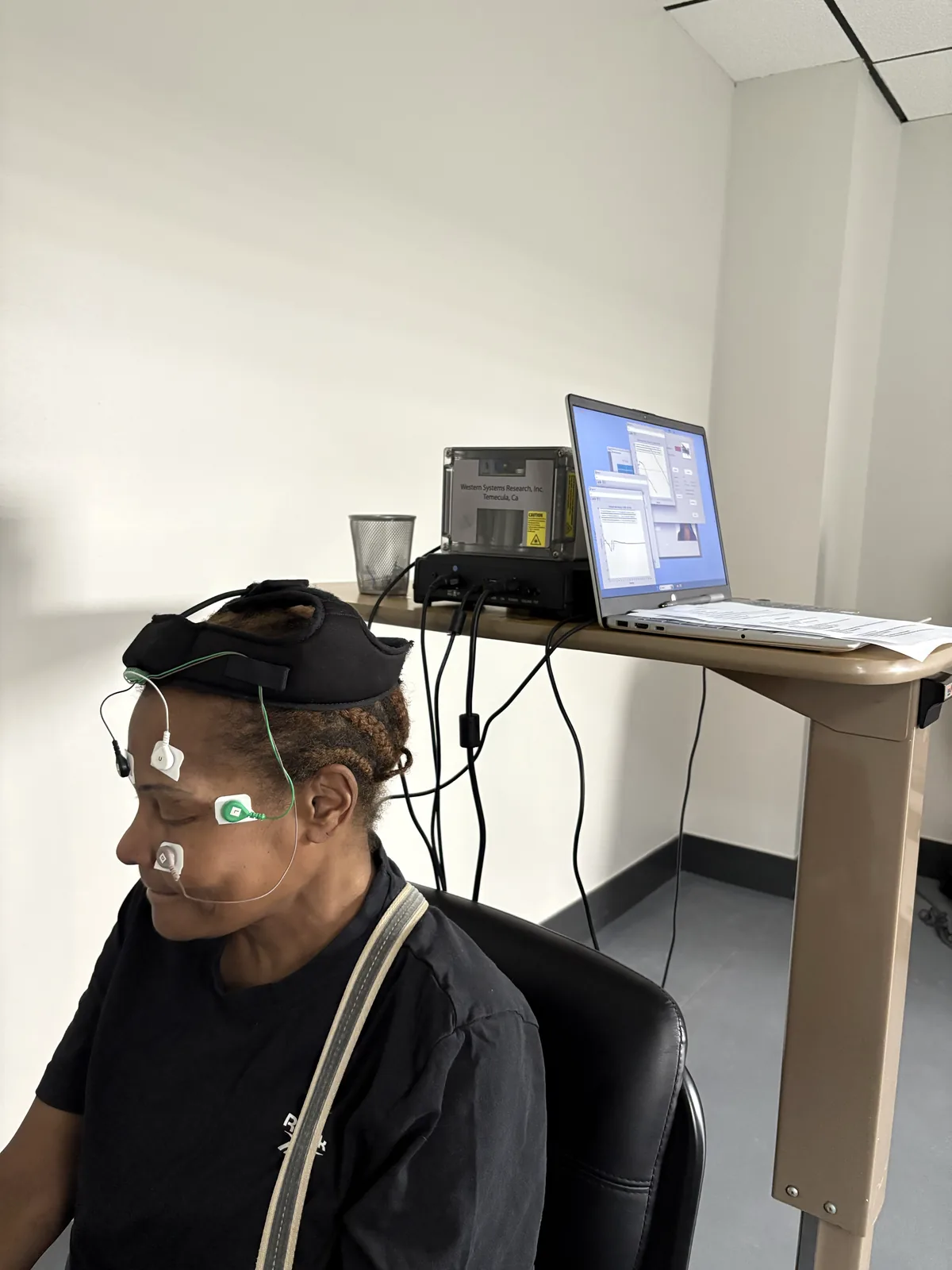
Videonystagmography is a test of inner-ear balance. It is used to look into unsteadiness and fall risk. It does not treat neuropathy or anything else. When you call, ask how your plan handles inner-ear (vestibular) tests. That is a separate question from nerve testing. More detail is on our VNG balance testing page.
Does insurance cover Qutenza, PRP, or laser therapy for neuropathy?
Qutenza (capsaicin 8% topical system)
Qutenza is FDA-approved in adults for neuropathic pain associated with postherpetic neuralgia and for neuropathic pain associated with diabetic peripheral neuropathy of the feet [1].
Two other label facts matter for planning. It is administered only by a physician or health care professional and is never dispensed for home use, and it is not repeated more frequently than every three months [1]. Our Qutenza page covers how the application visit works.
Orthobiologic injections (PRP and BMAC)
Plans generally do not cover them.
If this is under discussion, ask for that policy wording in writing before scheduling anything. Expect the answer to be strict.
In-clinic light and infrared therapies
Class 4 photobiomodulation, class 3B cold laser and whole-body infrared are given in clinic as parts of a plan, not as one-time procedures. Ask which benefit category your plan puts office-based therapy in, and what paperwork it expects for each session type.
What we will and will not tell you about cost
We do not publish fees on this site. What a patient owes depends on the plan, the benefits, and what the visit actually includes. A posted number would be wrong for most people reading it.
Fees are discussed directly with the practice during planning.
Frequently asked questions
What should I ask my insurer before neuropathy testing?
Ask what paperwork supports medical necessity for the specific test in your case, not whether neuropathy is covered in general. Then ask whether the answer differs for a diagnostic study versus repeat monitoring, because plans often treat those differently. Knowing which services are on the table first makes that call shorter. So review what we actually provide before you dial.
Why does my chart need to name a driver instead of just saying neuropathy?
Neuropathy is a category, not a diagnosis. So a request that names only the category gives a reviewer nothing to judge against. When the record states the suspected cause and ties the test to confirming or ruling it out, the medical reasoning is visible. See how the Regenerve protocol sequences testing.
Is coverage different for small-fiber evaluation than for EMG?
It can be. Electrodiagnostic testing measures the larger nerve fibers. So when your symptoms point to the small fibers, a different test is needed, and your plan may put it in a different benefit category. Ask which fiber type the order covers. See small fiber neuropathy symptoms and testing.
How do I find out what a visit will cost me?
We do not publish fees, because what applies to you depends on your plan, your benefits and what the visit actually includes. Fees are discussed directly with the practice during planning. Reach us through the Regenerve contact page.
What insurance covers neuropathy?
The better question is what your specific plan needs to see. Coverage usually turns on documented medical necessity: a named suspected cause and a test chosen to confirm or rule it out. A chart that says only “neuropathy” gives a reviewer little to work with. Ask your plan what paperwork supports this test in your case, and whether the study is diagnostic or for monitoring. Then write down the date and the representative’s name.
Is there a test to prove you have neuropathy?
No single test answers every question. EMG and nerve conduction studies, done on site at Regenerve, measure how well the larger nerve fibers conduct. When symptoms point to the small fibers, a different test is needed, and your plan may put it in a different benefit category. VNG is a separate test of inner-ear balance used to look into unsteadiness and fall risk. It does not treat neuropathy.
How can a doctor tell if you have neuropathy in your feet?
It starts with the pattern of your symptoms. Burning and temperature change point to the small nerve fibers. Numbness and weakness point to the larger ones. That pattern decides which test gets ordered. It also shapes how the request is written for your insurer. A test tied to a specific suspected cause, whether metabolic, nutritional, toxic, autoimmune, or structural, makes the medical reasoning clear to a reviewer.
Start with the Nerve Damage Score
The starting point at Regenerve is the free five-question Nerve Damage Score. It takes a few minutes. It tells us which cause to look at first, so your visit starts with a plan instead of a guess.
Take the free Nerve Damage Score assessment. Then bring the result to a physician-led visit at Regenerve, 4477 Woodson Rd #104, St. Louis, MO 63134, minutes from St. Louis Lambert International Airport. We see patients from the St. Louis region, Missouri and Illinois.
Sources
- U.S. Food and Drug Administration. QUTENZA (capsaicin) topical system — Highlights of Prescribing Information, revised 07/2024. https://www.accessdata.fda.gov/drugsatfda_docs/label/2024/022395s024lbl.pdf — referenced for the approved indications in adults (postherpetic neuralgia and diabetic peripheral neuropathy of the feet), for administration by a physician or health care professional only, and for repeat application not more frequently than every three months.