

Orthobiologic injections, meaning platelet-rich plasma (PRP) and bone marrow aspirate concentrate (BMAC), are offered in selected situations. No one has shown that they can reliably regrow nerve. No one has shown that they reverse peripheral neuropathy or consistently keep it from getting worse. Within the treatment options we have, these injections help patients’ symptoms. They ease pain and numbness and improve day-to-day function.
Here is the evidence behind both of those statements. There are published human studies of orthobiologics in nerve conditions. They are small and short. The way the injections are prepared is not standardized. And much of the work studied people who were screened for being uncomplicated. Saying only “not established” and stopping there leaves something out. It leaves out the part a patient with diabetes and fifteen years of burning feet most needs to hear.
So this page sets out what those studies found and who was in them. It shows who was kept out on purpose. And it shows what a clinician can and cannot honestly conclude from that. This is the talk we have with patients across the St. Louis region, Missouri and Illinois before anything is injected.
Key points
- A 2024 consensus guideline drew on many specialties. It found that “very limited evidence” suggests perineural PRP (PRP injected around the nerve) may improve pain and numbness in diabetic peripheral neuropathy. That was compared with conventional medical management [2].
- A systematic review looked at injectable biologics across nerve pain (neuropathic pain) conditions. It rated the overall certainty of evidence as very low by GRADE criteria [3].
- Every human study of PRP in diabetic peripheral neuropathy that we found added PRP to medical management. None tested it as a stand-alone treatment [4][5].
- These trials, as a rule, exclude diabetes, systemic (whole-body) disease, severe disease and overlapping neuropathies. That covers much of the patient profile this practice actually treats [8][9][10].
- Peripheral neuropathy covers at least seven distinct types, each with its own disease process (pathophysiologic phenotypes) [1]. The driver decides what belongs in a plan.
- Not proven to regrow nerve is not the same as unhelpful. Within the treatment options available, these injections help patients’ symptoms. Both statements carry the same weight here.
First, the condition is not one thing
Burning, numbness and electric sensations are the alarm. They are not the wiring fault. A 2026 review sorts peripheral neuropathy into types (phenotypes). One is distal “dying-back” axonopathy. Others are neuronopathy (ganglionopathy) and demyelinating neuropathies. Then come small-fiber neuropathy and autonomic neuropathy. Next are ischemic, infiltrative or inflammatory axonopathies. Last are focal compressive or entrapment neuropathies [1].
Seven mechanisms, one set of symptom words. That is why a general claim about “injections for neuropathy” is not a claim about anything in particular. It is also why the studies below cannot simply be added together. A trial in carpal tunnel syndrome and a trial in diabetic polyneuropathy are not studying the same disease.
What are PRP and BMAC injections?
PRP is the patient’s own blood. It is drawn and spun in a centrifuge to concentrate platelets and the growth factors they carry. BMAC is bone marrow drawn from the patient. It is then spun to concentrate the mononuclear cell fraction. That fraction includes mesenchymal cells that have not been grown in a lab (culture-expanded).
The 2024 consensus guideline calls these the pillars of regenerative medicine in pain practice. It also notes the rules they fall under. These are Section 361 of the Public Health Service Act and the related federal regulations. Under them, only minimally manipulated products in homologous use (doing the same job in the body) are permitted. Nothing may be added to the product. And it should not have a systemic (whole-body) effect. Growing cells in a lab (culture-expanding) is more than minimal manipulation. It is not permitted on that pathway [2].
That matters for reading claims. A rule that allows a same-day autologous product (made from your own body) is not a finding that the product works. Those two things are easy to blur. Advertising blurs them all the time.
What does the research show about PRP for neuropathy?
The formal guideline position
In 2024, a working group from many specialties published guidelines on regenerative medicine for chronic pain. They are clinical practice guidelines based on evidence. Their Consensus Point 27 covers nerve injections. It says very limited evidence suggests that perineural injection of PRP (PRP injected along certain nerves) may be associated with improvements in pain intensity and in neurological (nerve) symptoms such as numbness. The nerves include the median, ulnar, radial, peroneal, tibial, saphenous and sural nerves. The patients had diabetic peripheral neuropathy. The comparison was conventional medical management [2].
That is the strongest formal statement in this field. And it is hedged on purpose. The same guideline reports on a systematic review. It covered 27 human studies of injectable biologics for nerve pain. The conditions were post-spinal-cord-injury pain, diabetic peripheral neuropathy, painful scars, pudendal neuralgia, trigeminal neuralgia, carpal tunnel syndrome, peripheral neuropathy and radiculopathy. The review found very low certainty of evidence by GRADE criteria [2][3]. Its authors called for a standard preparation, dose and route. They said this must come first, before higher-quality trials could be run [3].
Diabetic peripheral neuropathy: two small studies, both combination designs
The first is a randomized trial of 60 adults with type 2 diabetes. Each had diabetic peripheral neuropathy for at least six months. It ran at a university hospital in Egypt, in its pain clinic and its rheumatology and rehabilitation departments. One group got ultrasound-guided perineural PRP plus medical treatment. The other got medical treatment alone. Patients were checked at one, three and six months. At every visit, pain and numbness scores (visual analog scales) improved more in the PRP group than in the control group. So did the modified Toronto Clinical Neuropathy Score [4].
The honest reading: 60 people, one center, six months. The comparison was PRP plus medication against medication alone. It was not PRP against a sham injection. The full text sits behind a subscription, and we could not verify its exclusion criteria. The published abstract does not state them, and we are not going to guess at them.
The second is a prospective case-control study of 80 people with type 2 diabetic peripheral neuropathy. Of these, 40 got ultrasound-guided perineural PRP with medical treatment. The other 40 got medical treatment alone. At three months in the PRP group, tibial motor nerve conduction velocity (how fast the nerve carries a signal) rose from 38.5 ± 5.2 to 45.3 ± 4.8 m/s. Peroneal motor conduction rose from 36.2 ± 4.9 to 42.7 ± 5.1 m/s. The modified Toronto score fell from 12.4 ± 2.1 to 6.3 ± 1.8. Pain fell from 8.2 ± 1.0 to 3.5 ± 1.2. The control group worsened on both scores over the same period [5].
The honest reading: this was a case-control design, not a randomized one. Participants were not assigned by chance. So a difference between the groups that nobody measured can produce a result like this. Follow-up was three months. This paper is also behind a subscription, and its exclusion criteria could not be verified.
Those two studies hold roughly 140 people between them, at two centers, over three to six months. That is the clinical evidence base for PRP in diabetic peripheral neuropathy that we were able to find. That is not a reason to dismiss them. It is a reason not to build a promise on them.
Bone marrow cells: studied, but not as BMAC and not around the nerve
A 2024 systematic review and meta-analysis screened 5,431 records. It found seven controlled trials of stem cell therapy in diabetic peripheral neuropathy. They covered 400 patients with a mean age of 62.4 ± 8.5 years. Six were done in China in people with type 2 diabetes. One, in Egypt, included both type 1 and type 2. Five used bone marrow-derived mononuclear cells. Two used umbilical cord-derived mesenchymal stromal cells. All but one delivered the cells by intramuscular injection (into muscle) in the leg. The remaining study used intravenous delivery (into a vein) [6].
Pooled results favored treatment. Motor nerve conduction velocity improved by 2.2 m/s (95% CI 1.6 to 2.8). Sensory conduction improved by 1.9 m/s (95% CI 1.1 to 2.6). Vibration perception threshold fell by 2.9 V (95% CI −4.0 to −1.8). The Toronto Clinical Scoring System fell by 3.6 points (95% CI −5.0 to −2.2). Reported complications were pain and swelling at the injection sites, which cleared within days [6].
The honest reading, in the review authors’ own terms: only one of the seven trials was randomized. Four of the seven raised risk-of-bias concerns. Follow-up ran only to 3, 6 or 12 months. And the field lacks high-quality controlled trials with large sample sizes. It also lacks any long-term safety follow-up [6].
There is also a design point that matters directly to a patient asking about an injection. Those cells went into leg muscle, not around a nerve. Bone marrow-derived mononuclear cells are a close relative of BMAC. BMAC is bone marrow aspirate spun to concentrate that same cell fraction [2]. But the preparations are not standardized across studies, and neither is the route. This evidence does not transfer cleanly to a perineural BMAC injection, and we do not present it as though it does. A 2026 review of orthobiologics in type 2 diabetes speaks to this. It states that evidence for BMAC and mesenchymal stromal cell outcomes specifically in diabetic patients remains sparse [11].
Entrapment neuropathy: the best-studied nerve indication, and where its ceiling shows
Carpal tunnel syndrome is a focal compressive neuropathy (one nerve squeezed in one spot). It has more PRP data than any other nerve condition. A 2025 meta-analysis pooled seven randomized trials covering 365 patients. Of these, 183 got PRP and 182 got conventional non-surgical care. All had mild to moderate disease [7].
Symptom severity got better with PRP at one, three and six months. Functional status got better at three and six months. Pain scores were lower at three months but not at one. Meanwhile, the nerve measures showed no statistically significant difference between groups at any time point. Those were the cross-sectional area of the median nerve, sensory nerve conduction velocity and distal motor latency. No serious adverse reactions were recorded in the four studies that tracked them [7].
Both halves of that are true at once. In the nerve condition with the most PRP evidence, what got better was how people felt and functioned. The electrical and ultrasound measurements of the nerve did not follow. Neither half should be dropped when the result is quoted.
A 2025 randomized controlled trial adds a harder finding. It enrolled seventy-five patients with mild to moderate idiopathic carpal tunnel syndrome. Idiopathic means no known cause. They were assigned in equal groups. One got perineural bupivacaine with methylprednisolone. One got pulsed radiofrequency with bupivacaine. One got perineural PRP. All three groups improved in pain, symptoms, function, median nerve cross-sectional area and nerve conduction. Pulsed radiofrequency and steroid produced greater improvement than PRP. The PRP group improved least of the three over the four-month study [8].
That is a modest-to-negative result for PRP, and we are not going to soften it. What we will do is say who was in that trial, because it changes what the result can be used to conclude.
Other nerve conditions: small, and mostly uncontrolled
An open-label interventional study gave a single 1 mL perineural PRP injection to 30 patients. They had Hansen’s disease (leprosy) and ulnar or common peroneal neuropathy. Of those, 27 completed 12 weeks of follow-up. Several things got better. They were two-point discrimination, area of sensory loss, hand dynamometry (grip strength) and foot muscle power. Activity-limitation scores got better at 12 weeks. At 12 weeks, motor nerve conduction amplitude also rose. Sensory latency fell and sensory conduction velocity rose. No adverse effects were recorded beyond one to two days of injection-site pain [9].
There was no control group. This was a single-arm open-label study over 12 weeks. The patients were also on multidrug therapy for the underlying infection. In that setting, treatment effect cannot be separated from natural recovery or expectation. The authors say as much. They also note that long-term effects could not be assessed.
A single-blind randomized comparative trial studied 30 men. Each had an incomplete traumatic sciatic nerve injury. One group got five weekly ultrasound-guided 5 mL perineural PRP injections plus 12 weeks of rehabilitation (rehab). The other got rehab alone. Follow-up lasted six months. At one month, PRP had not improved the motor or sensory function scales. By three and six months, motor function ratings and conduction velocities favored the PRP group over rehab alone. The authors’ own conclusion is that PRP “may be partially effective” in the early repair of incomplete sciatic nerve injuries [10].
Why these studies do not answer the question a complex patient is asking
The people who were screened out
This is the part that decides how much weight any of the above can carry. You can check it in the papers themselves.
Start with the carpal tunnel trial where PRP did worst. In the authors’ words, it excluded “secondary CTS due to systemic disease including thyroid disease, diabetes mellitus, or acromegaly.” It also kept out severe carpal tunnel syndrome. Severe meant any of these: distal motor latency to abductor pollicis brevis above 6.5 ms, absent median sensory potentials, or a nerve cross-sectional area above 15.0 mm². The trial also kept out “other neuropathies overlapping with CTS,” and past median nerve release or wrist surgery. Pregnancy kept people out. So did steroids taken at the same time, and known allergy to the study drugs. So did any carpal tunnel injection in the past six months. Only ages 20 to 60 could enroll. Their disease had to be mild to moderate and idiopathic. It had to have failed at least three months of conservative care [8].
The sciatic nerve trial enrolled only men aged 18 to 60. Each had an incomplete injury three weeks old and no other treatment. The authors state that “patients without other diseases were included,” and they kept out pre-existing bilateral sciatic dysfunction. They also kept out severe cardiopulmonary, hematological, skin, infectious, oncological and psychiatric disorders [10].
The Hansen’s disease study also had a long list. It kept out uncontrolled diabetes mellitus. It kept out known severe cardiac, hepatic or renal disease. It kept out people on antiplatelet drugs. It kept out anyone who took non-steroidal anti-inflammatory drugs within a week. The same went for systemic steroids above 20 mg daily and local steroid injection within six months. It kept out disease found more than three years earlier, and active lepra reactions. It also kept out anyone with a platelet count below 50 × 10³, hemoglobin below 10 g/dL or mean platelet volume above 12.3 fL [9].
The carpal tunnel meta-analysis pooled only mild to moderate disease treated without surgery. Severe disease was not in the pool. Surgical patients were excluded by design [7].
Now read that list against the person who usually walks into this clinic. That person has type 2 diabetes or insulin resistance, and often obesity. They are frequently on an antiplatelet agent (a drug that keeps platelets from clumping). They have ten or twenty years of symptoms and more than one driver at once. They have already tried several treatments without success. Most of them would not have been enrolled in most of these studies.
Two conclusions follow, and they point in opposite directions. Both are true, and we state both.
First, look at a modest or negative result in a screened, uncomplicated group. It does not establish that a treatment fails in the patients who were screened out. That is the usual external-validity problem: results in one group may not hold in another. It is why we do not treat the carpal tunnel finding as a verdict on orthobiologics in metabolic neuropathy.
Second, and just as important, it means the trials did not measure these injections in those patients either. Our position rests on our own clinical use. Within the treatment options available, they help patients’ symptoms. We do not claim they regrow nerve.
What a short single-modality study cannot measure
Every diabetic neuropathy study we found tested PRP added to medical management [4][5]. None tested PRP against a sham. None tested it inside a step-by-step plan that also corrects perfusion (blood flow), blood sugar control and the raw materials repair requires. A study of one treatment cannot report on a combination it never put together.
Follow-up across this entire literature ran from three to twelve months [6][7][8][9][10]. Nothing here speaks to what happens after a year. Peripheral neuropathy is measured in decades.
Outcome measures also disagree with each other. In carpal tunnel, symptoms and function moved while nerve conduction and nerve size did not [7]. In diabetic neuropathy, conduction velocities moved [5]. Those are different questions, and they can truly diverge. A study that measures one is silent about the other. Function is often not measured at all: walking, balance, sleeping through the night.
Efficacy is how well something works in a trial. Effectiveness is how well it works in practice. Those are also different questions. These studies did not standardize preparation protocols, platelet doses, white cell (leukocyte) content, injection volumes, nerve targets or number of sessions. That is exactly what the 2022 systematic review asked the field to fix before running larger trials [3].
Does diabetes make PRP less effective?
There is a complication in this literature that nobody advertises. It deserves stating plainly because it cuts against easy optimism.
A 2026 narrative review looked at orthobiologic therapy in type 2 diabetes. It reports that people with type 2 diabetes respond less to PRP, BMAC and mesenchymal stromal cell preparations. It attributes this to several causes. One is a buildup of advanced glycation end-products. Others are NF-κB-driven chronic inflammation and impaired Nrf2 antioxidant signaling. Still others are mitochondrial dysfunction and lasting epigenetic changes it calls “diabetic memory.” The review also sums up published reports. PRP from donors with diabetes can carry more VEGF (a growth signal) and still give worse clinical results. Bone marrow mobilization failure has been documented at 15.6% in patients with diabetes. In controls without diabetes, the rate was 6.4%. The review says its own framework is hypothesis-generating: it raises ideas to test. It is not a clinical protocol [11].
That is a caution, not a selling point. If metabolic terrain is the rate-limiting step, then treating the terrain is the treatment. Anything injected into unchanged terrain is being asked to do a job the surrounding tissue cannot support. That is one of the reasons metabolic and nutritional care is the foundation here, not an add-on to a procedure.
How evidence strength varies across other options
It helps to see what stronger evidence looks like in the same condition. Take painful diabetic peripheral neuropathy. One randomized trial added 10 kHz spinal cord stimulation to optimized medical management. Responder rates were markedly higher at six months. The benefit held through 24 months [1]. Ultrasound-guided pulsed radiofrequency for focal entrapment-type nerve pain is a different case. Its reported benefits are mostly short to mid-term, with mixed protocols, so certainty varies by indication [1].
The 2026 review that describes both of those calls itself a narrative review. It is not a formal practice guideline [1]. “Described in the literature” and “standard of care” remain different statements. Use the same test with orthobiologics. Ask about the specific phenotype and the specific indication, not about “neuropathy” in general.
What is still unproven about PRP and BMAC for neuropathy?
- No one has shown that orthobiologic injections can reliably regrow nerve, in any type of neuropathy. No one has shown that they reverse peripheral neuropathy. No one has shown that they consistently keep it from getting worse.
- Autologous PRP and same-day BMAC are used under minimal-manipulation, homologous-use rules [2]. That is a regulatory pathway, not a finding that they work.
- We found no head-to-head trial comparing PRP with BMAC in any peripheral neuropathy.
- We found no study of this exact mix. It would test orthobiologics in a length-dependent polyneuropathy, alongside photobiomodulation and metabolic correction. That mix is the only way the question would ever come up here.
- Insurance coverage is a payer decision, not a clinical finding. Patients sign an advance beneficiary notice for non-covered services. Whether something is covered says nothing about whether it works.
What would actually settle the question
A patient has a right to know what a real answer would require. It would take the following, and none of it exists yet.
- A randomized trial with a credible sham injection, not a group that only gets medication.
- Trials that enroll people with metabolic dysfunction on purpose. That includes obesity, long-lasting symptoms, many medicines (polypharmacy) and failed past treatment. Plans made in advance to study those subgroups, not exclude them.
- A standard preparation, fully reported. That means platelet dose, white cell (leukocyte) content, volume, nerve target and number of sessions [3].
- Outcomes that cover both what patients feel and what can be measured. That matters since symptom scores and nerve conduction have already been shown to move on their own, apart from each other [5][7].
- Follow-up well beyond twelve months, which nothing in the current literature provides [6].
- Trials that test the injection inside a combination plan, because a combination is the only setting where it would be used.
What we do instead of guessing
Map the driver before choosing a therapy
Metabolic, nutritional, autoimmune, toxic and structural drivers overlap and often occur together. Finding the dominant one changes what belongs in the plan more than any single treatment does.
The reasoning behind that approach is set out in the science of nerve terrain rehabilitation.
Test to answer a question
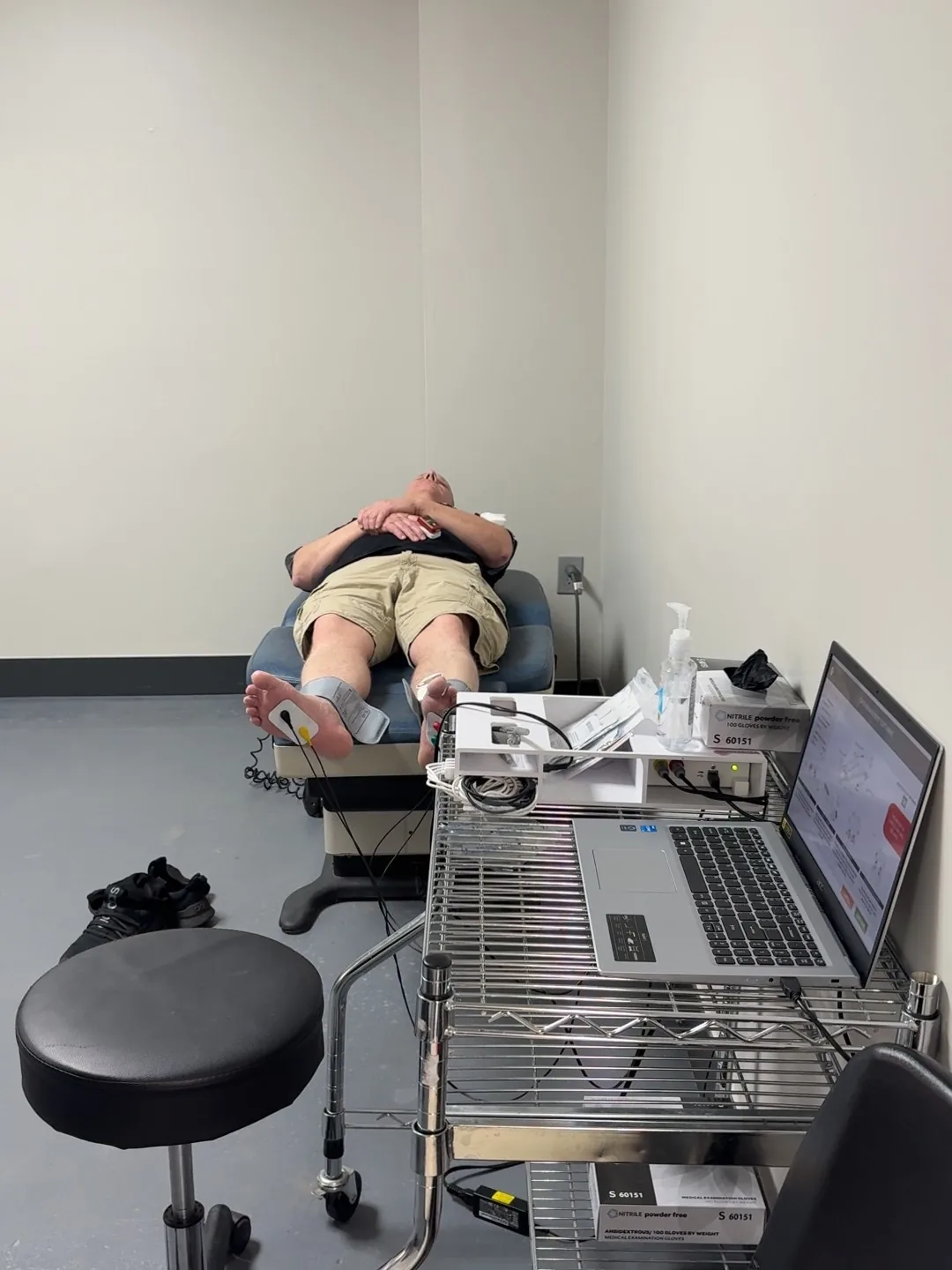
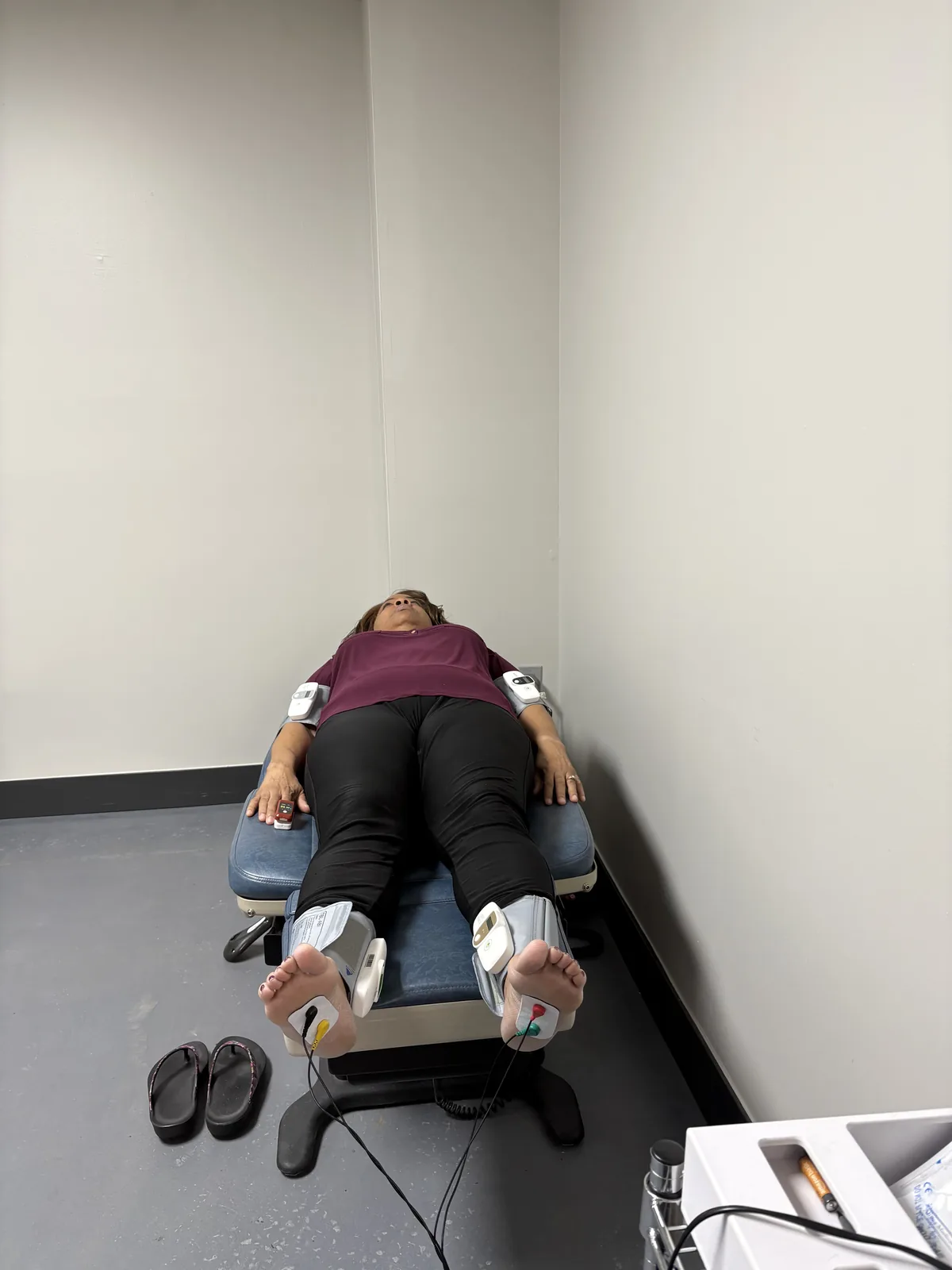
We perform electrodiagnostic testing (EMG/NCS) on site. It shows large-fiber involvement and pinpoints where a problem is. It can be normal in small fiber neuropathy, so a normal study does not end the evaluation.
Videonystagmography (VNG) is a diagnostic test of inner-ear balance function. We use it when unsteadiness is part of the picture. It is not a treatment for neuropathy or for anything else.
Treat the terrain the nerve depends on
The foundation comes first. Restore perfusion (blood flow) so oxygen reaches the nerve. Reduce the metabolic pathways that keep causing glycation injury (damage from sugar sticking to tissue). Supply the raw materials repair requires. Class 4 photobiomodulation, class 3B cold laser and whole-body infrared are part of that, matched to the clinical picture.
Qutenza (capsaicin 8% patch) is FDA-approved in adults for neuropathic pain from postherpetic neuralgia and from diabetic peripheral neuropathy of the feet. It is applied in clinic by a clinician, never dispensed for home use, and repeated no more often than every three months.
What are the downsides of PRP injections?
We do not promise nerve regeneration or reversal of established nerve damage.
We state what is known about safety apart from what is known about benefit. Across this literature, the reported adverse effects were injection-site pain, swelling and bruising that cleared within days [6][7][9][10]. The 2024 consensus panel described PRP and mesenchymal cell products as having minimal injection-related adverse effects, with rare severe reactions [2]. Safety is not efficacy. A treatment can be safe and still not help.
We offer an injection once the workup is finished and the dominant driver has been identified, as one part of the plan, never in place of it. When a service is not covered, we discuss that as a payer decision and document it before anything happens. We do not present it as a comment on whether the treatment works.
“My ethos is to treat all of my patients as I would my own family, with the goal of giving them back their quality of life.” — Dr. Gurpreet Singh Padda, MD, MBA, MHP
Questions worth bringing to the visit
- Which neuropathy phenotype do you think I have, and what supports that?
- Which driver is dominant in my case, and how did you establish it?
- Which parts of this plan are established, and which are less certain?
- If you are recommending an injection, which study are you relying on, and were patients like me eligible for it?
- What are we doing about the metabolic terrain, and in what order relative to any procedure?
- How will progress be measured, and over what period?
- Do my test results and my symptoms actually agree? If not, what explains the gap?
A clinician who cannot answer the third and fourth questions in plain language is the reason to slow down.
For context on what is used here: Regenerve prepares platelet-rich plasma leukocyte-poor, with no white cells and no red cells. It is activated with calcium chloride. It is made at two to three times baseline platelet concentration, with higher dosing in the six to twelve times range. The target is a measured dose above ten billion platelets per joint.
Frequently asked questions
Are PRP or BMAC injections approved for peripheral neuropathy?
No.Orthobiologic injections are offered in selected situations. Autologous PRP and same-day BMAC are used under federal minimal-manipulation rules. That is a regulatory pathway, not a finding that they work. See the Regenerve Protocol for peripheral neuropathy.
Is there any published research on PRP for diabetic neuropathy?
Yes, but very little. A randomized trial of 60 people reported improvement when PRP was added to medical treatment. So did a non-randomized case-control study of 80 people. Both ran over three to six months. A 2024 consensus guideline calls that “very limited evidence.” Neither study tested PRP on its own against a sham injection. See diabetic peripheral neuropathy treatment in St. Louis.
Why do you say trials may not apply to me?
Because these studies routinely screen out the people this clinic treats. One carpal tunnel trial excluded diabetes, thyroid disease, severe disease and any overlapping neuropathy. A sciatic nerve trial enrolled only men aged 18 to 60 with no other diseases. So a weak result in those groups does not prove failure in complex patients. It also means nobody has shown benefit in them. See the hidden drivers of peripheral neuropathy.
Can an EMG and nerve conduction study confirm small fiber neuropathy?
Not on its own. Nerve conduction studies assess large-fiber function. They can be normal in small fiber neuropathy, so a normal result does not close the question. The symptom pattern still has to be matched to the right test. See small fiber neuropathy symptoms and testing.
Does VNG balance testing treat neuropathy?
No. Videonystagmography is a diagnostic test of inner-ear balance function. It helps tell a vestibular (inner-ear) contribution apart from a nerve contribution when someone is unsteady. It treats nothing. See VNG balance testing.
Does PRP help with neuropathy in the feet?
Within the treatment options we have, PRP helps patients’ symptoms. It eases pain and numbness. It improves day-to-day function. It does not regrow nerve. A 2024 multispecialty guideline found very limited evidence that PRP may improve pain and numbness in diabetic neuropathy, compared with medical management alone. That PRP was injected along nerves, including the tibial, peroneal, saphenous and sural nerves. At Regenerve it is offered in selected situations, once the driver is identified.
Can PRP or BMAC regenerate nerves?
No. No orthobiologic injection has been shown to reliably regenerate nerve. None has been shown to reverse peripheral neuropathy or consistently prevent its progression. We do not claim nerve regrowth. Within the options available, these injections help symptoms. That means less pain and numbness and better function. That is why they sit inside a plan that also treats the metabolic terrain the nerve depends on.
What is the most successful treatment for peripheral neuropathy?
There is no single winner, because peripheral neuropathy covers at least seven different mechanisms. The driver decides what belongs in the plan. Evidence strength also varies by option. For painful diabetic neuropathy, a randomized trial added 10 kHz spinal cord stimulation to medical management. Responder rates were markedly higher at six months. The benefit lasted through 24 months. At Regenerve, mapping the driver comes first.
Next step
Before any injection question is worth asking, the driver has to be identified. Five questions start that map, and it takes a couple of minutes.
Sources
- Yuba T, Dabbagh A, Sabouri AS. Peripheral neuropathy: a phenotype-driven review for diagnosis and management. Rev Neurol. 2026;81(4):48384. doi:10.31083/RN48384. PMID 42052783. https://pmc.ncbi.nlm.nih.gov/articles/PMC13129557/
- D’Souza RS, Her YF, Hussain N, et al. Evidence-based clinical practice guidelines on regenerative medicine treatment for chronic pain: a consensus report from a multispecialty working group. J Pain Res. 2024;17:2951-3001. doi:10.2147/JPR.S480559. PMID 39282657. https://pmc.ncbi.nlm.nih.gov/articles/PMC11402349/
- Bies M, Ashmore Z, Qu W, Hunt C. Injectable biologics for neuropathic pain: a systematic review. Pain Med. 2022;23(10):1733-1749. doi:10.1093/pm/pnac066. PMID 35482528. https://pubmed.ncbi.nlm.nih.gov/35482528/
- Hassanien M, Elawamy A, Kamel EZ, et al. Perineural platelet-rich plasma for diabetic neuropathic pain, could it make a difference? Pain Med. 2020;21(4):757-765. doi:10.1093/pm/pnz140. PMID 31298289. https://pubmed.ncbi.nlm.nih.gov/31298289/
- Elsayed AA, Eldeen ES, Osman MA, Elazab SA. Role of platelet rich plasma in management of diabetic peripheral neuropathy: a case-control study. J Ultrasound. 2025. doi:10.1007/s40477-025-01042-7. PMID 40624430. https://pubmed.ncbi.nlm.nih.gov/40624430/
- Alizadeh SD, Jahani S, Rukerd MRZ, et al. Human studies of the efficacy and safety of stem cells in the treatment of diabetic peripheral neuropathy: a systematic review and meta-analysis. Stem Cell Res Ther. 2024;15(1):442. doi:10.1186/s13287-024-04033-3. PMID 39563393. https://pmc.ncbi.nlm.nih.gov/articles/PMC11577959/
- Du Y, Jiang X, Fu K, Cui C. Efficacy and safety of platelet-rich plasma in the treatment of carpal tunnel syndrome: a meta-analysis. Medicine (Baltimore). 2025;104(44):e45010. doi:10.1097/MD.0000000000045010. PMID 41261653. https://pmc.ncbi.nlm.nih.gov/articles/PMC12582690/
- Hashem EY, Shamandy FS, Elmulla AF, Mansour MA. Ultrasound-guided pulsed radiofrequency versus perineural platelet rich plasma injection for the treatment of idiopathic carpal tunnel syndrome: a prospective randomized controlled study. BMC Anesthesiol. 2025;25(1):406. doi:10.1186/s12871-025-03257-x. PMID 40804365. https://pmc.ncbi.nlm.nih.gov/articles/PMC12351916/
- Saha A, Kothari SY, Sonune S, et al. Effect of single perineural injection of platelet rich plasma on nerve function in Hansen’s disease with truncal neuropathy: an interventional study. Cureus. 2026;18(1):e102127. doi:10.7759/cureus.102127. PMID 41732637. https://pmc.ncbi.nlm.nih.gov/articles/PMC12925252/
- Yang C, Wang C, Wang C, Yang G, Wu W. The effectiveness of platelet-rich plasma in the treatment of sciatic nerve injury: a single-blind randomized comparative trial. Neural Plast. 2025;2025:7540054. doi:10.1155/np/7540054. PMID 41306443. https://pmc.ncbi.nlm.nih.gov/articles/PMC12646722/
- Santos MDS, Costa FR, Protasio Netto J, et al. Nutritional interventions to optimize orthobiologic therapy quality in type 2 diabetes mellitus: molecular mechanisms and clinical framework: a narrative review. Int J Mol Sci. 2026;27(9):3749. doi:10.3390/ijms27093749. PMID 42123336. https://pmc.ncbi.nlm.nih.gov/articles/PMC13164227/