
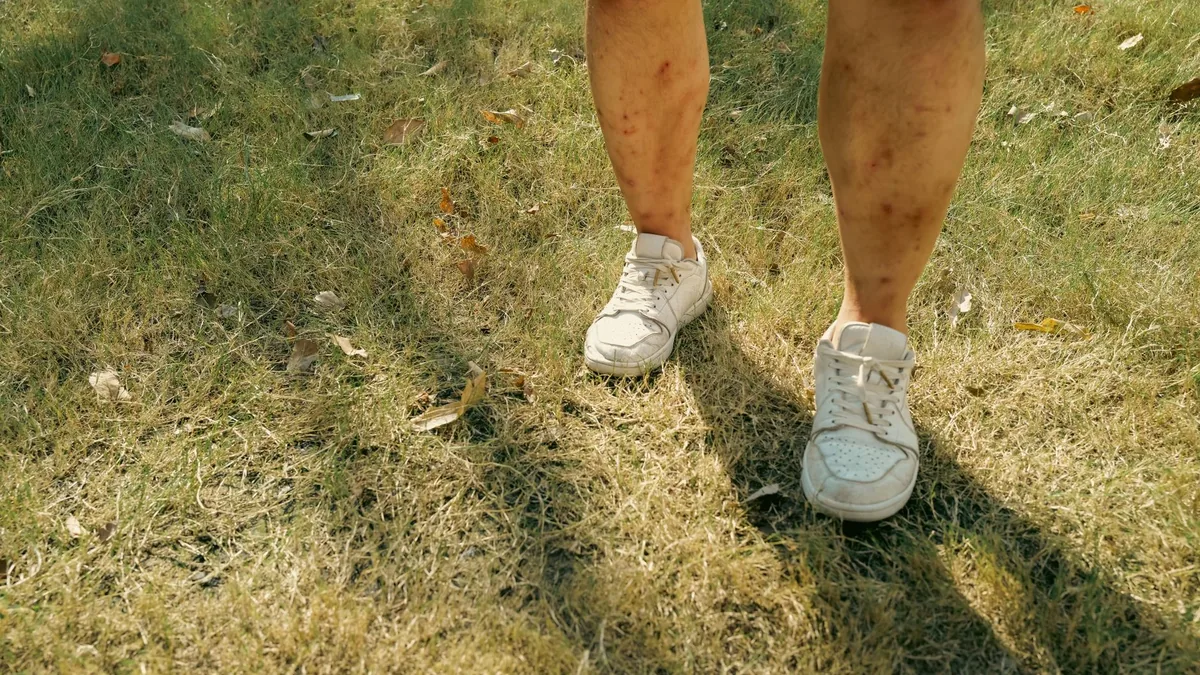
The dividing line is what your legs are asking you to do. Restless legs syndrome produces an urge to move. It comes on at rest, gets worse in the evening and eases when you actually move. Peripheral neuropathy produces abnormal feelings: burning, numbness, tingling. Moving does not reliably relieve them. They usually start in the feet and work upward.
Both keep people awake, which is why they get confused. Between 5% and 15% of the population may have restless legs syndrome.1 Peripheral neuropathy shows up with varying degrees of numbness, tingling, aching, burning, weakness of the limbs, hyperalgesia (extra pain from a painful trigger), allodynia (pain from a light touch) and pain.2 At midnight, the overlap in how they feel is real. But the physiology underneath is not the same.
Why are restless legs and neuropathy so often confused?
The best evidence on this is a case-control study. It compared 245 patients with peripheral neuropathy to 245 controls of the same age and sex. Everyone was screened for restless legs syndrome with a standard questionnaire. It was based on international diagnostic criteria.3
On screening, 65 of the neuropathy patients (26.5%) came back positive for restless legs syndrome. So did 25 of the controls (10.2%). That looks like a large excess. But then a movement disorders specialist examined the patients who screened positive. The specialist did not know who had neuropathy. The diagnosis was confirmed in only 46% of the neuropathy group, compared with 80% of the controls.3
After that confirmation step, the overall rate of restless legs did not differ between the neuropathy patients and the controls: 12.2% versus 8.2%.3 The most common reasons for a false-positive screen were cramps and paresthesia (pins and needles). These lacked true day-night variation and did not get worse at rest.3
That is the practical lesson for anyone trying to name their own symptoms. Neuropathy feelings often answer “yes” to restless legs screening questions without meeting the actual criteria. Timing, and whether rest or movement changes it, are what separate them. In this group, a questionnaire on its own gets it wrong more often than not.
Where a real association was found
In the same study, 14 of 72 patients with hereditary (inherited) neuropathy had restless legs syndrome (19.4%). That rate was higher than in controls. It was also higher than in acquired neuropathy (9.2%).3 Neuropathy patients who did have restless legs more often had a family history of it. They were also younger, at an average of 49.9 years versus 61.4.3
Want to learn more about nerve pain and the treatments we use? Get our neuropathy video series by email.
How can you tell restless legs from neuropathy?
What does restless legs syndrome feel like?
- An urge to move the legs, usually with uncomfortable sensations.
- Triggered or worsened by rest, especially sitting or lying down.
- Worse in the evening and at night than during the day.
- Partly or fully relieved by movement, for as long as the movement continues.
What does peripheral neuropathy feel like?
- Burning, numbness, tingling or electric feelings, not an urge to move.
- Usually starts in the toes and feet and moves upward, evenly on both sides.
- Often worse at night, but walking does not reliably switch it off.
- May come with loss of protective feeling, balance changes or a changed walk.
The feet-first, even, both-sides spread is the most useful single clue. An urge that rest brings on and walking relieves is the other.
Neuropathy is a category, so the next question is which driver
Say the pattern points to nerve injury, not a movement disorder. Then the label “neuropathy” is only the halfway point. The driver can be metabolic, nutritional, autoimmune, toxic or structural. Each one changes what is worth doing.
Peripheral neuropathy is mainly diagnosed clinically. That means through your history and a neurological exam. Small fiber feeling is checked with temperature or pinprick. Large fiber feeling is checked with vibration. Ulcer risk is checked with 10 g monofilament pressure testing.2 Nerve conduction studies and intraepidermal nerve fiber density testing (a skin biopsy) are called for when the case has unusual features. Examples are fast symptom onset, severe neuromotor impairment or feeling that is abnormal on one side more than the other.2
Testing we perform on site
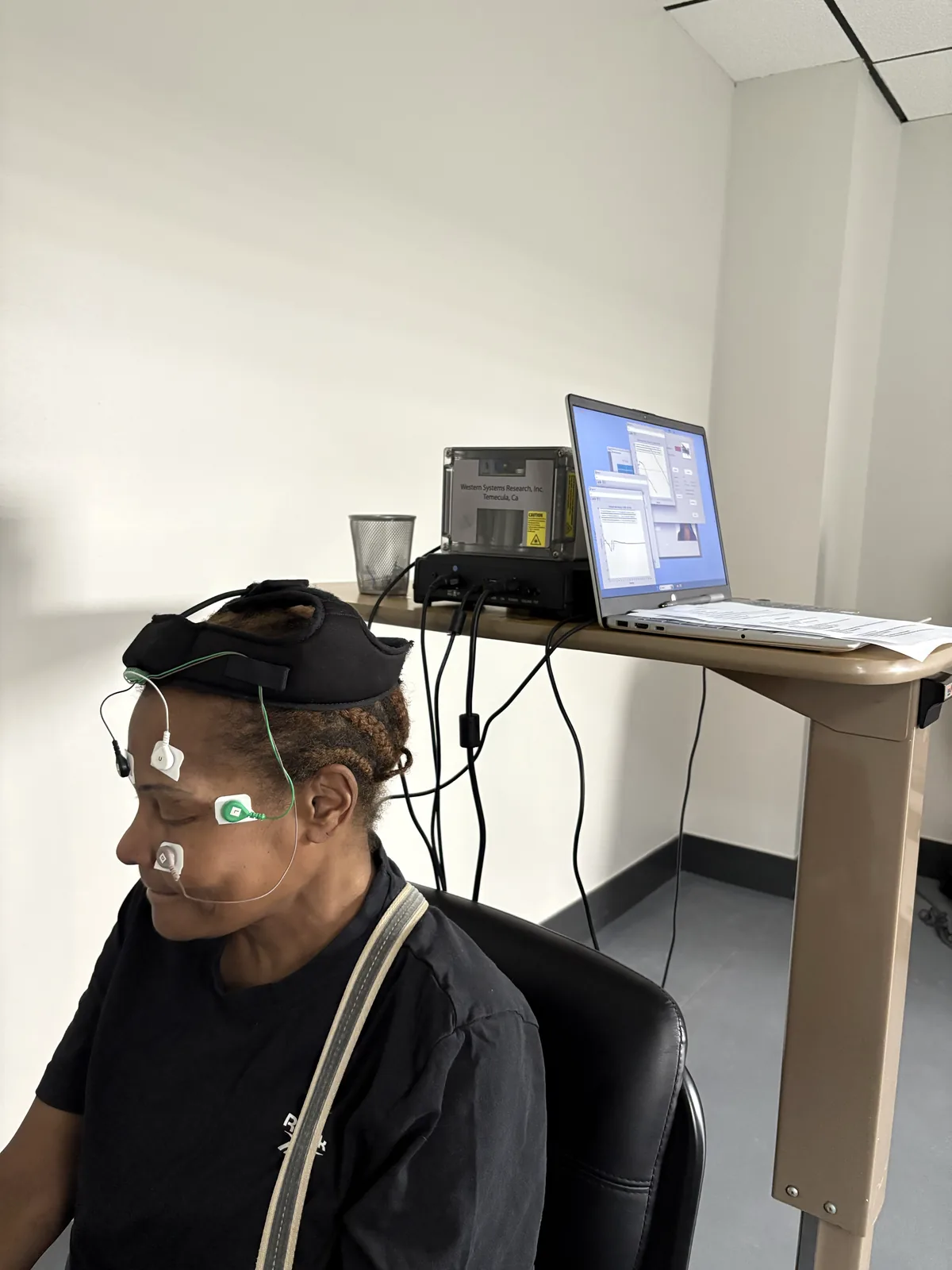
Regenerve performs electrodiagnostic testing (EMG/NCS) in the office. That is the test used to assess large-fiber damage. When balance complaints or dizziness are part of the picture, VNG (videonystagmography) may be used. It is a diagnostic test of inner-ear balance function. VNG finds where a balance problem is coming from. It is not a treatment. Details are on our VNG balance testing page.
Can you have restless legs and neuropathy at the same time?
The two can coexist. A family history of restless legs plus a younger age at onset makes that more likely in someone who already has neuropathy.3 Finding one does not close the file on the other.
When both are in play, the plan has to treat the nerve driver and the urge-to-move pattern as separate problems. Treating only one leaves the other running at night.
What we do at Regenerve
Our approach targets the driver rather than the symptom. That means finding what is injuring the nerve before choosing anything. Then the plan is matched to it.
- Electrodiagnostic testing (EMG/NCS) performed on site.
- Class 4 photobiomodulation and class 3B cold laser.
- Whole-body infrared.
- Metabolic and nutritional care directed by the identified driver.
- Orthobiologic injections (PRP and BMAC).
- Qutenza (capsaicin 8% patch), FDA-approved in adults for neuropathic pain from postherpetic neuralgia and from diabetic peripheral neuropathy of the feet, applied in clinic by a clinician and repeated no more often than every three months.
- VNG balance testing, which is diagnostic only.
Surgery is not part of the treatment plan for peripheral neuropathy itself. Nothing here is offered as a way to reverse or regenerate nerve damage.
Being evaluated in St. Louis
Regenerve is at 4477 Woodson Rd #104, St. Louis, MO 63134, minutes from St. Louis Lambert International Airport, and is led by Dr. Gurpreet Singh Padda, MD, MBA, MHP. The practice serves the St. Louis region, Missouri and Illinois.
Call (314) 886-5739 or text (314) 886-5902, or email info@regenerve.com. Office hours are Monday through Thursday 9 a.m. to 4 p.m. and Friday 9 a.m. to 1:30 p.m.
If your legs keep you awake and you are not sure which of these you have, try the Nerve Damage Score. It is a free five-question assessment. It produces a large-print report you can bring to any doctor.
Frequently asked questions
Can restless legs syndrome feel like peripheral neuropathy?
Yes, and the confusion runs both ways. In one case-control study, 26.5% of peripheral neuropathy patients screened positive for restless legs. But the diagnosis was confirmed in only 46% of them. Cramps and paresthesia were the most common causes of a false positive. See burning feet and nerve pain.
How do clinicians tell them apart?
By timing and by what movement does. Think restless legs when an urge to move comes on at rest, peaks in the evening and eases while you walk. Think nerve injury when burning or numbness starts in the toes and spreads upward, evenly on both sides. See how to choose a neuropathy specialist.
Is burning at night more likely to be neuropathy?
Burning is a sensory symptom, not an urge to move. So it fits the neuropathy pattern more closely, especially small fiber damage. That does not rule out restless legs, since the two can coexist. See small fiber neuropathy symptoms and testing.
Does having neuropathy raise my risk of restless legs syndrome?
In hereditary neuropathy it did: 19.4% versus 9.2% in acquired neuropathy. But after the diagnosis was confirmed, the overall rate in neuropathy patients (12.2%) did not differ significantly from matched controls (8.2%). See the hidden drivers of peripheral neuropathy.
Will treating my diabetes help either problem?
Treating a metabolic driver targets the nerve injury. It does not target what drives the urge to move. So an urge-to-move pattern still needs its own assessment. Both should be named separately before a plan is built. See diabetic peripheral neuropathy treatment in St. Louis.
What could be causing my restless legs and sore feet?
It could be restless legs syndrome, peripheral neuropathy, or both. Think restless legs when rest brings on an urge to move that is worse in the evening and that walking relieves. Think nerve injury when burning, numbness or tingling starts in the toes, spreads upward on both sides and does not switch off when you walk.
How common is restless legs syndrome?
Between 5% and 15% of the population may have restless legs syndrome. One study looked at people with peripheral neuropathy. Confirmed restless legs showed up in 12.2% of them, compared with 8.2% of matched people without neuropathy. That difference was not significant. It was more common in hereditary neuropathy, at 19.4%.
Is there a test that tells restless legs and neuropathy apart?
Not a questionnaire alone. In the study above, a specialist’s exam confirmed the screening result in only 46% of neuropathy patients who screened positive. Neuropathy itself is diagnosed mainly from your history and a neurological (nerve) exam. Regenerve performs EMG/NCS nerve testing on site when the features call for it.
Sources
- Mansur A, Castillo PR, Rocha Cabrero F, Bokhari SRA. Restless Legs Syndrome. StatPearls. StatPearls Publishing. Updated February 27, 2023. NCBI Bookshelf NBK430878
- Bodman MA, Dreyer MA, Varacallo MA. Diabetic Peripheral Neuropathy. StatPearls. StatPearls Publishing. 2024. NCBI Bookshelf NBK442009
- Hattan E, Chalk C, Postuma RB. Is there a higher risk of restless legs syndrome in peripheral neuropathy? Neurology. 2009;72(11):955–960. PMID 19038854