
Duloxetine reduces pain more than placebo in painful diabetic peripheral neuropathy, and the size of that benefit is modest. A 2023 systematic review and meta-analysis pooled 7 randomized controlled trials in adults with painful diabetic peripheral neuropathy. Duloxetine was more efficacious than placebo for pain improvement, with a mean difference of -0.89 (95% confidence interval -1.09 to -0.69; P <.00001) [1].
The limits sit in two places. Can you tolerate it long enough for the benefit to matter? And is the cause behind the nerve injury still active while you take it?
Does duloxetine work for diabetic neuropathy?
The same 2023 meta-analysis also found improvement on three other scales in patients with painful diabetic peripheral neuropathy. These were the Clinical Global Impression severity subscale, the Patient Global Impression of Improvement scale, and the European Quality of Life Instrument 5D version [1].
On dosing, the authors concluded that when a 60 mg dose is not enough, 120 mg of duloxetine may improve symptoms [1]. That is a statement about the evidence. It is not an instruction to raise your own dose. Dose choices belong with the prescribing clinician, especially if you take other medicines or have liver, blood pressure or bleeding concerns.
Does duloxetine repair nerve damage?
Duloxetine acts on pain signaling. It does not cut glycation damage, improve blood delivery through the vasa nervorum (the tiny vessels that feed nerves), or fix a nutrient shortage. When one of those is the active cause, the drug can help with the feeling while the real problem goes on.
What are the side effects of duloxetine for neuropathy?
In the pooled trial data, severe side effects were rare. Nausea, sleepiness, dizziness, fatigue, constipation and lower appetite were common. About 12.6% of patients stopped because of those common symptoms [1].
A 2025 single-center study looked at 113 adults aged 25 to 65 with diabetic neuropathy, treated at a provincial hospital in Quetta, Pakistan. It reported side effects in 32 patients (28.3%). The most common were nausea in 12 (10.6%), dizziness in 8 (7.1%) and sleepiness in 7 (6.2%) [2]. Observational data cannot prove cause the way a randomized trial can. But it gives a sense of what tolerability looks like outside a trial protocol.
Why the driver still matters
Neuropathy is a category, not a diagnosis. Even when diabetes is clearly present, other causes are often active at the same time. They change what the rest of the plan should be.
- Glycation and AGEs, which keep acting on nerve tissue no matter what a pain medicine is doing.
- Functional B12 deficiency, which can be missed when a blood level in the normal range is treated as the final word.
- Gluten-related nerve injury, which can happen even with a negative celiac panel.
- Medication effects, including drugs that affect nutrient levels and call for monitoring.
The clinical work at Regenerve aims at that layer. That means restoring tiny-vessel blood flow so oxygen reaches the nerve, cutting the metabolic pathways that cause glycation damage, and supplying the raw materials nerves need. All of it happens under physician evaluation. That is the layer a pain medicine does not reach.
Testing that tells you whether the evidence applies to you
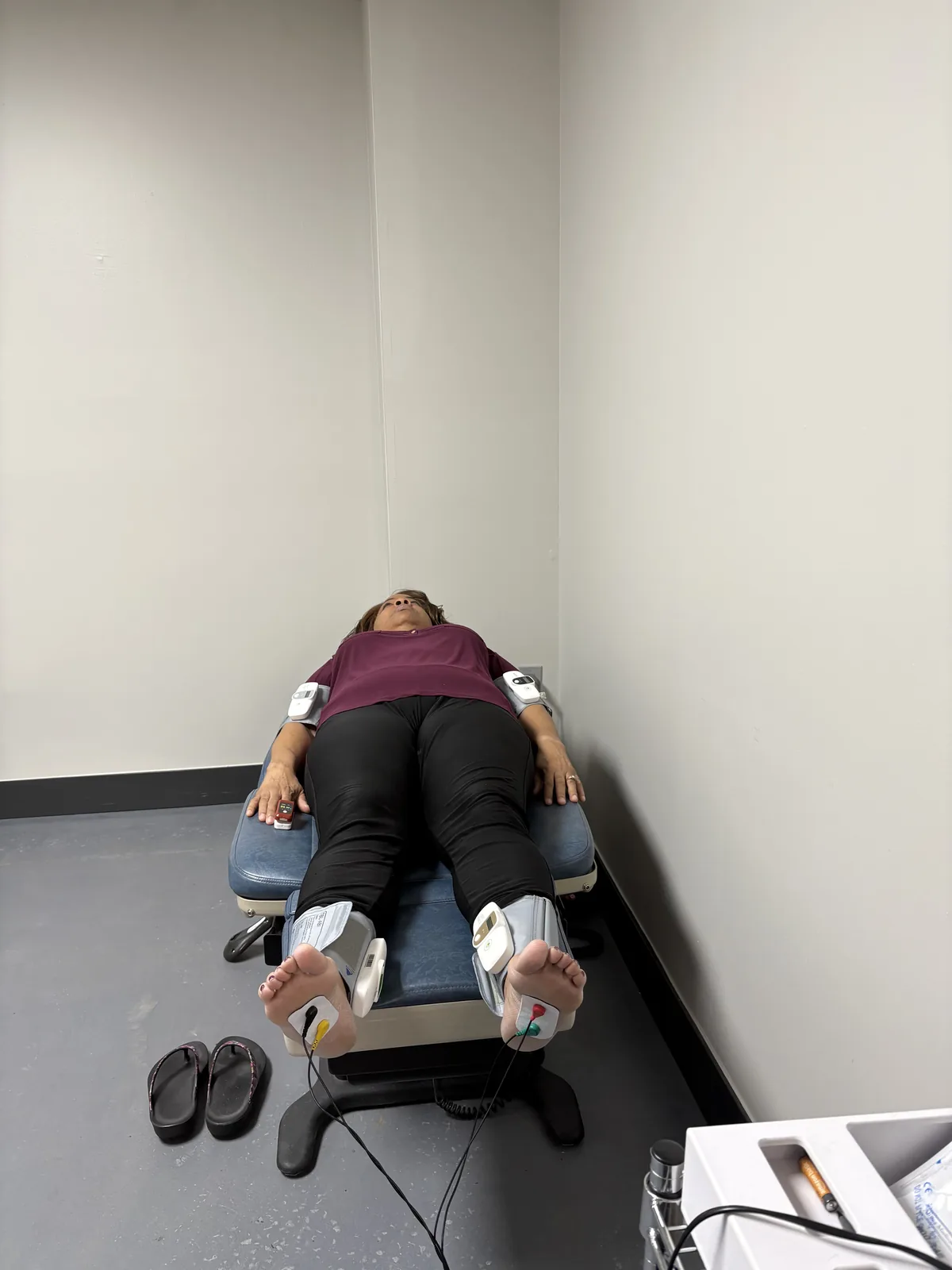
The trials above enrolled patients with painful diabetic peripheral neuropathy. Whether that describes you is a question the workup answers, not the label on the chart.
Electrodiagnostic testing
EMG and nerve conduction studies, done on site, show which fibers are involved. They can tell a body-wide neuropathy apart from a pinched-nerve pattern. That matters most when symptoms suggest more than one cause at once.
Balance testing is diagnostic only
Videonystagmography, or VNG, measures inner-ear balance. It shows whether a second system is adding to unsteadiness. It is a test, not a treatment.
Small fiber involvement
Small fiber neuropathy can cause burning and changes in feeling that a single test will not always catch. That is one reason the workup focuses on the cause profile, not on confirming the word neuropathy.
What else helps alongside duloxetine?
None of this is meant as an alternative to duloxetine. Class 4 photobiomodulation and class 3B cold laser are part of neuropathy care, and whole-body infrared is also offered. When walking and foot feedback are affected, whole-body vibration may be part of the wider plan.
For how these fit together for foot-predominant symptoms, see diabetic peripheral neuropathy treatment in St. Louis.
Frequently asked questions
How much pain relief does duloxetine actually provide?
A 2023 meta-analysis pooled 7 randomized controlled trials in adults with painful diabetic peripheral neuropathy. Duloxetine beat placebo on pain improvement by a mean difference of -0.89 (95% CI -1.09 to -0.69; P <.00001) [1]. That is a real effect and a modest one. That is why it usually sits alongside cause-focused care instead of replacing it. See peripheral neuropathy treatments for the feet.
What side effects most often make people stop?
In the same pooled trial data, severe side effects were rare. Nausea, sleepiness, dizziness, fatigue, constipation and lower appetite were common. About 12.6% of patients dropped out because of those common symptoms [1]. Tolerability, not efficacy, is usually the deciding factor. See small fiber neuropathy symptoms and testing.
If 60 mg is not enough, does going to 120 mg help?
The 2023 meta-analysis concluded that when a 60 mg dose is not enough, 120 mg may improve symptoms in painful diabetic peripheral neuropathy [1]. That is a physician decision. It depends on what else you take and on your liver, blood pressure and bleeding risk. See why a negative celiac test does not close the question.
What if my neuropathy is not only diabetic?
Then the evidence fits your situation less well, because these trials enrolled patients with painful diabetic peripheral neuropathy only. Nutrition, autoimmune, toxic and structural causes can run alongside diabetes. They change what the plan should put first. See why a normal B12 result can still miss a deficiency.
How can I reduce diabetic neuropathy pain?
Duloxetine gives a real but modest benefit over placebo in painful diabetic peripheral neuropathy. It quiets pain signaling. But it does not reach glycation damage, poor blood delivery through the vasa nervorum or a nutrient shortage. That is why our plan pairs pain control with work on the cause. That means restoring tiny-vessel blood flow, cutting glycation pathways and supplying the raw materials nerves need, all under physician evaluation.
Do I need nerve testing before taking duloxetine?
Testing tells you whether the trial evidence fits you. The duloxetine trials enrolled patients with painful diabetic peripheral neuropathy. A label on the chart does not prove that is what you have. EMG and nerve conduction studies, done on site at Regenerve, show which fibers are involved. They can tell a body-wide neuropathy apart from a pinched-nerve pattern.
Decide with a map, not by trial and error
Whether duloxetine belongs in your plan is easier to answer once you know which cause is doing the most damage. The free five-question Nerve Damage Score at regenerve.com/assessment is where that talk starts.
Sources
- Wu CS, Huang YJ, Ko YC, Lee CH, Efficacy and safety of duloxetine in painful diabetic peripheral neuropathy: a systematic review and meta-analysis of randomized controlled trials, Systematic Reviews (BMC), 2023, doi:10.1186/s13643-023-02185-6, https://pmc.ncbi.nlm.nih.gov/articles/PMC10031998/.
- Osama M, Javaid M, Shahid B, Heema, Jamali AG, Anwar B, Mushtaq T, Efficacy of duloxetine in the management of diabetic neuropathy: a prospective observational cohort study, Cureus, 2025, doi:10.7759/cureus.82382, https://pmc.ncbi.nlm.nih.gov/articles/PMC12089739/.