

Yes, peripheral neuropathy can improve. How much depends on which cause is damaging the nerve and how long that cause has been at work. Cleveland Clinic states that some types of neuropathy can be stopped or improved when they are found and treated quickly.1 For damage that has built up over years, real goals shift toward less burning, better protective feeling and safer walking.
Peripheral neuropathy is the term for any nerve damage outside the brain and spinal cord.1 That one definition is why the honest answer varies so much from person to person. The label tells you where the injury is. It does not tell you what is causing it.
Key takeaways
- Neuropathy is a category, not a diagnosis. What can improve depends on the driver, not the label.
- Most stalled cases are cases where the cause was never found. Treatment aimed at the wrong problem tends to stall.
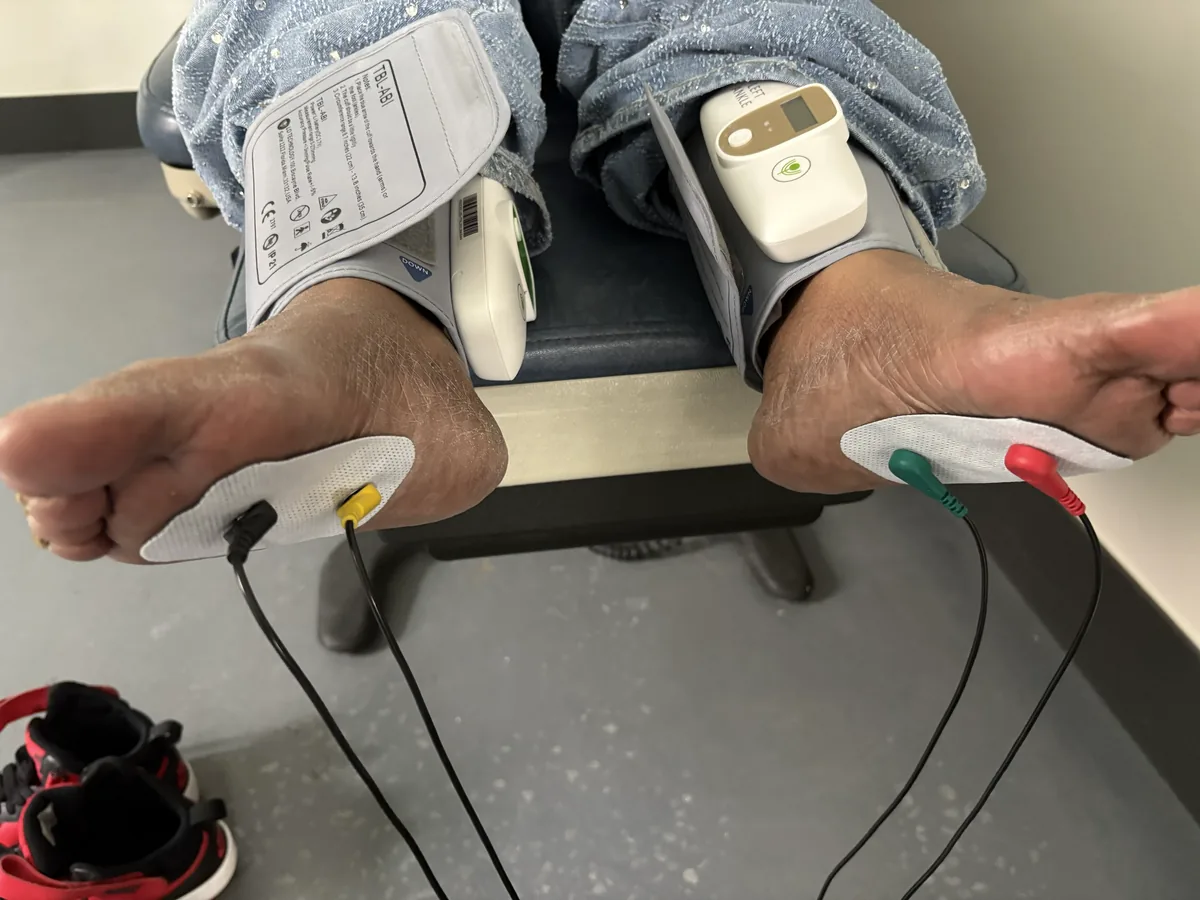
- Testing narrows the question. We do electrodiagnostic testing (EMG and nerve conduction studies) on site. It helps show which nerve fibers are involved.
- Timing matters. A cause caught early is a different problem from one that has been at work for a decade.
- For long-standing damage, the goals change. The targets are less burning, more reliable feeling and steadier walking, not nerve regrowth.
Why does neuropathy improve for some people and not others?
Two people can describe the same burning feet and the same numbness and have totally different problems underneath. One may have an active metabolic problem. Another may have a nutrient shortage, an autoimmune process, a toxic exposure or a pinched nerve.
That is why the useful question is not “how bad is my neuropathy.” It is “what is still injuring my nerves right now, and can that be reduced.”
The five driver categories we work through
- Metabolic drivers, including the nerve injury seen in diabetes
- Nutritional drivers, including B12 deficiency
- Autoimmune and infectious drivers
- Toxic and environmental drivers
- Structural and compressive contributors
Medicine that turns down the signal does not repair the wiring. If the cause is still active, symptoms tend to come back whenever the dose is lowered.
What does improvement in neuropathy look like?
Improvement is not one number. It is a set of changes that matter for daily life and for safety.
Goals that are realistic to discuss
- Less burning at night and fewer hot-coal sensations
- Better protective feeling, so you notice pressure before the skin breaks down
- Less numbness and more reliable feedback from the feet, which helps you walk more steadily
- Fewer electric, shooting misfires
- Holding steady, once exposure to the cause has been cut
What we do not promise
We do not promise nerve regeneration, reversal or a cure. When nerve injury has had years to build up, the honest goal is to heal the nerve’s environment and improve function. It is not a return to how your feet felt before symptoms started.
How is peripheral neuropathy diagnosed?
In diabetic peripheral neuropathy, StatPearls notes that peripheral neuropathy is mainly diagnosed clinically.2 That means your history, your symptom pattern and the exam carry much of the weight. Testing answers specific questions the exam raises.
Mapping before choosing a treatment
- On-site electrodiagnostic testing (EMG and nerve conduction studies) to check nerve function
- Cause workup across metabolic, nutritional, autoimmune, toxic and structural causes
- A plan that follows the finding, not a fixed sequence applied to everyone
Can diabetic neuropathy improve?
Diabetic peripheral neuropathy is a metabolic and small-vessel problem that happens to show up in the feet. How much can improve depends mostly on how much of that metabolic injury is still active. That is why sugar control and blood-vessel support sit inside the treatment plan, not beside it. Our approach for patients in this situation is on the diabetic peripheral neuropathy treatment page.
Why the timeline matters
High blood sugar drives a chemical reaction in the body. It is related to how sugar browns under heat. The longer that process runs unchecked, the more of the nerve’s support system it harms. You can read how that process damages nerve tissue in our article on glycation and nerve damage.
Where light-based and energy-based therapies fit
Class 4 photobiomodulation, class 3B cold laser and whole-body infrared are used at Regenerve as part of a broader plan aimed at the nerve environment. They are not a stand-alone answer, and they are not a substitute for identifying the driver.
When light therapy is added without knowing what is injuring the nerve, the result is a gamble. When it is added to a plan that also cuts the active cause, it has a clear job inside that plan.
When the diagnosis comes back “idiopathic”
Many people arrive with an idiopathic label. That usually means the cause was not found during the last workup. That is a fork in the road, because a cause that has not been found cannot be cut back.
Small fiber damage, nutrient shortage, gluten-related problems, autoimmune processes and toxic exposures are all worth working through before you accept that there is no cause. Some of these turn up on a second look because the first workup was aimed elsewhere.
Regenerve in the St. Louis region
Regenerve treats peripheral neuropathy for patients across the St. Louis region, Missouri and Illinois, including Edwardsville, Glen Carbon, Collinsville, Troy and Maryville. The clinic is at 4477 Woodson Rd #104, St. Louis, MO 63134, minutes from St. Louis Lambert International Airport.
Call (314) 886-5739 or text (314) 886-5902, or email info@regenerve.com. Hours are Monday through Thursday 9 a.m. to 4 p.m. and Friday 9 a.m. to 1:30 p.m.
Your next step
If you want a clear starting point, take the free five-question Nerve Damage Score. It shows which group of causes most likely applies to you. Your answers guide what we check first.
Frequently asked questions
Can peripheral neuropathy improve if both of my feet are affected?
It can. An even, feet-first pattern is common when a metabolic or nutrition cause is at work. Finding that cause is what changes the outlook. The workup, including on-site electrodiagnostic testing, is on our neuropathy services page.
My neuropathy was called idiopathic. Does that mean nothing can be done?
Not necessarily. Idiopathic usually means the cause has not been found yet. It does not mean there is no cause. See the hidden drivers of peripheral neuropathy.
Why do my symptoms feel worse than my test results suggest?
Small nerve fibers carry burning, pins and needles and temperature feeling. They can be injured while routine nerve conduction testing still looks close to normal. See small fiber neuropathy symptoms and testing.
What can I realistically expect for burning feet at night?
Burning at night is one of the symptoms most likely to respond when the cause is treated. The timeline varies, and no one can promise a specific result. See burning feet and nerve pain.
Can peripheral neuropathy ever go away?
For some types, yes. Cleveland Clinic states that some types of neuropathy can be stopped or improved when they are found and treated quickly.1 What decides it is which cause is injuring the nerve and how long it has been at work. When damage has built up over years, the real goals shift to less burning, better protective feeling and safer walking. They are not a return to how your feet felt before.
Can neuropathy be cured?
We do not promise a cure, nerve regeneration or reversal. Neuropathy is a category, not a diagnosis. So what can change depends on the cause underneath it. When a cause is caught early and cut back, holding steady and real symptom relief are fair to discuss. When nerve injury has had years to build, the honest goal is a healthier nerve environment and better daily function.
What makes peripheral neuropathy worse?
A cause that is still active and still injuring the nerve. That can be a metabolic problem such as diabetes, or a nutrient shortage such as low B12. It can be an autoimmune, infectious or toxic process, or a pinched nerve. In diabetes, high blood sugar drives a chemical reaction related to how sugar browns under heat. The longer it runs unchecked, the more of the nerve’s support system it harms.
What are the ways to treat peripheral neuropathy?
Treatment starts with finding what is injuring the nerve. We work through metabolic, nutritional, autoimmune, toxic and structural causes. We run EMG and nerve conduction studies on site. Then we build the plan around what we find. In diabetes, sugar control and blood-vessel support sit inside the plan. Class 4 photobiomodulation, class 3B cold laser and whole-body infrared each have a clear job within that plan. None is a stand-alone answer.
Sources
- Cleveland Clinic, “Peripheral Neuropathy,” Cleveland Clinic health library, last updated July 16, 2026, https://my.clevelandclinic.org/health/diseases/14737-peripheral-neuropathy
- Bodman MA, Dreyer MA, Varacallo MA, “Diabetic Peripheral Neuropathy,” StatPearls, Treasure Island (FL): StatPearls Publishing, last updated February 25, 2024, https://www.ncbi.nlm.nih.gov/books/NBK442009/