

Slow stomach emptying can be a sign of autonomic neuropathy, but it is not proof of it. Gastroparesis becomes a nerve question, not a stomach question, when it shows up with other autonomic clues. These include feeling lightheaded on standing, changes in sweating, changes in heart rate, or long-standing diabetes. When those cluster, the useful next step is to find which cause is injuring the nerves, not to treat the stomach alone.
The overlap can be measured. A cross-sectional study looked at 400 Saudi adults with type 2 diabetes at a primary health care center. Cardiovascular autonomic neuropathy was present in 15.3% of them, and gastroparesis symptoms in 6.3% [1].
Key takeaways
- Gastroparesis can reflect autonomic nerve damage, especially in diabetes and other metabolic causes. But it has causes outside the nerves too.
- Neuropathy is a category, not a diagnosis. So the workup looks for the main cause instead of stopping at the label.
- Autonomic and limb nerve symptoms can point to the same underlying process. That is why they are worth mapping together.
- Electrodiagnostic testing checks the nerves in the limbs. Autonomic damage is a separate question that needs its own workup plan.
- Nutrition, medicine, toxic, autoimmune, and structural causes all belong on the list, not only blood sugar.
What is gastroparesis, and how is it linked to the nerves?
Gastroparesis means the stomach empties more slowly than it should, with no physical blockage to explain it. The autonomic nervous system runs functions you do not consciously control. These include heart rate, blood pressure responses, sweating, and how the gut moves food along.
Because gut movement is under autonomic control, injury to autonomic fibers is a plausible route to slow emptying. That is why a digestive symptom can be a nerve clue.
The stomach-only trap
Treating the symptom can quiet the discomfort without touching what is causing it. If an autonomic cause is active, the problem goes on while the symptom is managed.
The other way is to ask which cause is doing the most damage right now. Then choose a workup and care that match that answer.
Why do autonomic neuropathy and gastroparesis occur together in diabetes?
Diabetic nerve injury is not one single process. It combines metabolic and tiny-vessel stresses that can reach several groups of nerves at once, including autonomic fibers.
The same primary care study of 400 Saudi adults with type 2 diabetes found more. Longer disease duration and high blood pressure were independently associated with cardiovascular autonomic neuropathy. Metformin use was an independent predictor of having at least one gastroparesis symptom [1]. When problems show up together like that, clinicians are pushed to think in whole systems, not in silos.
How common is gastroparesis in diabetes?
Less common than symptom questionnaires alone would suggest, and less consistent across studies than a single number implies. A systematic review and meta-analysis of gastroparesis in people with diabetes reported a combined estimated prevalence of 9.3%. It also noted high sensitivity, low robustness, and significant bias factors across the pooled studies [2].
That is a useful warning. Symptom rates, questionnaire-based rates, and coded diagnoses are three different measurements, and they do not agree with each other. It is another reason to weigh your pattern over a label.
What else besides diabetes can cause gastroparesis with nerve symptoms?
Autonomic damage can come with several causes of limb neuropathy, so the question is which one fits your history. These are the patterns we check when gut movement symptoms and nerve symptoms overlap.
Metabolic and nutritional drivers
The metabolic environment around a nerve affects how it signals, through sugar handling, oxidative stress, and fat pathways. Low nutrients belong in the same talk, including B12-related patterns when the history and labs support it.
If burning in the feet at night or dulled feeling is part of your story, that is a reason to review the whole nervous system, not the stomach alone.
Medication and toxin effects
Several medicines slow the gut, and several exposures affect nerve function. When gut and nerve symptoms show up together, it is worth carefully rebuilding the timing of each medicine and your exposure history.
This is also where cases labeled idiopathic often turn out to have an explanation. Unknown often means not yet mapped.
Autoimmune involvement
Immune-driven processes can affect autonomic function in some patients. If your history points that way, it becomes an important piece of the picture, not a footnote.
Gluten-related nerve injury
Not every digestive symptom is a digestive disease. Gluten-related nerve injury can show up as nerve symptoms alongside gut ones. A negative celiac test does not by itself close that question.
How is gastroparesis with nerve symptoms evaluated?
The first goal is to work out which cause is most active and which nerve pathways are involved. That order is what keeps the plan from becoming generic.
Symptom pattern first
The workup looks for clusters that suggest autonomic and limb nerve damage at the same time. Burning, temperature-related discomfort, and other small-fiber features change how the pathway is checked.
The timing of gut symptoms, the full medicine list, and your medical history all feed into that map.
Peripheral testing, including EMG and nerve conduction studies
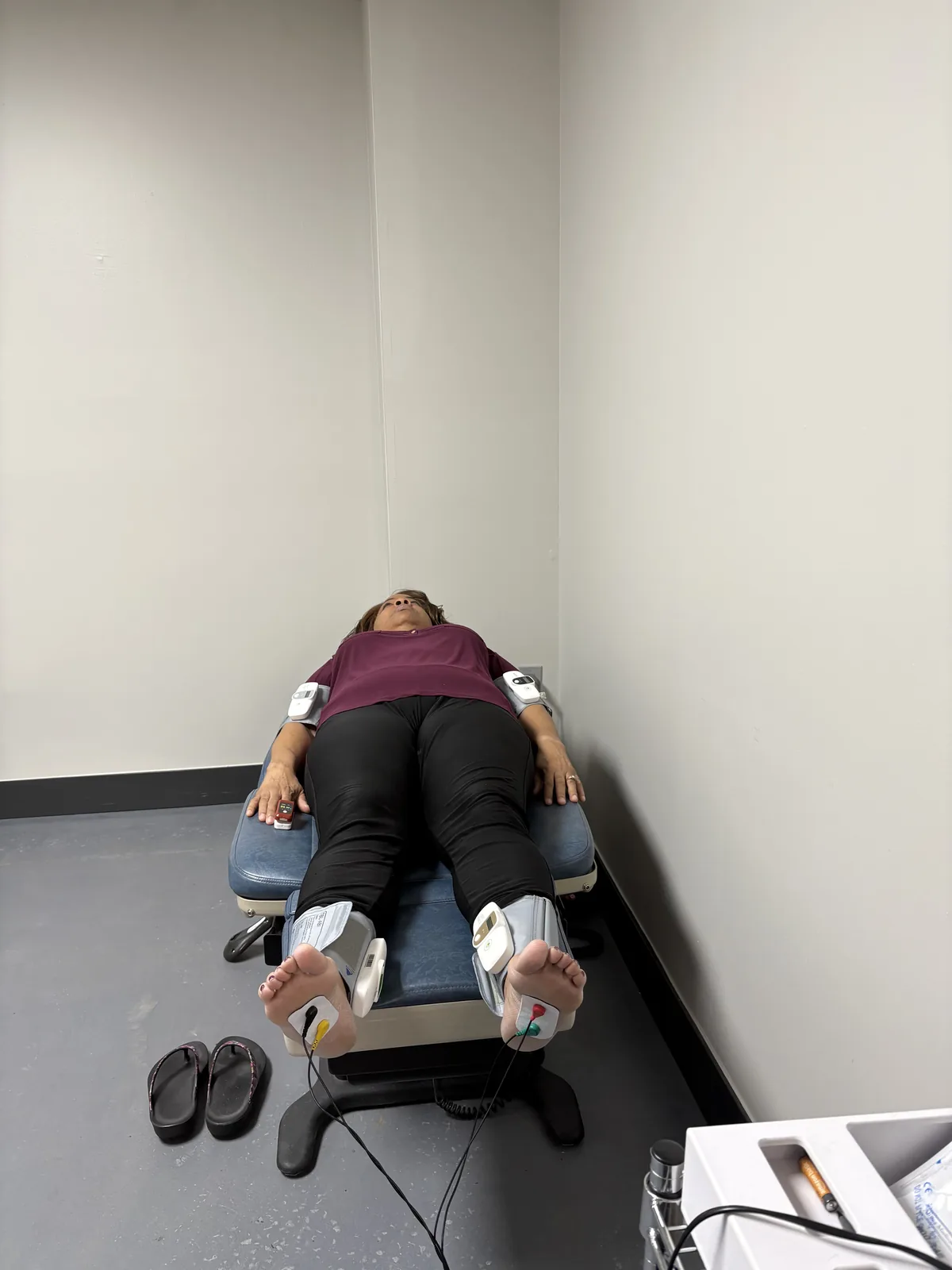
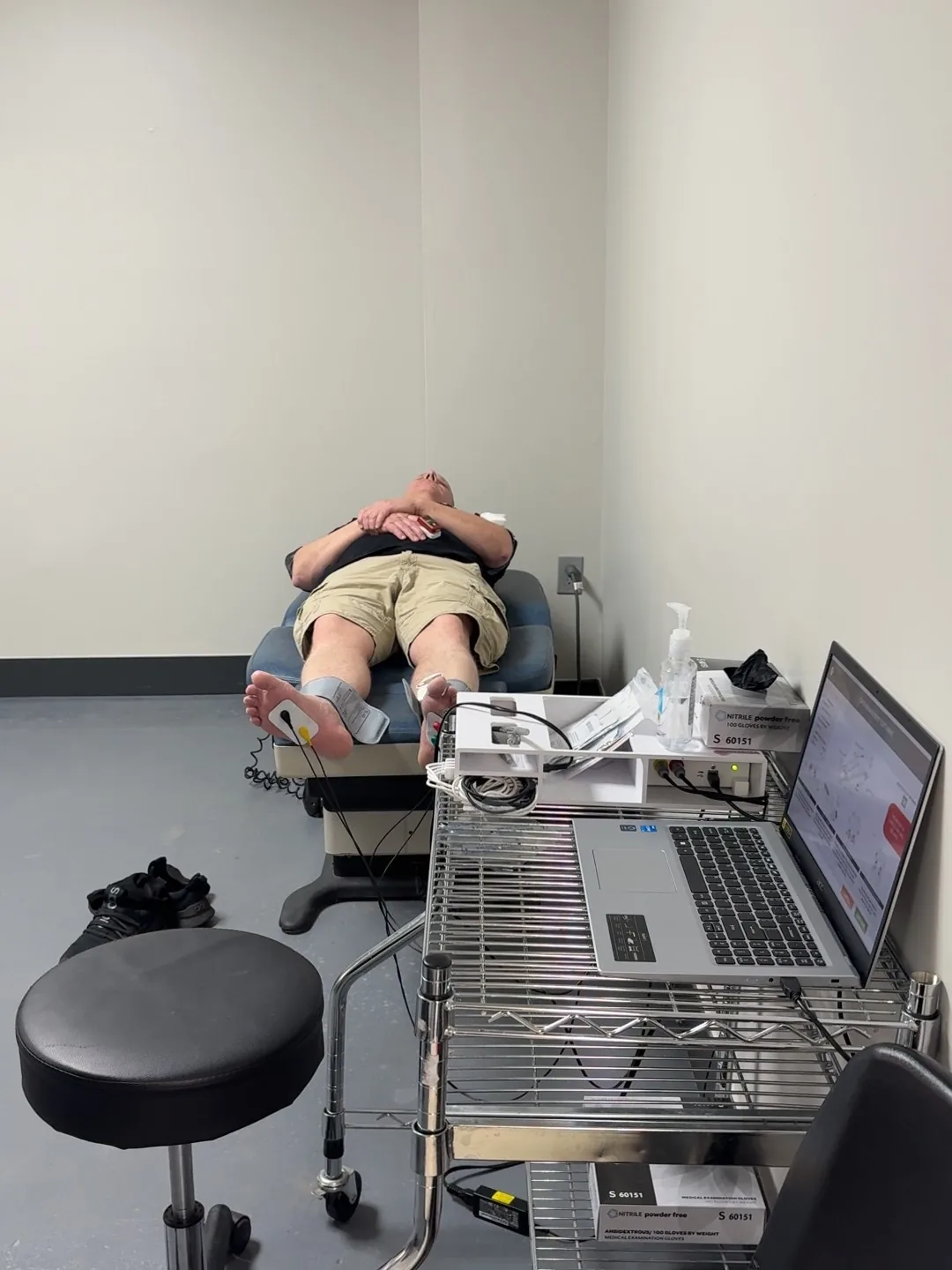
We do electrodiagnostic testing on site at Regenerve. It checks the nerves in the limbs, mainly the large fibers. It is used to support or refine an idea about the cause, not to settle the autonomic question.
The difference matters both ways. Autonomic symptoms can happen without classic limb nerve findings. And limb nerve findings can point to a body-wide cause affecting more than one nerve system.
Driver-focused care rather than symptom chasing
When gastroparesis and nerve symptoms show up together, the care plan targets what is causing both. Burning feet are usually not a foot problem. And gut symptoms in this setting are usually not only a stomach problem.
For a fuller account of how causes are separated from labels, read about the hidden drivers of peripheral neuropathy.
In-clinic therapies used at Regenerve
For nerve symptom patterns, the plan can include class 4 photobiomodulation, class 3B cold laser, and whole-body infrared. These always go alongside metabolic and nutrition care, guided by a physician’s evaluation. They support the environment around the nerve. They are not a treatment for slow stomach emptying.
Blood flow and nutrient delivery are the base of that work, because a nerve can only repair in an environment that supplies it. For how sugar handling plays into nerve injury, see how glycation damages nerves.
Why this matters for foot symptoms too
Many patients arrive asking about numbness and burning in the feet. Those limb symptoms can point to the same body-wide pathways that affect autonomic function. That is why we check the two together instead of sending them to different doctors.
Frequently asked questions
Can gastroparesis be a sign of autonomic neuropathy?
It can be. In 400 Saudi adults with type 2 diabetes at a primary health care center, cardiovascular autonomic neuropathy was present in 15.3% and gastroparesis symptoms in 6.3%. So the two do show up together in real groups of people. For one person, it comes down to whether other autonomic and nerve clues are present. For more on how metabolic causes are worked up, see diabetic and metabolic drivers of neuropathy.
Is gastroparesis the same thing as diabetic neuropathy?
No. Gastroparesis is slow stomach emptying, while diabetic neuropathy is nerve injury. They can overlap under shared metabolic and tiny-vessel stress, but they are not the same finding. Gastroparesis also has causes that have nothing to do with nerve injury. For the symptom words used to tell fiber types apart, see small fiber neuropathy symptoms and testing.
What testing helps when I have gastroparesis and nerve symptoms?
No single test answers every part of the question. The workup starts with the symptom pattern and history. It can include on-site EMG and nerve conduction studies when limb nerve damage is the question. Autonomic testing is handled separately. For what is available in clinic, see the services offered at Regenerve.
My workup was called idiopathic but I also have gut symptoms. What now?
Idiopathic means the cause has not been found with the testing done so far. It does not mean there is nothing to find. Nutrition, medicine, autoimmune, and toxic causes are all worth a second look when the history supports them. For one often-missed nutrition pattern, see why a normal B12 result can still miss neuropathy.
What are the first signs of autonomic neuropathy?
Autonomic nerves run functions you do not consciously control, so the early clues show up there. They include lightheadedness when you stand, changes in sweating, changes in heart rate, and slow stomach emptying. One clue alone proves little. When several show up together, especially with long-standing diabetes or burning and numbness in the feet, the nerves become the question worth answering.
Can medications cause gastroparesis symptoms?
Yes. Several medicines slow the gut, so the full medicine list and the timing of each drug are part of the workup. In the study of 400 Saudi adults with type 2 diabetes in primary care, metformin use was an independent predictor of having at least one gastroparesis symptom. Exposure history matters for the same reason, because several exposures affect nerve function.
Can an autoimmune problem affect the autonomic nerves?
It can. Immune-driven processes affect autonomic function in some patients. When the history points that way, autoimmune activity becomes an important piece of the picture, not a footnote. It sits on the same list as metabolic, nutrition, medicine, toxic and structural causes. The workup looks for whichever one is doing the most damage.
Can gluten cause both stomach and nerve symptoms?
Gluten-related nerve injury can show up as nerve symptoms alongside gut ones, so not every stomach complaint is a stomach disease. A negative celiac test does not by itself close that question. When gut and nerve symptoms come together, gluten belongs on the list of causes to check, along with B12-related and other nutrition patterns.
Take the next step
If gut and nerve symptoms are showing up together, the useful move is to map the cause instead of guessing. Start with the free five-question Nerve Damage Score. Regenerve is at 4477 Woodson Rd #104, St. Louis, MO 63134, minutes from St. Louis Lambert International Airport, serving the St. Louis region, Missouri and Illinois. Call (314) 886-5739 or text (314) 886-5902, or email info@regenerve.com.
Sources
- AlOlaiwi LA, AlHarbi TJ, Tourkmani AM. “Prevalence of cardiovascular autonomic neuropathy and gastroparesis symptoms among patients with type 2 diabetes who attend a primary health care center.” PLoS ONE. 2018;13(12):e0209500. https://pmc.ncbi.nlm.nih.gov/articles/PMC6303088/ (referenced for: 400 adults with type 2 diabetes in Saudi primary care; cardiovascular autonomic neuropathy present in 15.3%; gastroparesis symptoms present in 6.3%; disease duration and hypertension independently associated with CAN; metformin use an independent predictor of at least one gastroparesis symptom).
- Li L, Wang L, Long R, Song L, Yue R. “Prevalence of gastroparesis in diabetic patients: a systematic review and meta-analysis.” Scientific Reports. 2023;13:14015. https://www.nature.com/articles/s41598-023-41112-6 (referenced for: combined estimated prevalence of gastroparesis in people with diabetes of 9.3%, with high sensitivity, low robustness and significant bias factors noted by the authors).