

Both drugs have randomized trial evidence for nerve pain. A 2025 systematic review and meta-analysis in Frontiers in Pain Research compared them. Pregabalin produced greater improvement in pain scores than gabapentin from four weeks onward, through 12 to 14 weeks of follow-up [1]. The same review found no significant difference between the two in dizziness or sleepiness. But gabapentin showed more nausea and vomiting [1]. What the evidence does not support is treating either drug as an answer to the injury that is making the pain signal.
Nerve pain is common enough that the question comes up all the time. Its rate in the general population is estimated at 3.2% to 10.3% [1]. People across the St. Louis region, Missouri and Illinois ask us the same thing. Are these medicines worth taking, and what else should be happening at the same time?
Key points
- Gabapentin and pregabalin are gabapentinoids. They act on pain signaling. They do not correct the metabolic, nutritional, autoimmune, toxic or structural cause behind the injury.
- Head-to-head trial evidence favors pregabalin on pain intensity and on patient-reported quality of life over 12 to 14 weeks [1].
- Dizziness and sleepiness are the side effects most often reported for both. They are also the most common reasons people stop [2].
- Neuropathy is a category, not a diagnosis. The cause decides what else belongs in the plan.
- Start by finding which cause is doing the most damage. Then decide what role, if any, a gabapentinoid should play.
Is pregabalin better than gabapentin for nerve pain?
Pain intensity
The 2025 meta-analysis pooled randomized trials that compared the two drugs directly in nerve pain. Pregabalin showed significantly greater pain improvement than gabapentin at four weeks and onward. Most main comparisons fell at 12 to 14 weeks of follow-up [1].
A better average in pooled trial data is not a promise about your result. It tells you which drug is more likely to help. It does not tell you whether the cause of your symptoms is being treated.
Quality of life and function
The same review reported significantly greater improvement in general quality-of-life scores for pregabalin compared with gabapentin [1]. When burning feet disrupt sleep, a change in daily function can matter more than a change in one pain score.
We also look at what else a patient takes for pain, because the goal is to cut the overall load, not add another prescription to it.
What are the side effects of gabapentin and pregabalin?
Tolerability drives whether people keep taking a drug. In nerve pain trials, dizziness and sleepiness were the side effects reported most often for both pregabalin and gabapentin compared with placebo. They were also the most common reasons for stopping either medicine [2].
Are gabapentin and pregabalin riskier for older adults?
Dizziness and sleepiness raise fall risk and dull daytime activity. Before starting or raising a gabapentinoid, the review should cover other sedating medicines, alcohol use and the conditions that make those effects stronger.
Stopping matters too. As of June 2020, New Zealand’s Centre for Adverse Reactions Monitoring had received seven reports of withdrawal syndrome for pregabalin and seven for gabapentin [2]. Changes should be planned with the prescriber, not made suddenly.
Do gabapentin and pregabalin treat the cause of neuropathy?
Neuropathy is a category, not a diagnosis
Burning, numbness and electric feelings describe how damaged nerves misfire. They do not tell you what is damaging them. Metabolic injury, nutrient shortage, autoimmune attack, toxic exposure and pinched nerves all cause overlapping symptoms.
That is why we treat the terrain around the nerve, not only the signal coming off it. A gabapentinoid can quiet the alarm while the emergency goes on.
Where testing fits
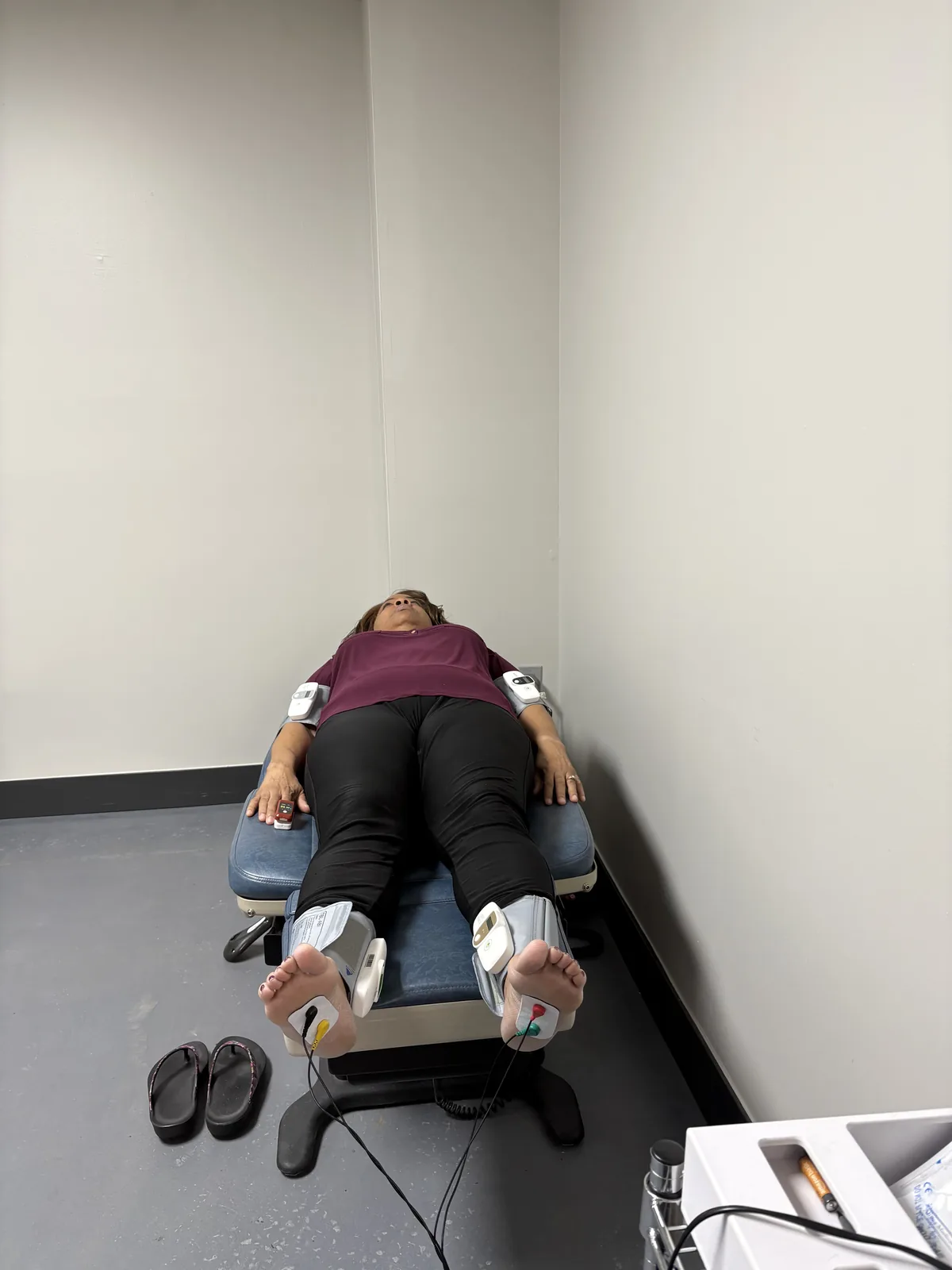
We do electrodiagnostic testing (EMG/NCS) on site. It helps map large-fiber damage. When the pattern suggests small fiber neuropathy, standard nerve conduction studies can be normal. So the workup has to go beyond them.
Balance complaints are checked separately with videonystagmography (VNG), a test of inner-ear balance. It is not a treatment.
What sits alongside gabapentinoids in our plans
Qutenza (capsaicin 8% patch)
Qutenza is FDA-approved in adults for neuropathic pain from postherpetic neuralgia and from diabetic peripheral neuropathy of the feet. It is applied in clinic by a clinician, is never dispensed for home use, and is repeated no more often than every three months.
In-clinic light and laser therapies
We also offer class 4 photobiomodulation, class 3B cold laser and whole-body infrared. These are part of a cause-based plan. They do not replace finding what is injuring the nerve.
Orthobiologic injections (PRP and BMAC) are offered in selected situations. The framework behind all of it is in the Regenerve Protocol for peripheral neuropathy.
Duloxetine is the other first-line pill for burning feet. Its trial results and limits are covered in duloxetine for painful diabetic neuropathy.
Frequently asked questions
Does pregabalin work better than gabapentin for neuropathic pain?
A 2025 systematic review and meta-analysis of randomized trials compared them. Pregabalin produced greater improvement in pain scores than gabapentin from four weeks onward through 12 to 14 weeks of follow-up. That is an average across trial groups, not a prediction for one person. That is why we map the cause first. See the hidden drivers of peripheral neuropathy.
What side effects do people notice first?
In nerve pain trials, dizziness and sleepiness were the side effects reported most often for both pregabalin and gabapentin compared with placebo. They were also the most common reasons people stopped treatment. In older adults those effects can affect balance and daytime function, so they are worth reviewing at every visit. See small fiber neuropathy symptoms and testing.
Is there a non-oral option for burning feet?
Qutenza (capsaicin 8% patch) is FDA-approved in adults for neuropathic pain from postherpetic neuralgia and from diabetic peripheral neuropathy of the feet. It is applied in clinic by a clinician, never dispensed for home use, and repeated no more often than every three months. See Qutenza (capsaicin 8% patch).
Should I have nerve testing before starting a gabapentinoid?
Electrodiagnostic testing (EMG/NCS) helps show whether the pattern fits a large-fiber neuropathy and where the problem sits. It tells you less when the symptoms point to small fiber damage. So the testing plan should follow the symptom pattern. We do EMG/NCS on site; see our services and on-site testing.
Can I stop gabapentin or pregabalin on my own?
No. Withdrawal reactions have been reported to national drug-safety monitoring for both medicines. So any change should be planned with the prescriber, not made suddenly. Symptom control and work on the cause usually need to be adjusted together. See peripheral neuropathy treatments for the feet.
Is it okay to switch from gabapentin to pregabalin?
A switch can make sense, but plan it with your prescriber instead of doing it on your own. In pooled trials, pregabalin improved pain scores and quality of life more than gabapentin over 12 to 14 weeks. Withdrawal reactions have been reported for both medicines, so neither should be stopped suddenly. And the change should fit a plan aimed at the cause.
Which is safer, gabapentin or pregabalin?
Their safety profiles are close. The 2025 meta-analysis found no significant difference between them in dizziness or sleepiness, though gabapentin showed more nausea and vomiting. Dizziness and sleepiness are also the most common reasons people stop either drug. Withdrawal reactions have been reported for both. In older adults, those effects raise the risk of falls.
What other treatments are used alongside gabapentin or pregabalin?
At Regenerve, a gabapentinoid is one piece of a cause-based plan, not the whole plan. Alongside it we may use Qutenza (capsaicin 8% patch) for diabetic nerve pain in the feet, class 4 photobiomodulation, class 3B cold laser and whole-body infrared. In selected situations we may add PRP or BMAC injections. The first job is finding which cause is injuring the nerve.
Next step
Five questions show which cause is doing the most damage right now. Start there. Then decide what role gabapentin or pregabalin should play in your plan.
Sources
- Mayoral V, et al. Pregabalin vs. gabapentin in the treatment of neuropathic pain: a comprehensive systematic review and meta-analysis of effectiveness and safety. Frontiers in Pain Research (Lausanne). 2025. https://pmc.ncbi.nlm.nih.gov/articles/PMC11747324/
- Medsafe (New Zealand Medicines and Medical Devices Safety Authority). Spotlight on gabapentin and pregabalin for neuropathic pain. Prescriber Update 42(1):3, 4 March 2021. https://www.medsafe.govt.nz/profs/PUArticles/March2021/Spotlight-on-gabapentin-and-pregabalin-for-neuropathic-pain.html