
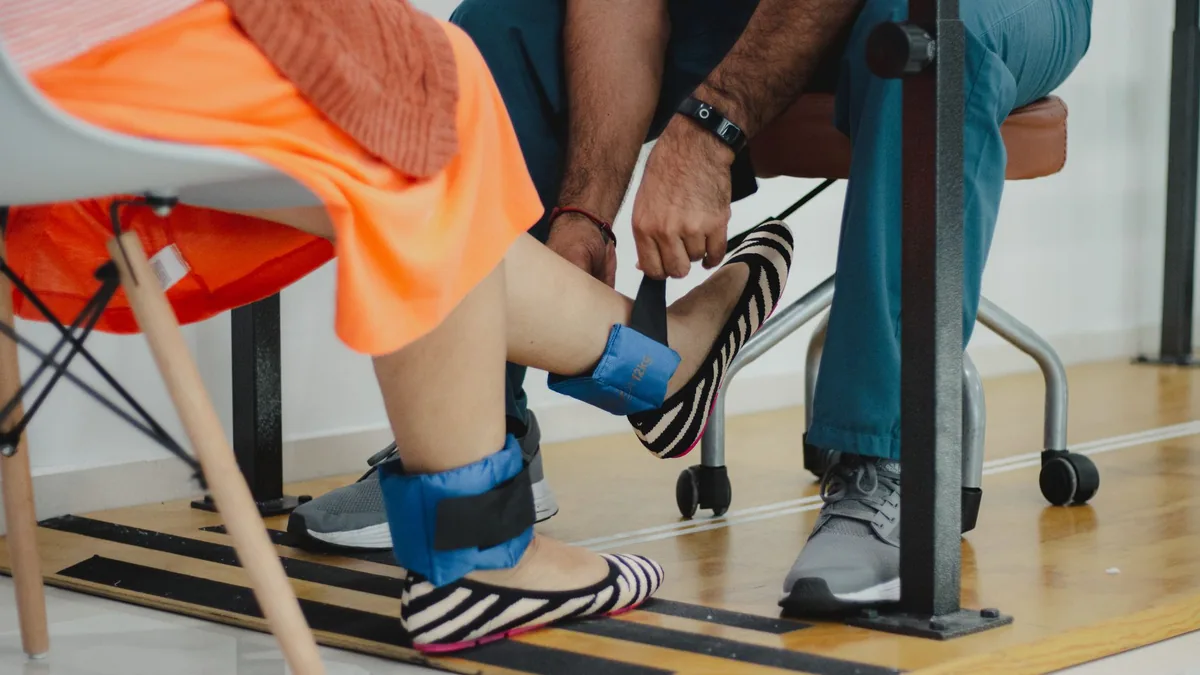
When peripheral neuropathy dulls protective feeling, footwear stops being a comfort choice and becomes injury prevention. The shoe you want holds the heel still and leaves room at the toes. It spreads pressure out instead of focusing it, and it never needs breaking in. Pair that shoe with a look at both feet every single day, because a numb foot no longer reports its own injuries.
Knowing this is not the same as doing it. A cross-sectional study looked at 212 patients with diabetes in a row at a rural hospital in Tamil Nadu, southern India. Of them, 75% scored well on foot-care knowledge. Yet only 67% scored well on foot-care practice. A good score meant at least half the possible points [1].
Key takeaways
- Dulled protective feeling changes how rubbing, pressure, and heat register. So skin injury can start before you feel anything.
- Foot care starts with finding the cause behind your neuropathy, because neuropathy is a category, not a single diagnosis.
- Daily checks are the safety system that stands in for the warning your nerves can no longer give.
- Fit matters more than brand: room at the toes, a heel that does not slip, and closure you can control.
- Electrodiagnostic testing helps show which nerve fibers are involved. That shapes how hard the foot needs to be protected.
- Burning feet at night and dulled feeling can exist together. So comfort at rest is not proof that the skin is safe during the day.
Why do shoes matter so much with peripheral neuropathy?
Footwear is part of the mechanical side of neuropathy care. The nerve fibers that report pressure, heat, and rubbing are exactly the ones peripheral neuropathy tends to hit first in the feet.
When protective feeling drops, the foot keeps taking small injuries long after they would once have hurt. That is the silent injury path. It is why a shoe problem can become a skin problem without a single painful moment.
Three ways the wrong shoe injures a numb foot
- Friction and shear cause small skin injuries that never register as pain.
- Focal pressure piles stress on one spot, especially where there is a bunion, a hammertoe, or a thickened nail.
- Heat and trapped moisture soften and break down skin. They can also make burning feel worse in the evening.
What your symptom pattern changes in real life
Peripheral neuropathy of the feet often hits the longest nerves first, so the toes go first. Small-fiber symptoms tend to be burning, electric, or hot-coal feelings. Large-fiber loss shows up as numbness and dulled protective feeling.
Those two patterns call for different focus. If you cannot reliably feel injury, prevention has to come before comfort. For how these symptoms show up and what they suggest, see peripheral neuropathy of the feet symptoms.
How should shoes fit when you have neuropathy?
Good footwear for a numb foot is a no-surprises zone. It is stable, supportive, and predictable from the first minute you wear it. Fit does more of that work than any material or brand claim.
Fit checks to run before you wear a shoe
- Toe box space: your toes should not feel compressed at any point in the stride.
- Heel stability: the heel should not lift or slide, because sliding is what causes shear.
- Closure control: laces or straps should let you keep pressure even across the top of the foot.
- No break-in period: do not break in shoes on numb feet. If something rubs, stop wearing them and look at the skin.
What to avoid when sensation is reduced
- Loose sandals that let the foot slide side to side.
- Hard, narrow shoes that concentrate pressure on a deformity.
- Soft slippers with no structure, which let the foot shift and rub.
- Any shoe that feels fine at first and uncomfortable later, since a delayed or muted signal is exactly what neuropathy causes.
Daily foot inspection is your safety system
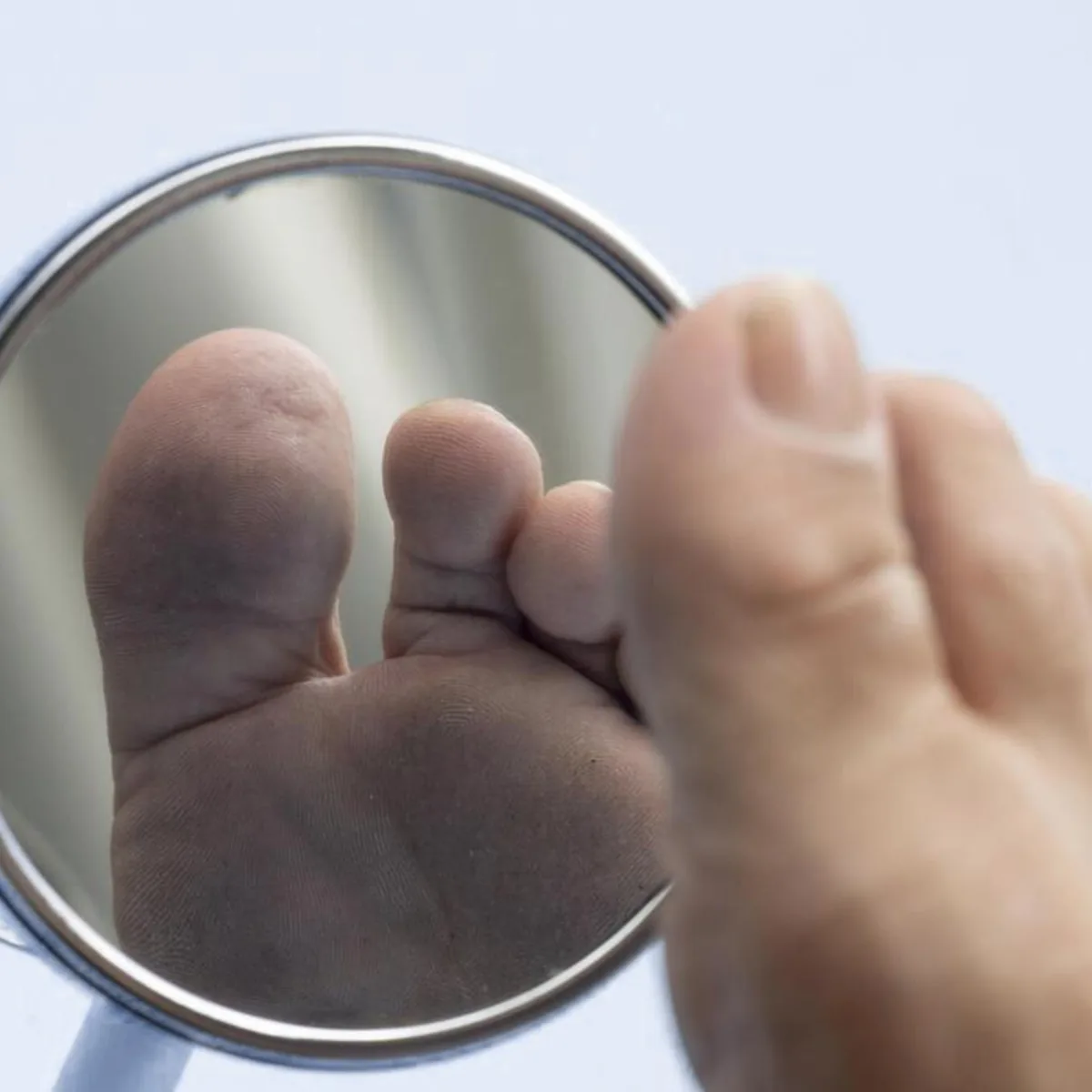
Check both feet at the same time every day, including between the toes and across the sole. If you cannot see the sole, use a mirror and a bright light, or ask someone to look for you.
Checking matters most for the people who feel the least. It also matters when burning at night is the loudest symptom, because an injury picked up in the morning may give no warning at all.
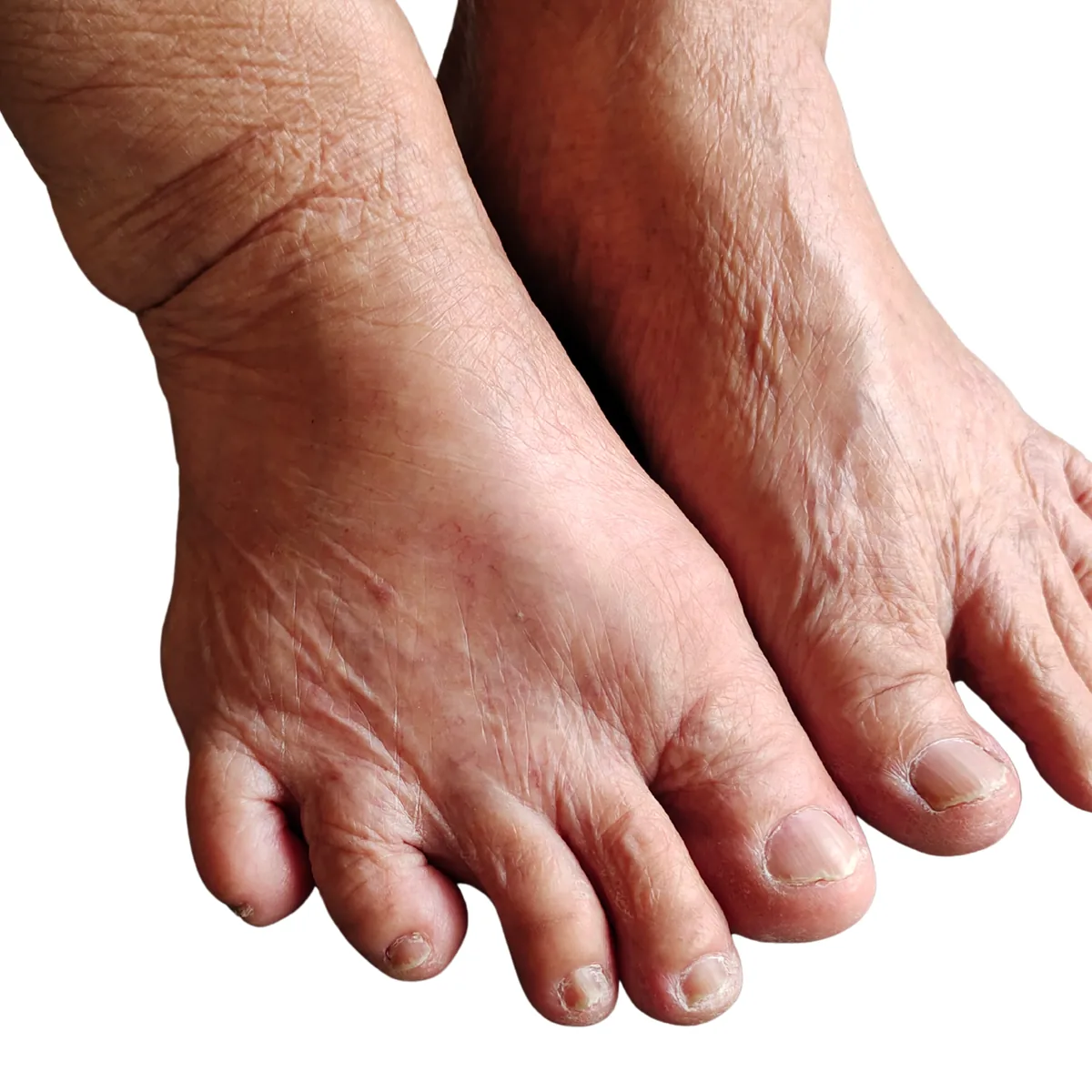
What causes peripheral neuropathy in the feet?
Neuropathy is a category, not a diagnosis. Two people can have the same numbness in the toes and totally different problems behind it. That is why the workup looks for the cause first.
The feet go first when the longest nerves are hit, so they are where an untreated cause shows up soonest. That is the case for mapping the cause instead of only managing the feeling.
Drivers that change footwear and foot-care priorities
- Metabolic and diabetic drivers, where poor tiny-vessel blood supply and metabolic stress affect the tissue around the nerve.
- Nutritional drivers, including B12-related patterns that can add to nerve problems.
- Gluten-related nerve injury, which can matter even when celiac testing is negative.
- Toxic and medication-related exposures, including alcohol-related nerve injury and chemotherapy history.
- Autoimmune and structural contributors, which can cause patterns that behave differently in the foot.
- Small-fiber predominant patterns, which tend toward burning. Large-fiber loss, by contrast, raises the risk of a wound you do not notice.
For how these causes are told apart in practice, read about the hidden drivers of peripheral neuropathy.
Diabetes, perfusion, and skin safety
Diabetic peripheral neuropathy involves both metabolic and tiny-vessel stress. The feet are simply where it shows. When less oxygen reaches the nerve and skin, healing after a small injury is slower and less reliable.
What this means for footwear choices
- Choose stability: a stable shoe cuts shear during walking, which is the injury most often missed.
- Inspect earlier: look for redness, blisters, and callus even when nothing hurts.
- Manage moisture: dry skin cracks and damp skin gets soggy, and both increase rubbing damage.
- Plan around deformity: thickened nails and bunions shift pressure and may call for a modified shoe or insert.
When should you see a doctor about a neuropathic foot problem?
- An open sore, or redness that is spreading.
- New swelling, especially with a change in skin temperature.
- Blisters that keep returning in the same spot in the same shoe.
- A sudden change in numbness or feeling after a change in footwear.
Which tests help plan foot protection?
Foot protection gets more precise once the fiber type and the cause are clearer. Vague labels lead to vague plans.
Electrodiagnostic testing and why the pattern drives the plan
Electrodiagnostic testing means EMG and nerve conduction studies. We do it on site at Regenerve. It gives information about large-fiber damage. Small-fiber damage is not always picked up the same way, so we choose the tests to match the question being asked.
How in-clinic therapies connect to foot protection
Regenerve uses class 4 photobiomodulation, class 3B cold laser, whole-body infrared, and metabolic and nutrition care as the medical side of the plan. None of these replaces a well-fitted shoe or a daily check.
The two halves do different jobs. The medical plan works on the environment around the nerve. The shoe and the mirror work on the physical harm that happens between visits.
Putting it together in the St. Louis region
Three things run side by side: protect the foot physically, find the cause medically, and check your feet every day. Dropping any one of them tends to undo the other two.
How a foot protection plan gets built
- Screen for the most likely main cause with the free five-question Nerve Damage Score, then review the result together.
- Clarify the nerve fiber pattern with testing that fits your symptoms.
- Build the footwear and foot-check plan around your level of feeling, any deformities, and your risk factors.
- Reassess and adjust, because both the cause and the foot can change over time.
Frequently asked questions
What kind of shoes help when you have peripheral neuropathy?
Look for stable support, a roomy toe box, and a closure that stops the foot from sliding, since rubbing and focused pressure are what damage skin that cannot report pain. Fit is checked on your foot, not on the box. For how footwear fits with the rest of the plan, see peripheral neuropathy treatments for the feet.
Should numbness be treated with medication or with footwear first?
Both have roles, but physical protection comes first, because medicine does not restore the warning signal that prevents a wound. Numb feet need a shoe and a daily check before they need anything else. For what numbness and burning each suggest, see small fiber neuropathy symptoms and testing.
Is walking safe when my feet are numb?
Usually yes, in well-fitted shoes and with both feet checked before and after. Any open wound, or a hot and swollen foot, needs a checkup before weight-bearing activity. For a step-by-step approach to movement, see exercises for peripheral neuropathy in the feet.
What should I do if my feet burn at night but the skin looks normal?
Burning at night is common in small-fiber patterns and does not mean an injury will be visible. So daily checks and friction control still apply. It is also a reason to look for the cause instead of settling for symptom control. For what a workup includes, see the services offered at Regenerve.
Do shoes for neuropathy really work?
Shoes do a physical job. They cut down the rubbing, shear and focused pressure that injure skin you can no longer feel. Fit matters more than brand. Look for room at the toes, a heel that does not slip and a closure you control. A shoe does not treat the nerve, which is why the medical plan and the shoe work side by side.
What are the worst shoes for people with neuropathy?
Loose sandals that let the foot slide, hard narrow shoes that press on a bunion or hammertoe, and soft slippers with no structure all allow rubbing and pressure you may not feel. So does any shoe that needs breaking in, or one that feels fine at first and uncomfortable later. If a shoe rubs, stop wearing it and check the skin.
How often should you check your feet with neuropathy?
Every day, at the same time, including between the toes and across the sole. Use a mirror and a bright light, or ask someone to look if you cannot see the bottom of your foot. Look for redness, blisters and callus even when nothing hurts, because a numb foot no longer reports its own injuries.
Does diabetes change what shoes you need?
It raises the stakes. Diabetic neuropathy adds tiny-vessel stress, so small injuries heal more slowly. Choose a stable shoe to cut shear. Keep the skin neither too dry nor too damp. Plan around thickened nails or bunions, which may call for a modified shoe or insert. Check early, before anything hurts.
Take the next step
If you want a plan matched to your cause instead of a one-size shoe tip, start with the free five-question Nerve Damage Score. Regenerve is at 4477 Woodson Rd #104, St. Louis, MO 63134, minutes from St. Louis Lambert International Airport. We serve the St. Louis region, Missouri and Illinois.
Sources
- George H, Rakesh PS, Krishna M, Alex R, Abraham VJ, George K, Prasad JH. “Foot Care Knowledge and Practices and the Prevalence of Peripheral Neuropathy Among People with Diabetes Attending a Secondary Care Rural Hospital in Southern India.” Journal of Family Medicine and Primary Care. 2013;2(1):27–32. https://pmc.ncbi.nlm.nih.gov/articles/PMC3894008/ (referenced for: 212 consecutive patients with diabetes; 75% good foot-care knowledge score; 67% good foot-care practice score).