
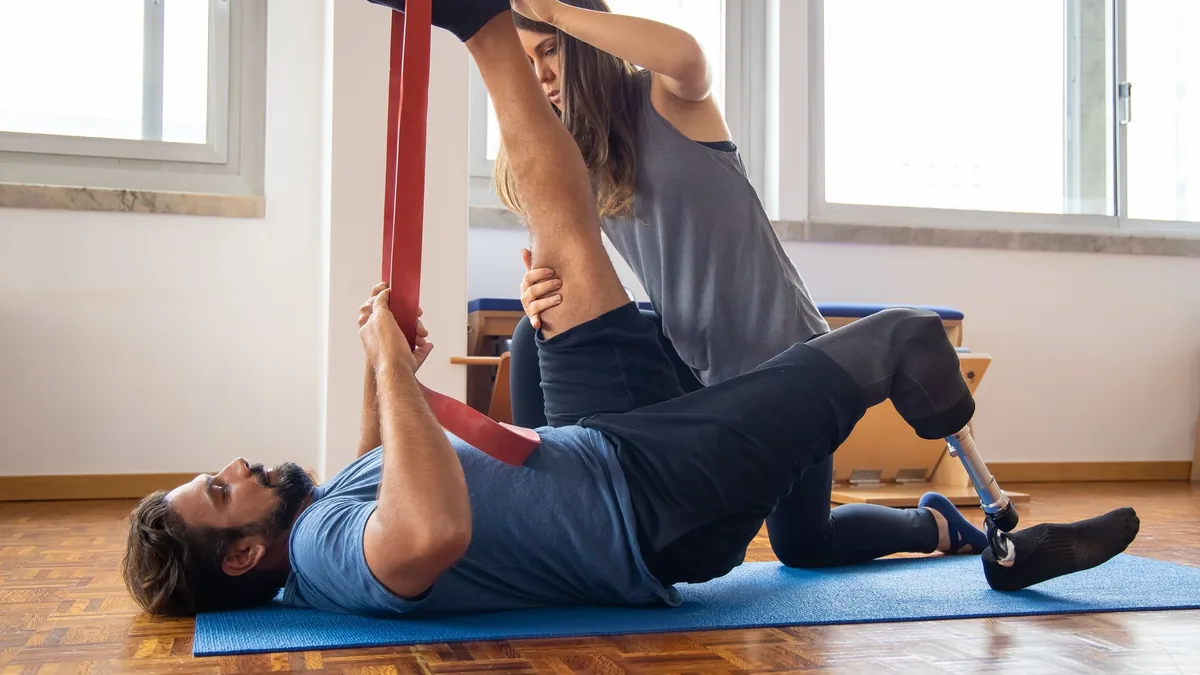
The research supports exercise as rehabilitation for peripheral nerve health, not as nerve repair. Clinical evidence shows positive trends favoring physical therapy after peripheral nerve damage. Those trends were measured by range of motion, muscle power grade and pain [2]. A University of Michigan study looked at nearly 2,900 people who wore wrist activity monitors. Those who spent more time in moderate or vigorous activity were less likely to have peripheral neuropathy [3].
What the research does not show is a path to regrown nerves in people. That difference is the whole point of this article.
How does exercise help peripheral nerves?
Peripheral nerves are long tissue that costs a lot of energy to run. Day after day, they depend on oxygen delivered through the vasa nervorum (the tiny vessels that feed nerves) and on steady metabolic conditions. Both of those are body-wide, not local.
Exercise acts on exactly those systems. Among adults in general, people who are not active enough have a 20% to 30% higher risk of death than people who are active enough [1]. That is a blunt way of saying that the systems exercise touches are the ones that matter most.
What does the research say about exercise and nerve regeneration?
A 2021 review in Heliyon looked at exercise and peripheral nerve regeneration, in animal models and in clinical use. In animal models it reported more axon regeneration and more nerve regrowth into muscle after nerve injury. It also reported better recovery of strength and muscle mass, and higher levels of nerve growth factors [2].
In humans, the same review found clinical evidence of positive trends favoring physical therapy after peripheral nerve damage. That was based on improvement in range of motion, muscle power grade and pain [2]. Those are measures of function. They are not the same as a measured nerve-repair result.
Animal results are not human promises
A result in a rodent model tells you a mechanism is possible. It does not tell you the mechanism works at a useful scale in a person with twenty years of metabolic disease behind them. Here, exercise is used as rehabilitation and as metabolic and blood-vessel conditioning. It is not presented as nerve repair.
Does exercise intensity matter for diabetic neuropathy?
About 30% of people with diabetes have diabetic peripheral neuropathy, and 30% to 40% of those have painful diabetic peripheral neuropathy [3]. Guidelines have recommended physical activity to help prevent diabetic peripheral neuropathy. But they have not said how much or how hard. That is what the Michigan work set out to answer.
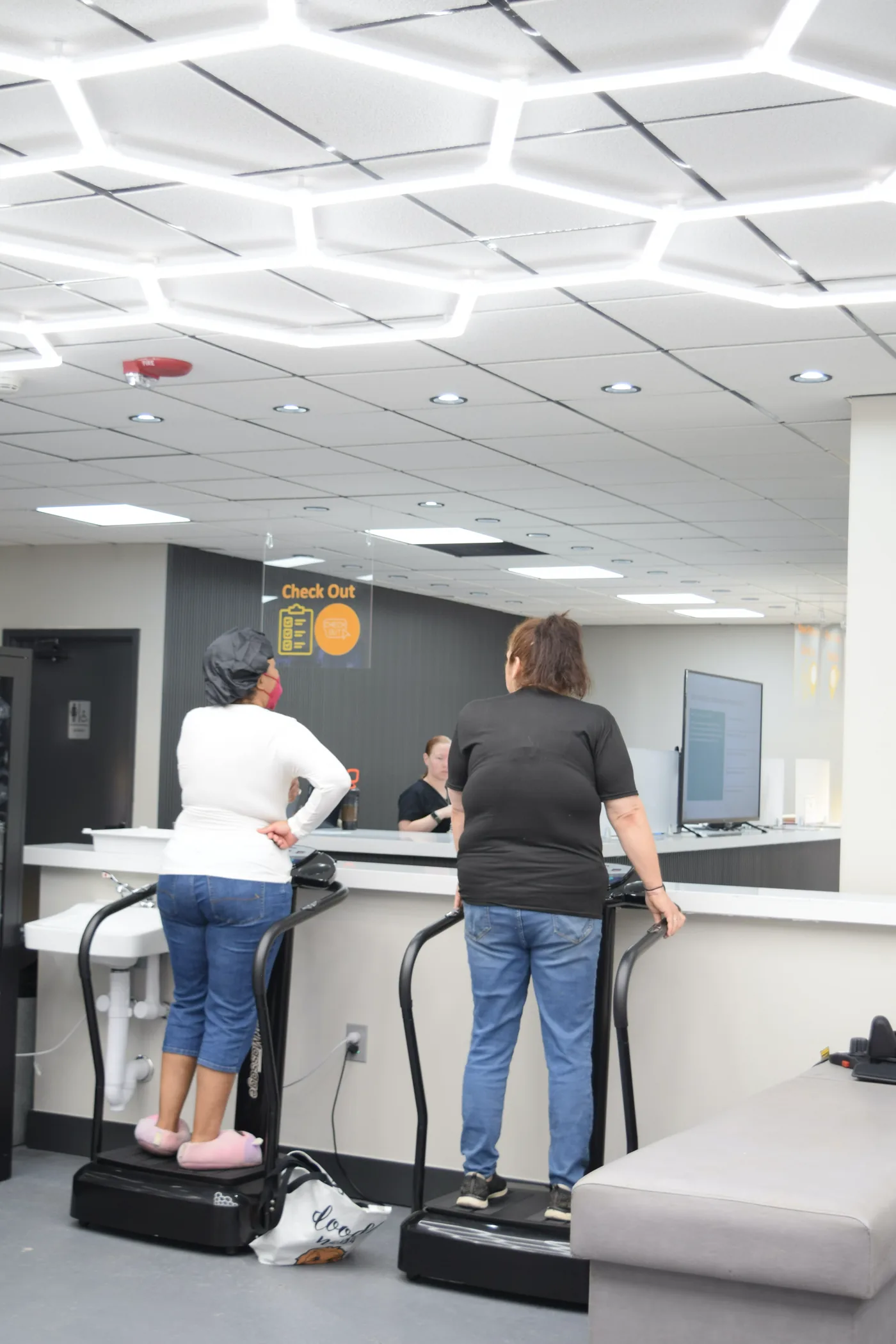
They studied nearly 2,900 people wearing wrist activity monitors. More time in moderate or vigorous activity was associated with a lower likelihood of peripheral neuropathy [3]. Association is not causation. And the study measured activity; it did not prescribe it.
Exercise lands better when the terrain is being managed
If the metabolic causes stay active, activity is working against a headwind. That is why we pair movement with metabolic and small-vessel care, instead of offering it as a standalone instruction.
What kinds of exercise help peripheral neuropathy?
The weekly plan at Regenerve combines four parts. Endurance work helps metabolism and blood vessels. Balance and body-awareness training helps stability and function. Then come strength work and daily foot and ankle mobility.
The common mistake is adding intensity too fast. Consistency comes first, then progress, while you watch your symptoms along the way. The full weekly plan and how to adjust it is in exercises for peripheral neuropathy in the feet.
When symptoms flare
Some people feel worse before they feel better. If burning gets worse from one session to the next, the plan gets adjusted instead of pushed through. Usually that means less load and shorter sessions while keeping the same frequency.
Matching the plan to the driver
Neuropathy is a category, not a diagnosis. The best plan depends on what is stressing the nerve. Even when diabetes is present, other causes are often active at the same time. These include medicine effects, alcohol, low nutrients, autoimmune causes, toxic exposures and pinched nerves.
Idiopathic is a label, not an answer
When symptoms are filed as idiopathic, the upstream causes are still worth looking for. Improving the terrain means treating whatever made it fail.
Chemotherapy-induced neuropathy needs pacing
Chemotherapy-induced neuropathy can last and can be sensitive to load. Exercise may still have a role. But the plan has to respect recovery time, and new numbness should be checked before you push through it.
Nutritional and autoimmune drivers change what else you do
When a functional B12 deficiency or a gluten-related problem is driving the injury, exercise alone has limited power to correct it. The shortage has to be treated on its own terms.
Which tests should come before balance training?
Balance training does not help much if the unsteadiness comes from somewhere you have not found. Electrodiagnostic testing, done on site, maps nerve damage. It can tell a body-wide neuropathy apart from a pinched-nerve pattern. Videonystagmography, or VNG, measures inner-ear balance and is a test only.
Frequently asked questions
Can exercise repair damaged nerves?
Animal studies show the idea is plausible, including more axon regeneration and nerve regrowth into muscle. Clinical evidence shows positive trends favoring physical therapy after peripheral nerve damage for range of motion, muscle power grade and pain [2]. Animal findings do not carry over to people automatically, and no one should promise nerve regrowth. See peripheral neuropathy treatments for the feet.
Is walking enough, or does intensity matter?
A University of Michigan study looked at nearly 2,900 people who wore wrist activity monitors. Those who spent more time in moderate or vigorous activity were less likely to have peripheral neuropathy [3]. Intensity appears to matter. But the practical starting point is whatever you can repeat. See peripheral neuropathy of the feet symptoms.
What if exercise makes my feet burn more?
Then the plan needs adjusting, not pushing through. Cut the load, shorten the session, and keep the frequency. That usually keeps the metabolic benefit without setting off the flare. See the neuropathy services offered at Regenerve.
Could my instability be something other than neuropathy?
It can be. Pinched-nerve patterns such as carpal tunnel and sciatica cause overlapping symptoms. Inner-ear balance is a separate question, which VNG testing checks. See carpal tunnel, sciatica and double crush.
What is the best exercise for peripheral neuropathy?
There is no single best exercise. The weekly plan at Regenerve combines endurance work for metabolism and blood vessels, balance and body-awareness training for stability, strength work, and daily foot and ankle mobility. The right mix depends on which cause is doing the most damage. Start with what you can repeat steadily. Then step it up while watching your symptoms.
What should you avoid when exercising with neuropathy?
The most common mistake is adding intensity too fast. Build consistency first, then step it up. If burning gets worse from one session to the next, do not push through it. The plan gets adjusted, usually by cutting load and session length while keeping the same frequency. New numbness is a reason to get checked before you train harder.
Is exercise safe with chemotherapy-induced neuropathy?
Exercise may still have a role. But chemotherapy-induced neuropathy can last and can be sensitive to load. The plan has to respect recovery time and move at a slower pace. If new numbness shows up, get checked before pushing through it. Electrodiagnostic testing, done on site at Regenerve, maps how the nerves are involved.
Can exercise fix neuropathy caused by a B12 deficiency?
Not on its own. When a functional B12 deficiency or a gluten-related problem is driving the nerve injury, exercise has limited power to correct it. The shortage has to be treated on its own terms. Exercise still helps as rehabilitation and as metabolic and blood-vessel conditioning. But it works best alongside care aimed at the actual cause.
Start with the driver
How fast to step up endurance, how much balance work to put first, and what else needs to happen alongside it all depend on which cause is doing the most damage. The free five-question Nerve Damage Score at regenerve.com/assessment is the first step.
Sources
- World Health Organization, Physical activity (fact sheet), updated 26 June 2024, https://www.who.int/news-room/fact-sheets/detail/physical-activity.
- Maugeri G, D’Agata V, Trovato B, Roggio F, Castorina A, Vecchio M, Di Rosa M, Musumeci G, The role of exercise on peripheral nerve regeneration: from animal model to clinical application, Heliyon, 2021;7(11):e08281, doi:10.1016/j.heliyon.2021.e08281, https://pmc.ncbi.nlm.nih.gov/articles/PMC8571504/.
- University of Michigan Medical School, New exercise guidelines for neuropathy, https://medresearch.umich.edu/research-news/new-exercise-guidelines-neuropathy.