

Peripheral neuropathy disrupts sleep because its pain tends to get worse at night. Broken sleep then makes the pain harder to tolerate. In diabetic peripheral neuropathy, the pain has been described as superficial, deep-seated, or severe, unremitting pain that flares at night [1]. What helps is treating both halves of that loop. Find and address the driver behind the nerve injury. And stop the nights from feeding the next day’s symptoms.
The loop is not a metaphor. Nerve pain (neuropathic pain) and poor sleep make each other worse. There is evidence that broken sleep may help turn short-term nerve pain into chronic nerve pain [2].
Key takeaways
- Nighttime worsening is a known feature of nerve pain. It is not a sign that you are imagining it.
- Sleep loss and pain feed each other, so a plan that addresses only one of them tends to stall.
- Neuropathy is a category, not a diagnosis. So the first move is finding which driver is active.
- Burning, tingling, and numbness can each disturb sleep in different ways. Each can point to different nerve fibers being involved.
- Electrodiagnostic testing shows nerve involvement and its pattern. It does not measure sleep.
- No treatment offered here reverses nerve damage. And none is promoted with an outcome percentage.
Why does nerve pain feel worse when you lie down at night?
Symptoms do not clock out at bedtime. Many people notice that burning, electric jolts, tingling, and aching build through the evening. Going to bed then means lying still with an alarm that will not switch off.
Peripheral neuropathy commonly causes numbness, tingling, aching, and burning. It also causes hyperalgesia (extra pain from things that should hurt a little) and allodynia (pain from things that should not hurt at all) [1]. When skin and nerves are on high alert, normal background feelings register as heat or pain. And lying still takes away the distraction that daytime movement gives you.
What the sleep-pain loop does
Poor sleep here is not only a result. Pain makes it hard to fall asleep and stay asleep. The broken sleep then feeds back into the pain problem instead of easing along with it [2].
That is why bedtime routine advice alone rarely settles a night of nerve pain. The cause of the symptom has to be addressed as well.
Which neuropathy symptoms keep you awake at night?
Nighttime complaints tend to cluster. Some people describe a flare as they settle in. Others sleep for a few hours and then wake up to burning, or to discomfort they cannot shift away from.
- Burning: hot-coal feelings and skin irritation that grow stronger once you stop moving.
- Reduced sensation: losing the feeling that protects you makes a comfortable position harder to find. It also makes you more aware of pressure.
- Tingling and electric pain: nerves firing when they should not. It keeps you from settling even when medication takes the edge off.
Many people also describe a length-dependent pattern. It starts in the toes and moves upward over time. That pattern points toward whole-body (systemic) drivers, not a local foot problem.
What causes the nerve pain that wakes you up?
Peripheral neuropathy covers a broad range of disease processes [1]. So different causes can drive the night alarm in different people. Metabolic stress and low nutrients are on the list. So are toxins, autoimmune disease or infection, and structural compression (nerves being pinched).
Maybe you have been told it is neuropathy with no account of the cause. Then you are left with volume control, not a plan. The evaluation at Regenerve starts by finding which driver is doing the most damage now.
Metabolic drivers and the glycation pathway
Glycation (sugar sticking to proteins) and advanced glycation end-products are part of how metabolic stress injures nerves. That pathway can matter even when routine labs look fine. We read symptoms, labs, and metabolic pattern together, not one marker at a time.
Nutritional and immune drivers
Gluten-related nerve injury can keep nerves on high alert in some patients whose standard celiac testing is negative. B12-related patterns are similar. A blood level inside the normal range does not always show how B12 is working in the tissue.
Small-fiber patterns
Small fiber involvement is especially disruptive at night. It produces burning and hot feelings that seem skin-deep, and they are hardest to ignore when you are lying still. For the symptom language and how it is tested, see small fiber neuropathy symptoms and testing.
Can a nerve test show why neuropathy disrupts my sleep?
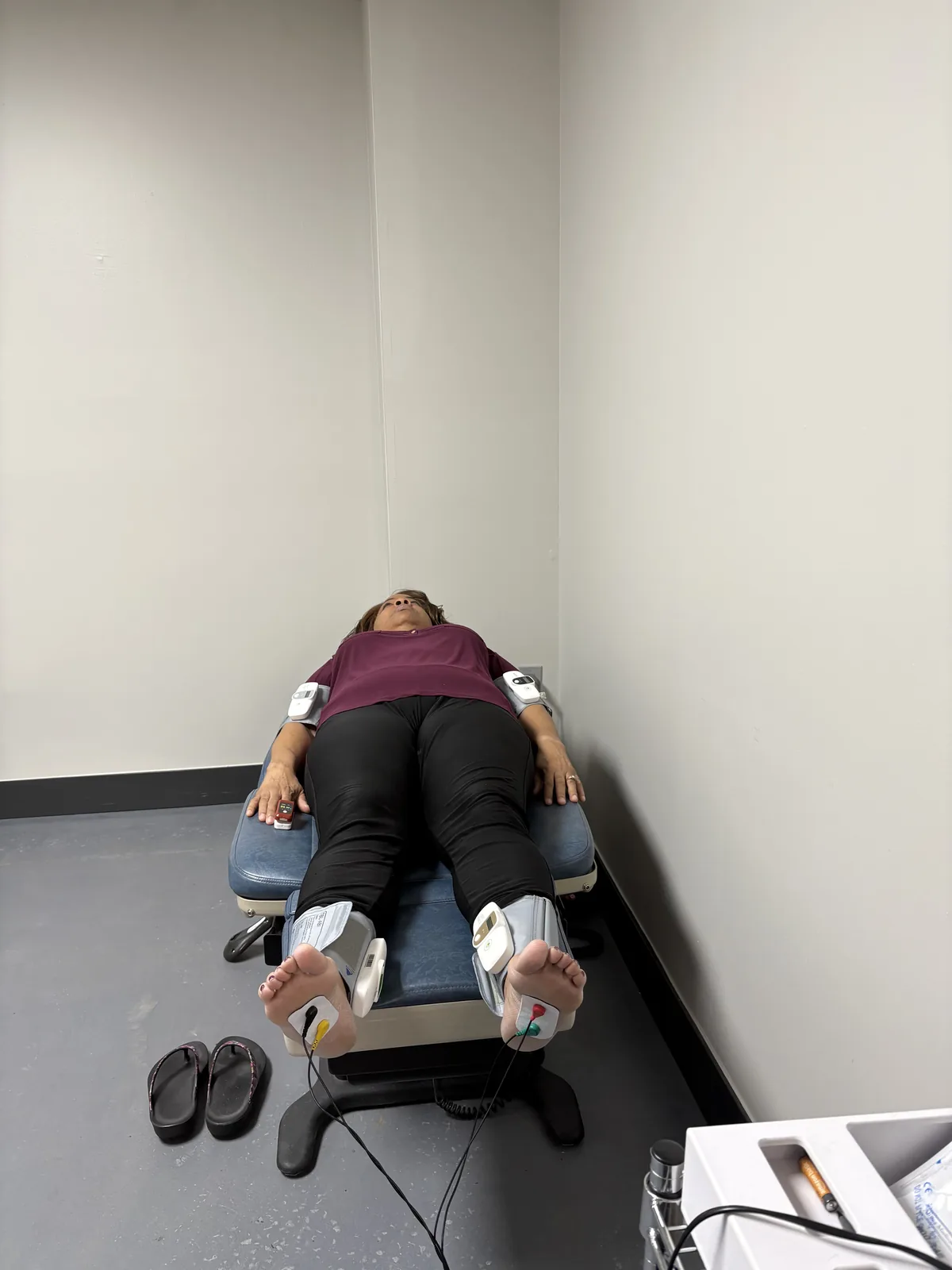
Electrodiagnostic testing, meaning EMG and nerve conduction studies, is done on site at Regenerve. It helps confirm nerve involvement and its pattern, especially in the large fibers. It is most useful when there is weakness. It also helps when the pattern points to one specific nerve or root.
It does not measure sleep, and it does not capture small-fiber involvement well. VNG is also done on site. But it is a diagnostic test of inner-ear balance function. It is not a treatment for neuropathy or for sleep.
What is used in clinic, and what it is for
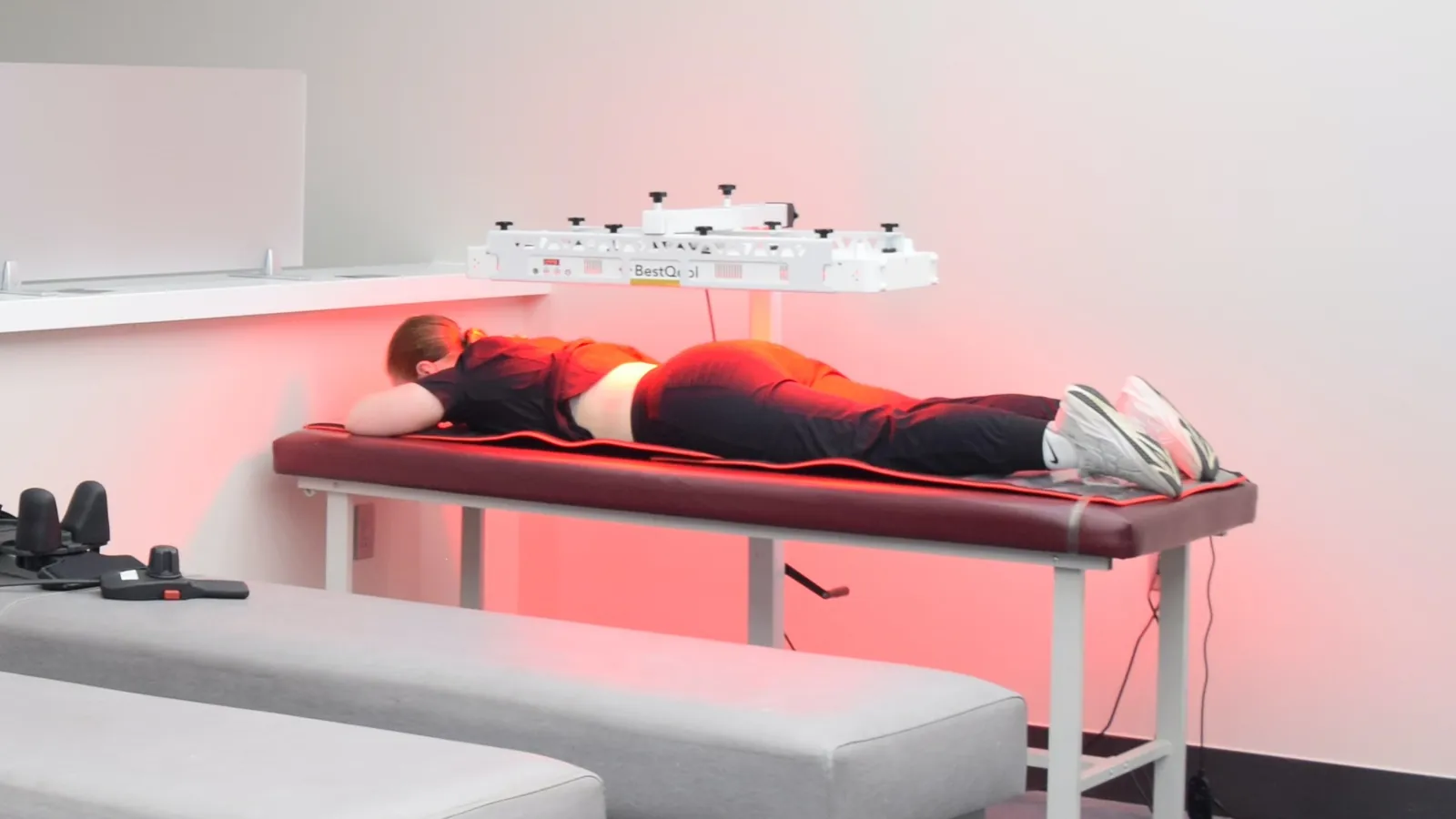
Regenerve uses class 4 photobiomodulation, class 3B cold laser, and whole-body infrared. These go with metabolic and nutritional care, guided by a doctor’s exam. They are aimed at the area around the nerve. They are used as part of a plan, not as a package sold on their own.
Two other options are worth knowing. Qutenza, the capsaicin 8% patch, is FDA-approved in adults only for neuropathic pain associated with postherpetic neuralgia and with diabetic peripheral neuropathy of the feet. A clinician applies it in the clinic. It is never handed out for home use. It is repeated no more often than every three months [3].
Orthobiologic injections are offered here. These are platelet-rich plasma and bone marrow aspirate concentrate.
What none of this claims
Nerve tissue heals slowly, if it heals at all. Nothing on this list is offered as a way to regenerate, reverse, or eliminate nerve damage. For how the pieces are put in order, see the Regenerve protocol for peripheral neuropathy.
What can I do when neuropathy keeps me up at night?
Next to the medical plan, a few habits turn the nights from a mystery into something you can track.
- Map the nights: note when burning and waking spike. Note what positions, bedding, footwear, and evening activities change them.
- Bring the list: medications, supplements, alcohol, and exposures. Several of them are drivers in their own right.
- Protect the feet during the day: with less feeling, a daytime injury can show up as nighttime symptoms.
- Raise sleep directly: if the nights are the worst part, say so. It changes what gets priority.
Frequently asked questions
Why does neuropathy get worse at night?
Night flares are a known feature of the nerve pain in diabetic peripheral neuropathy. Lying still takes away the daytime input that competes with the symptom. Broken sleep then makes the next night harder, not easier. For what actually helps in feet-first neuropathy, see peripheral neuropathy treatments for the feet.
Will treating my blood sugar fix the nighttime burning?
It can help if metabolic stress is the main driver. But blood sugar alone rarely explains neuropathy, and more than one driver can be active at once. That is why the evaluation looks at the whole picture, not one number. For how metabolic injury reaches the nerve, see how glycation damages nerves.
My nerve pain started after shingles. Is that the same problem?
The cause is different, and so is the treatment path. Postherpetic nerve pain has its own pattern and its own approved options. It is worth naming on its own, not folding into a general neuropathy plan. For that pattern, see postherpetic neuralgia and shingles nerve pain.
Can in-clinic light or infrared therapy fix my sleep?
They are used to support the area around the nerve. They are not a sleep treatment. They are not offered with any promise of nerve regeneration or reversal. Sleep tends to get better when the driver underneath is addressed and night symptoms settle. For what is available and how it is used, see the services offered at Regenerve.
What is the best thing for neuropathy at night?
Treat both halves of the loop. Pain breaks sleep, and broken sleep makes the pain harder to bear. So a plan that fixes only one side tends to stall. Start by finding the driver behind the nerve injury, because bedtime routines alone rarely settle nights of nerve pain. Meanwhile, track when burning and waking spike and what changes them. Protect your feet during the day. And tell your doctor if the nights are the worst part.
Can neuropathy be reversed?
Nerve tissue heals slowly, if it heals at all. Nothing Regenerve offers is presented as a way to regenerate, reverse, or erase nerve damage. That includes light and infrared therapy, Qutenza, and orthobiologic injections. The real goal is to find and address the driver doing the most damage now. It may be metabolic, nutritional, toxic, autoimmune, or structural. The other goal is to calm the nighttime symptoms that keep feeding the pain.
What are the worst symptoms of peripheral neuropathy?
For many people, the worst are the ones that show up at night. Burning can feel like hot coals once you stop moving. Numbness makes a comfortable position hard to find. Tingling and electric pain keep you from settling even when medication takes the edge off. When skin and nerves are on high alert, ordinary sensations register as heat or pain. Symptoms that start in the toes and climb upward point toward a whole-body driver, not a foot problem.
Take the next step
If neuropathy is taking your nights, the first move is finding the driver, not adding another bedtime remedy. Start with the free five-question Nerve Damage Score. Regenerve is at 4477 Woodson Rd #104, St. Louis, MO 63134, minutes from St. Louis Lambert International Airport. It serves the St. Louis region, Missouri and Illinois. Call (314) 886-5739 or text (314) 886-5902, or email info@regenerve.com.
Sources
- Bodman MA, Dreyer MA, Varacallo MA. “Diabetic Peripheral Neuropathy.” StatPearls. StatPearls Publishing; last updated February 25, 2024. https://www.ncbi.nlm.nih.gov/books/NBK442009/ (referenced for: neuropathic pain in diabetic peripheral neuropathy characterized as superficial, deep-seated, or severe, unremitting pain with exacerbation at night; symptom components including numbness, tingling, burning, hyperalgesia and allodynia; peripheral neuropathy encompasses a broad range of clinical pathologies).
- Ho A, Drew VJ, Kim T. “What Links Sleep and Neuropathic Pain? A Literature Review on the Neural Circuits for Sleep and Pain Control.” Nature and Science of Sleep. 2025;17:813–838. doi:10.2147/NSS.S509013. https://pmc.ncbi.nlm.nih.gov/articles/PMC12065536/ (referenced for: neuropathic pain significantly disrupts sleep, creating a feedback loop in which pain and sleep disturbance exacerbate each other; evidence that sleep disruption may contribute to progression from acute to chronic neuropathic pain).
- Averitas Pharma Inc. “QUTENZA (capsaicin) 8% topical system — prescribing information.” U.S. National Library of Medicine, DailyMed; label revised July 2024. https://dailymed.nlm.nih.gov/dailymed/drugInfo.cfm?setid=3ffbbcb0-ad93-4f15-bb38-5da76a71c735 (referenced for: indicated in adults for neuropathic pain associated with postherpetic neuralgia and for neuropathic pain associated with diabetic peripheral neuropathy of the feet; only physicians or health care professionals are to administer it; may be repeated not more frequently than every three months).