
Whether your neuropathy gets worse depends far more on one thing than on the word “neuropathy” itself. Is the driver damaging your nerves still active? That is the whole answer. It is also why nobody can give you a timeline until the driver has been found.
Peripheral neuropathy is the most common reason for an outpatient neurology visit in the United States. It accounts for over $10 billion in health care spending each year.1 Much of that reflects how long people live with a diagnosis that names the symptom, not the cause. Progression is not one fixed path, and it can be measured.
How does neuropathy progress?
When people say progression, they usually mean symptoms. But symptoms are only one of the things that change. Feeling, balance, strength and daily function can all shift, sometimes in different directions at once.
Length-dependent and symmetrical patterns
In many metabolic forms, the longest nerve fibers fail first. That is why symptoms usually start in the toes and move upward. It is also why the hands are often affected later, once the pattern has reached about mid-calf.
The pattern is also usually the same on both sides. That points toward a whole-body (systemic) driver. A one-sided or patchy pattern points somewhere else entirely. That is a useful thing for your clinician to notice early.
Small fiber involvement can progress when standard testing looks normal
Burning, hot-coal feelings and changed pain and temperature sense can be present while a routine nerve conduction study looks normal. That is because the study measures large fibers.
A normal result in that setting does not mean nothing is getting worse. It is a signal that the workup needs to match the symptom pattern, not stop.
What causes neuropathy to get worse?
Peripheral neuropathy is a category, not a diagnosis. These are the driver groups worth working through. More than one can be present in the same person.
Metabolic injury
When glucose runs high, sugars stick to proteins in a slow browning reaction. That makes advanced glycation end-products, which build up around the nerve. Poor flow through the small vessels that feed the nerve makes it worse. That is because the longest fibers depend on the weakest part of that supply.
The practical point: while the metabolic driver runs, injury goes on. That is true whether or not symptoms happen to be quiet that week. How strong the symptoms feel and how active the disease is are two different things.
Nutritional drivers
B12 deficiency can cause nerve damage that keeps getting worse. It keeps going until the deficiency is corrected. Diet, absorption after gut surgery, and drugs that interfere with absorption all belong in the history.
Autoimmune and immune-reactive patterns
Immune-driven processes can keep symptoms advancing while the immune activity goes on. Gluten-related nerve injury is one of them. These patterns are often the ones hiding behind an idiopathic (no known cause) label.
Toxic and medication-related exposures
Chemotherapy-related nerve injury follows the timeline of the exposure. So the history and the course of symptoms have to be read together. Heavy metals such as lead, arsenic and mercury are the other exposure group. They are worth ruling in or out when the history suggests it.
Structural compression
Not everything that looks like neuropathy is systemic. Sometimes symptoms follow the path of a single nerve. Then progression may be driven by pressure on the nerve (compression) and local inflammation instead. That responds to entirely different treatment. The difference is covered in nerve compression: carpal tunnel, sciatica and double-crush patterns.
How is neuropathy progression measured?
Progression is change over time. Change over time only means something against a baseline. Without one, every visit is a fresh guess about whether things are moving.
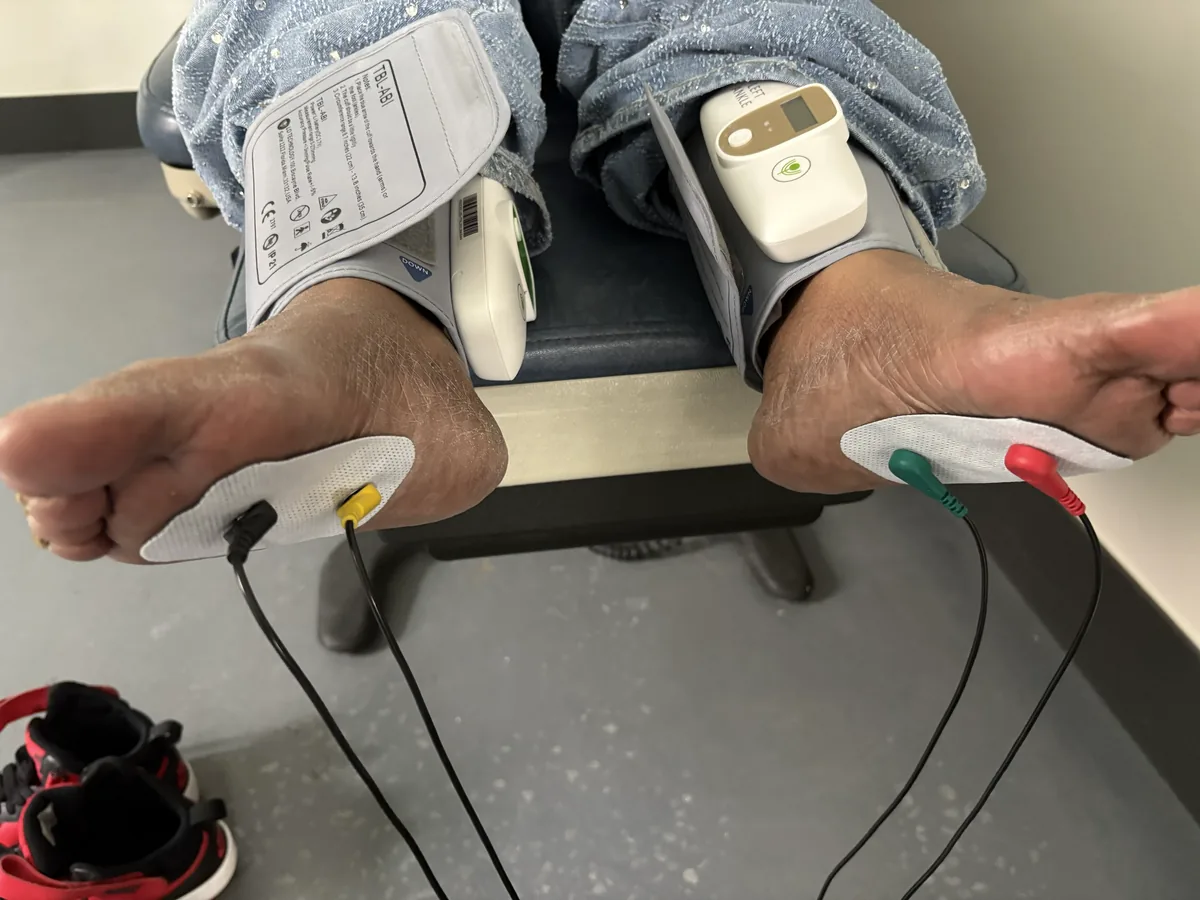
We perform electrodiagnostic testing (EMG/NCS) on site. It measures how large fibers carry signals. When unsteadiness, dizziness or falls are part of the picture, we use VNG as a diagnostic test of inner-ear balance function. It is not a treatment, and it does not measure peripheral nerves.
Metabolic and nutritional testing runs alongside both, because that is where most of the drivers you can change actually live.
Can neuropathy damage be reversed?
We do not promise that nerve damage can be regenerated or reversed. A plan aimed at the driver has a different goal, and one that is easier to defend. It finds what is still causing injury. It reduces that injury where it can be reduced. And it protects function.
Symptom treatment has a place inside that. Qutenza (capsaicin 8% patch) is FDA-approved in adults only for neuropathic pain from postherpetic neuralgia and from diabetic peripheral neuropathy of the feet. It is applied in clinic by a clinician and repeated no more often than every three months.
Orthobiologic injections such as PRP and BMAC are offered in selected situations. Better sleep and less pain are worth having in their own right. But neither one changes the driver.
When should worsening neuropathy be checked right away?
Some changes are worth acting on quickly instead of watching.
- Numbness that is spreading upward, or newly involving the hands.
- Pain that has started to disrupt sleep, or pain set off by light touch such as a bedsheet.
- New unsteadiness, dizziness, or any fall.
- Difficulty with stairs, weakness, or a foot that catches when you walk.
- Any break in the skin, blister, or hot, swollen foot when feeling is reduced.
- A high-risk history: diabetes, chemotherapy, known B12 risk, or a major exposure.
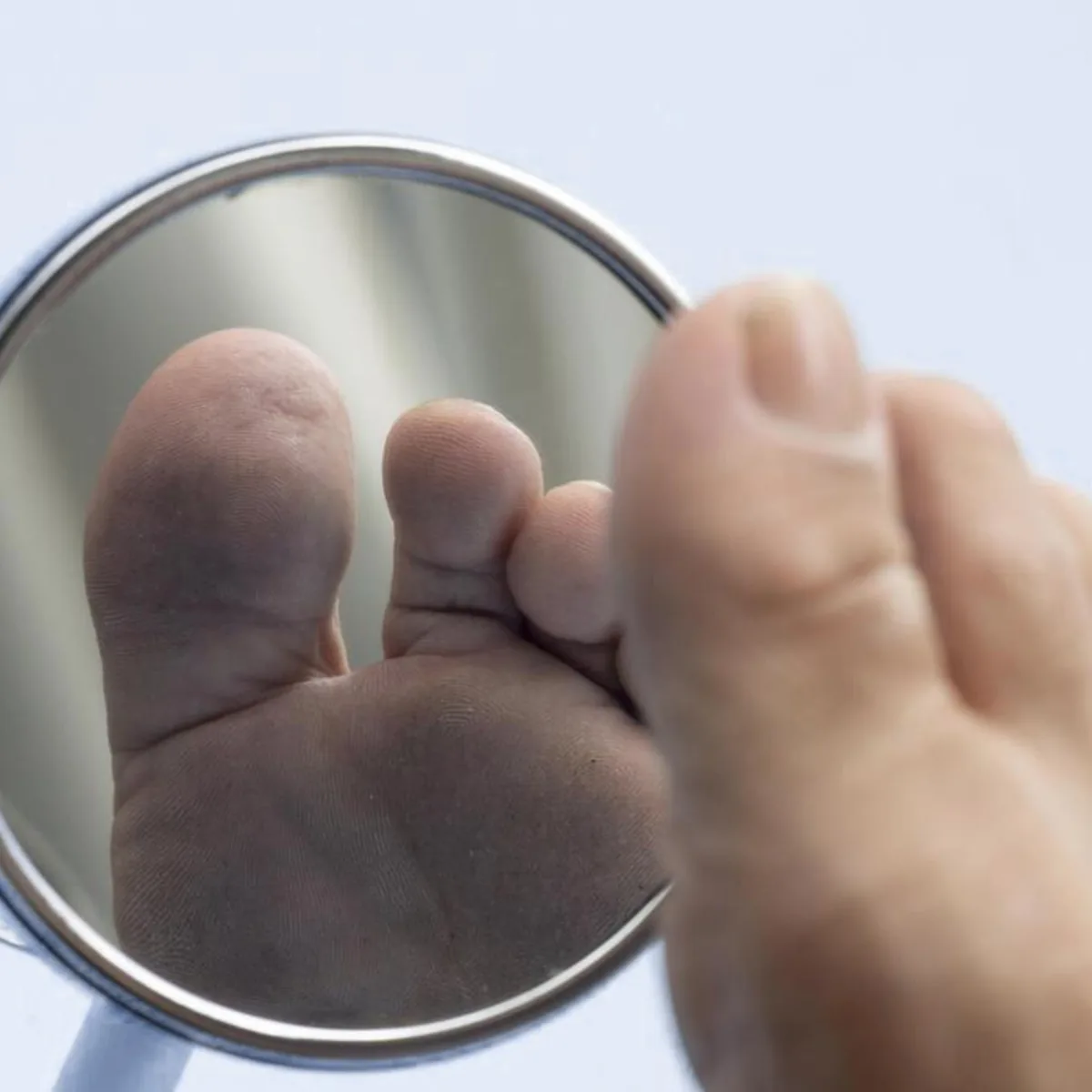
When protective feeling is reduced, checking your feet every day stops being optional. A numb foot no longer reports injury. So your eyes have to do the job the nerves used to do.
Start with the Nerve Damage Score
The Nerve Damage Score is five questions, and it is free. It is built to point at the driver most likely responsible in your case. That is the only honest starting point for a talk about whether things will get worse.
Regenerve, 4477 Woodson Rd #104, St. Louis, MO 63134. Call (314) 886-5739 or text (314) 886-5902, or email info@regenerve.com. We are minutes from St. Louis Lambert International Airport and see patients from across the St. Louis region, Missouri and Illinois, including Edwardsville, Glen Carbon, Collinsville, Troy and Maryville.
Frequently asked questions
My feet burn at night. Does that mean it is getting worse?
Not by itself. Nighttime burning is common early and does not reliably track severity. So how bad it is on a given night is a poor measure of progression. What matters is whether feeling, balance and function are changing over months. See small fiber neuropathy symptoms and testing.
How do clinicians predict whether neuropathy will progress?
By finding the driver and then watching whether it is still active. A driver that is being corrected and a driver that is left alone lead to very different paths in the same person. See the hidden drivers of peripheral neuropathy.
My blood sugar is under control now. Am I safe?
Better glucose control reduces one source of ongoing injury, but it is not the whole terrain. Lipids, blood pressure, small blood vessel health, nutrition status and any other driver all still matter. See diabetic peripheral neuropathy treatment in St. Louis.
What if nobody has found a cause for my neuropathy?
Idiopathic is a status, not a verdict. It usually means the workup stopped too soon, before the less common drivers were looked at. These include deficiency states, immune-reactive patterns and exposures. See functional B12 deficiency and neuropathy.
Could an exposure be making mine worse without my knowing?
It is possible, and it is worth ruling in or out instead of assuming. Heavy metals such as lead, arsenic and mercury are the classic example. Exposure history is often the only clue before testing. See heavy metals and neuropathy.
How do you stop neuropathy from progressing?
Find the driver that is still causing injury and reduce it where it can be reduced. That can mean correcting a B12 deficiency, getting metabolic injury under control, or removing a toxic exposure. A baseline from nerve testing lets your clinician see whether things are actually changing. Symptom treatment helps you feel better, but it does not change the driver.
Can neuropathy spread to the hands?
Yes. In many metabolic forms the longest nerve fibers fail first, so symptoms usually start in the toes and move upward. The hands are often affected later, once the pattern has reached about mid-calf. Numbness that newly involves the hands is one of the changes worth getting checked promptly instead of watched.
What’s the worst that can happen with neuropathy?
When protective feeling fades, a numb foot stops reporting injury. So a blister, a break in the skin or a hot, swollen foot can go unnoticed. Weakness, a foot that catches when you walk, new unsteadiness and falls are the other serious turns. Each one needs a prompt check. Daily foot checks become essential once feeling is reduced.
Sources
- Tavee JO. Office approach to small fiber neuropathy. Cleveland Clinic Journal of Medicine. 2018;85(10):801–812. ccjm.org