
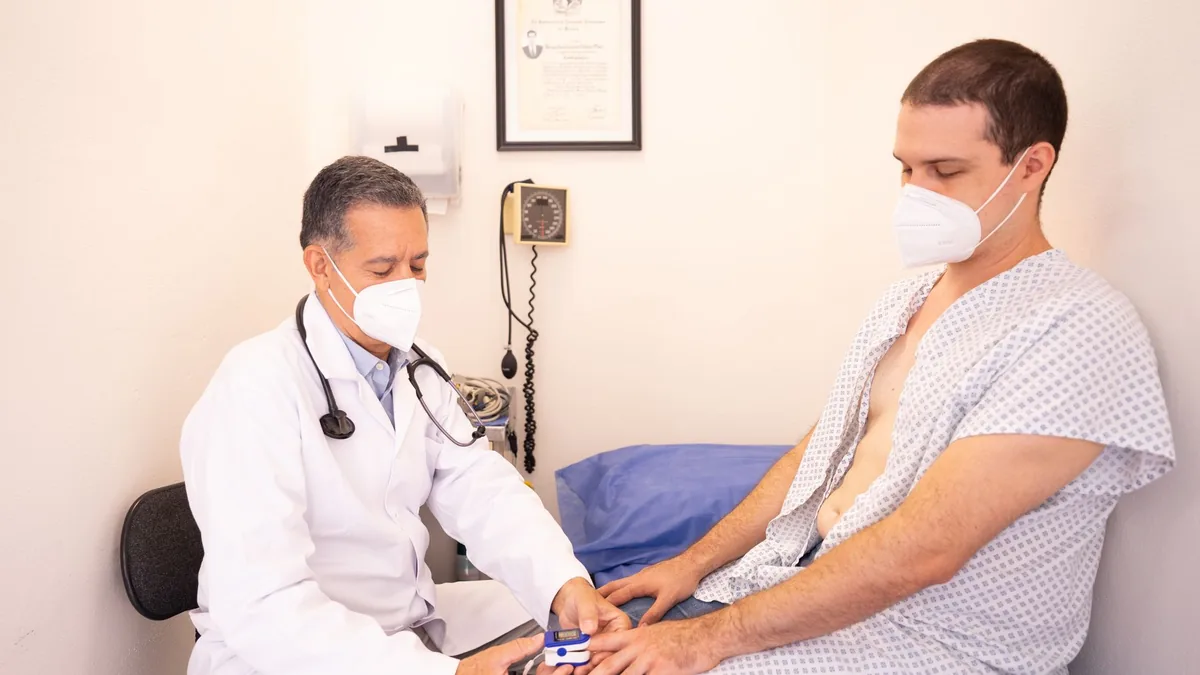
A VNG test, short for videonystagmography, measures a type of eye movement you cannot control, called nystagmus. It uses that to test how well your inner-ear balance system and the balance pathways in your brain are working.1 It is a diagnostic test, not a treatment. It does not measure peripheral nerve function at all.
In someone who already has neuropathy, it answers one narrow and useful question. Is part of the unsteadiness coming from the vestibular (inner-ear balance) system, not from the nerves in the feet? That answer changes what the balance plan should look like.
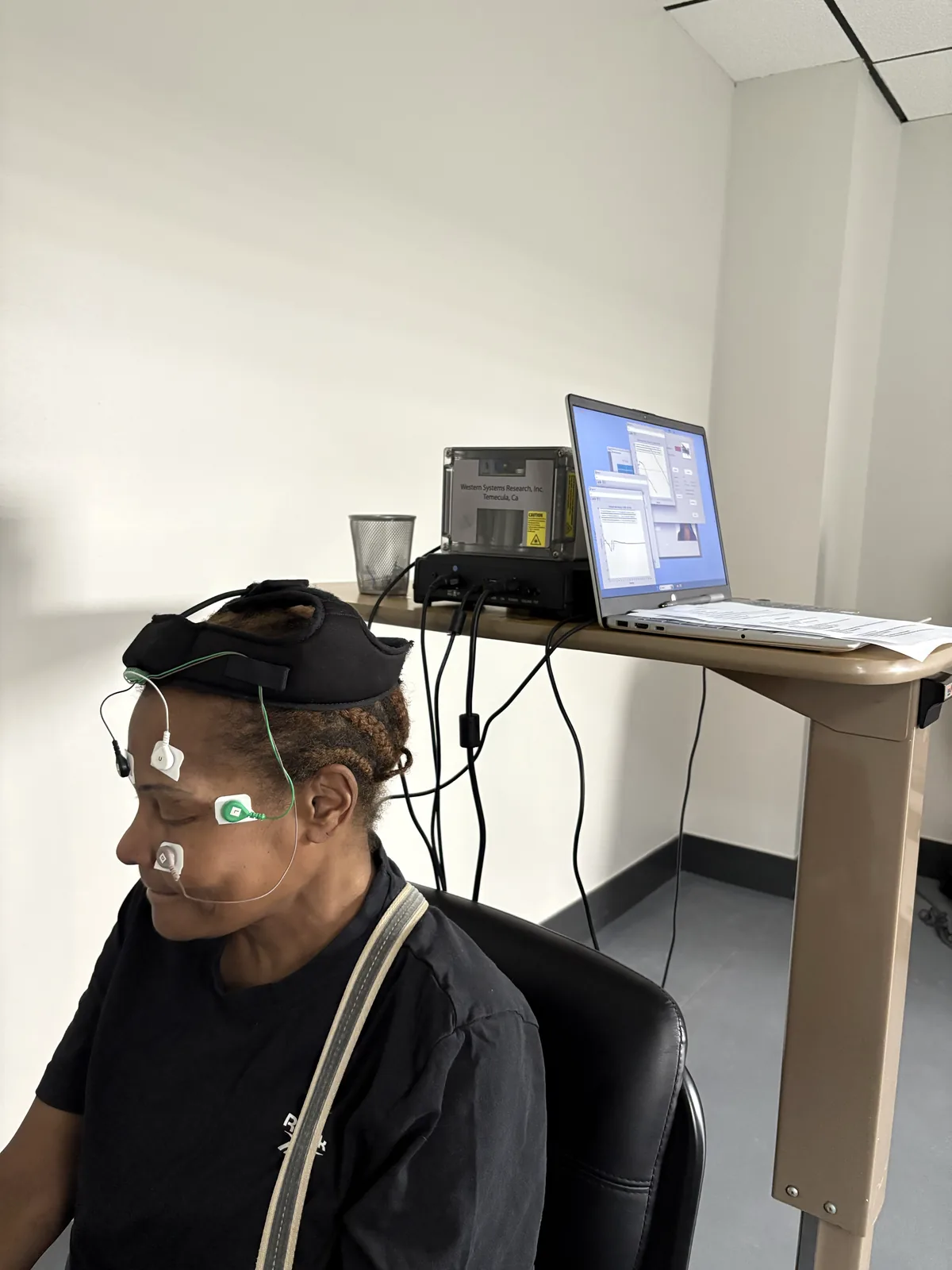
How does a VNG test work?
A camera inside a pair of goggles records your eye movements. Meanwhile the examiner changes what you are looking at, where your head is, and the temperature inside your ear canal.
Brief nystagmus is normal as the eyes adjust when the head moves into certain positions. Nystagmus that shows up at other times may point to a disorder of the balance system in the inner ear. So may nystagmus that fails to show up when it should.1
That is what makes it worth doing. Eye movement is involuntary, so the recording is an objective signal. That matters, because the symptom itself, feeling unsteady, is famously hard to describe.
What happens during a VNG test?
A VNG has three main parts. Each one checks a different part of the balance wiring.1
- Ocular testing. You follow moving lights and hold your gaze on steady lights without moving your head.
- Positional testing. Your head and body are moved into different positions while the goggles watch for nystagmus.
- Caloric testing. Each ear is tested on its own. First it gets cool water or air, and then warm water or air in the same ear.
What the caloric portion is looking for
The cool temperature should make the eyes move in a certain way. The warm temperature should produce a different response.1 Testing one ear at a time is what lets the two sides be compared.
Sometimes the eyes do not move as expected during caloric testing. That may mean there is damage in the inner ear or in the part of the brain that controls balance.1 Abnormal VNG results are also associated with conditions such as benign paroxysmal positional vertigo, Ménière disease, labyrinthitis and vestibular neuritis.1
Can neuropathy affect your balance?
Standing upright depends on three inputs. They are feeling from the feet and legs, vision, and the vestibular system. Peripheral neuropathy weakens the first one. If the third one is also impaired, the loss compounds. A person who could make up for one problem cannot make up for two.
Patients often describe both at once: numb feet and a swimming, off-balance feeling. It is easy for all of it to get blamed on the neuropathy. Testing separates them.
Balance can fail in more than one place at a time
Sorting this out is not academic. Vestibular findings call for one kind of rehabilitation. Sensory loss in the feet calls for another. That includes footwear, lighting, home hazards and the protective habits that matter when the feet no longer report injury.
Getting the proportions right is how a fall risk gets addressed, not just described.
What can a VNG test not tell you?
VNG does not identify your neuropathy driver. Peripheral neuropathy is a category, not a diagnosis. The cause may be metabolic, nutritional, autoimmune, toxic or structural. Finding out which happens elsewhere in the evaluation.
It also does not treat anything. A normal VNG is useful information. It moves the balance problem back toward the feet. But neither a normal nor an abnormal result is a therapy.
How it fits into an evaluation at Regenerve
Electrodiagnostic testing (EMG/NCS) is performed on site. It shows how well the peripheral nerves are conducting signals. VNG is used when balance, dizziness or past falls suggest the vestibular system may also be involved.
The two are read together, along with your symptom timeline, medications, and metabolic and nutritional workup. Our page on VNG balance testing covers what to expect on the day of the test itself.
Bring the details with you. When does the unsteadiness happen? Is it worse in the dark? Does the room spin, or do you just feel adrift? Have you fallen? Those details shape how the results are read.
Start with the Nerve Damage Score
The Nerve Damage Score is five questions, and it is free. It is the starting point for finding which driver is most likely damaging your nerves. That is the piece VNG cannot supply. We do not promise that nerve damage can be regenerated or reversed.
Regenerve, 4477 Woodson Rd #104, St. Louis, MO 63134. Call (314) 886-5739 or text (314) 886-5902, or email info@regenerve.com. We are minutes from St. Louis Lambert International Airport and see patients from across the St. Louis region, Missouri and Illinois, including Edwardsville, Glen Carbon, Collinsville, Troy and Maryville.
Frequently asked questions
What does VNG balance testing measure?
It records involuntary eye movements, called nystagmus, with infrared goggles. It uses the timing and conditions of those movements to assess the inner-ear balance system and the balance pathways in the brain. It is a diagnostic test, not a treatment. See our VNG balance testing page.
Is VNG the same as nerve testing for neuropathy?
No. VNG checks vestibular (inner-ear balance) function through eye movement. Electrodiagnostic testing (EMG/NCS) measures how peripheral nerves conduct. They answer different questions. They are often ordered together when both the feet and balance are involved. See the testing and care we provide on site.
Can VNG tell me why my feet are numb?
It cannot. Numbness in the feet is a peripheral nerve finding, and VNG does not measure peripheral nerves at all. What it can do is show whether some of your unsteadiness comes from a second problem in the inner ear. See peripheral neuropathy of the feet symptoms.
Why would someone with diabetes be sent for balance testing?
Because unsteadiness in diabetes is rarely one thing. Reduced feeling in the feet, vision changes and vestibular problems can all add up at once. The plan differs depending on which one is dominant. See diabetic peripheral neuropathy treatment in St. Louis.
What happens if my VNG is abnormal?
An abnormal result points to the vestibular system or the balance pathways in the brain. It guides the balance side of your care. It does not identify the driver behind your neuropathy, so that mapping still has to happen separately. See the hidden drivers of peripheral neuropathy.
Is a VNG test worth it if I have neuropathy?
It is when unsteadiness, dizziness or a fall is part of the story. Your eye movements during the test are involuntary. So the recording gives an objective signal for a symptom that is hard to describe. It shows whether part of your imbalance comes from the inner ear, not the feet. That changes which kind of balance rehabilitation you need.
What conditions can a VNG test find?
Abnormal VNG results are linked to inner-ear and balance-pathway problems. Examples are benign paroxysmal positional vertigo, Ménière disease, labyrinthitis and vestibular neuritis. The caloric portion tests one ear at a time, so the two sides can be compared. A VNG does not diagnose neuropathy or identify its cause. So nerve testing and the driver workup still happen separately.
What if my VNG test is normal?
A normal VNG is still useful. It tells your clinician the inner-ear balance system is not the main problem. That moves the explanation for your unsteadiness back toward the nerves in your feet. The plan then focuses on foot feeling: footwear, lighting, home hazards and the protective habits that matter when your feet no longer report injury.
Sources
- MedlinePlus, National Library of Medicine. Videonystagmography (VNG). MedlinePlus Medical Test. Last updated June 28, 2023. medlineplus.gov