
Get numbness in your feet checked promptly in these cases: it comes on suddenly, it is much worse on one side, it comes with real weakness, there are autonomic changes such as lightheadedness on standing, or it is getting worse over days to weeks. American Family Physician names those same features as reasons to refer a patient for electrodiagnostic studies. So does a first workup that is normal while symptoms go on.1 Slow, even numbness in both feet is less urgent. But it still deserves a workup, because it is usually pointing to a cause somewhere else in the body.
What to notice before your visit
- Numbness that is spreading or getting worse. A changing pattern suggests the cause is still active.
- Numbness plus weakness or autonomic changes. These are the features that move a workup up the line.
- A diabetes or prediabetes history. Peripheral neuropathy affects 25% to 50% of patients with diabetes. It depends on age, years with diabetes, and control.1
- Known abnormal labs. B12, thyroid, and metabolic results shape which cause is most likely.
- Burning, heat, and night symptoms. Small-fiber patterns can be intense while standard testing looks normal.
- Balance changes. Dulled protective feeling makes missteps more likely.
When should you worry about numbness in your feet?
Numbness means nerve signals are impaired. When it gets worse, it stops being only a feeling problem and becomes a safety problem. Walking, heat sensitivity, and balance all depend on that feedback.
Worrisome patterns that support earlier evaluation
American Family Physician advises referral for electrodiagnostic studies when symptoms are worrying. Its examples are sudden onset, a lopsided pattern, mostly motor or autonomic symptoms, and a fast-worsening course. It also advises referral when the first workup is normal and symptoms go on.1
- Sudden or fast-developing numbness
- Clearly lopsided, much more on one side than the other
- Prominent weakness rather than numbness alone
- Autonomic signs such as lightheadedness on standing or changed sweating
- Getting worse over days to weeks
Is numbness in the feet without pain still serious?
A survey of 5,682 Japanese people, published in 2023, looked at numbness that comes without pain. Using the EQ-5D-3L, it found that quality of life fell as numbness got stronger.2 Notably, in that survey, numbness of the feet and numbness in younger people were less likely to affect quality of life than numbness elsewhere.
That detail is worth saying plainly. No pain, and even a small effect on quality of life, is not proof that the nerve is unhurt. It only means the symptom is quiet.
How common is peripheral neuropathy?
American Family Physician reports that peripheral neuropathy affects 1% to 7% of the general population, with higher rates among those older than 50 years.1 The range is wide, but the direction is steady: age raises the risk.
What if no cause is found for the numbness?
The same source notes that peripheral neuropathy is idiopathic in 25% to 46% of cases, and that this becomes more common with age.1 A clear explanation may not show up at the first visit. That is what makes a structured workup worth the effort, not a formality.
The diabetes context
Peripheral neuropathy affects 25% to 50% of patients with diabetes, depending on age, number of years with diabetes, and level of control.1 If diabetes is part of your history, numbness in the feet calls for a plan, not watching and waiting, because metabolic causes tend to get worse quietly.
What we are actually mapping
Neuropathy is a category, not a diagnosis. The cause decides the direction of treatment. So the workup is built to name it, not to confirm a label. Several of the causes that get missed on a first pass are covered in our review of the hidden drivers behind peripheral neuropathy.
The questions that organize the map
- Does the pattern start in the toes and move up, hitting the longest nerves first?
- Are the symptoms mostly added feelings, such as burning and tingling, or mostly lost feeling?
- Does the picture fit small-fiber damage, with burning and changed temperature feeling?
- Is there metabolic risk that points to a diabetic or prediabetic cause?
- Is there a nutrition, medicine, or toxic exposure history that points somewhere else?
What tests are done for numbness in the feet?
A workup is about making decisions. We want to know which nerves are involved, what is damaging them, and whether the cause looks metabolic, nutritional, toxic, autoimmune, or structural.
Initial laboratory evaluation
American Family Physician describes first tests that include a complete blood count, a comprehensive metabolic profile, and fasting blood glucose, thyroid-stimulating hormone, and vitamin B12 levels.1 We read those results alongside the symptom pattern, never on their own.
Electrodiagnostic testing: what it can and cannot do
Electrodiagnostic studies measure how well the larger nerve fibers carry signals. They do not replace reading the symptom pattern, and they cannot see the smallest fibers. But they can tell a normal-looking report apart from a measurable signal failure. We do electrodiagnostic testing (EMG/NCS) on site at Regenerve.
Why burning feet at night can still matter when testing looks normal
In metabolic neuropathy, small-fiber symptoms often come first, including burning and changed temperature feeling. That is the case people find most confusing, because the report can look normal while the feeling is severe.
VNG balance testing when numbness comes with dizziness
VNG (videonystagmography) is a test of inner-ear balance, not a treatment. When numbness comes with dizziness or unsteadiness, it helps separate an inner-ear cause from a nerve cause, so the plan targets the right system.
Why cause-first planning changes what you do next
The feet report first, because the longest nerves carry the heaviest load and depend on the longest supply route for oxygen and nutrients. When that supply weakens, those fibers misfire first.
Diabetic peripheral neuropathy behaves as a tiny-vessel and metabolic problem that happens to show up in the feet. That is why treatment aimed only at the feeling tends to leave the cause untouched.
What is offered here, described accurately
Class 4 photobiomodulation, class 3B cold laser, and whole-body infrared are offered in clinic alongside metabolic and nutrition care, guided by what the workup finds. Orthobiologic injections (PRP and BMAC) are offered as well. We do not promise nerve regeneration, reversal, or a cure. We publish no success rate for any of it.
What you can do before your visit
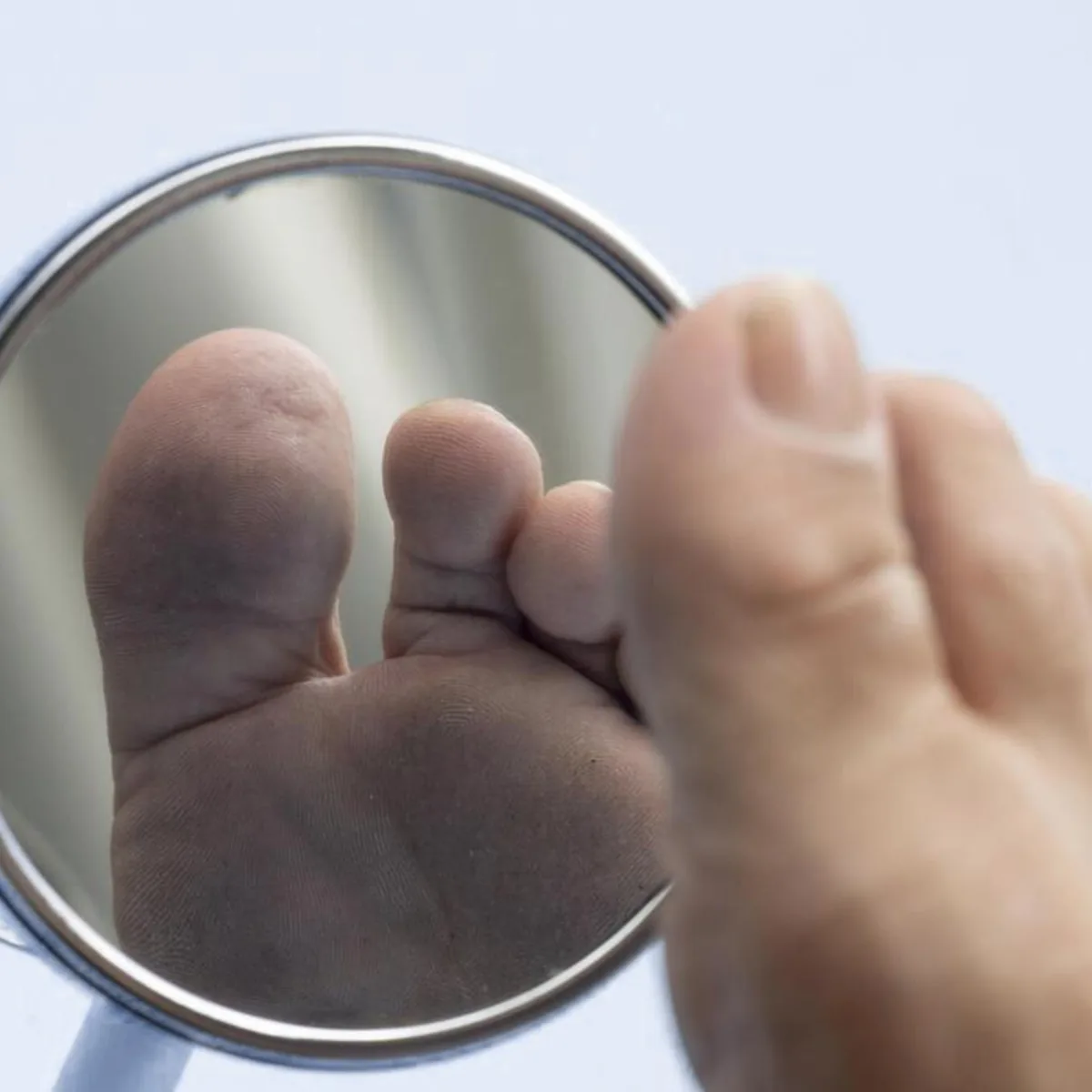
- Check your feet daily with a mirror if protective feeling is dulled, so skin breakdown is found early.
- Write down the timing and how it is changing, including whether burning is worse at night and whether symptoms are spreading.
- Note exposures, medicines, and metabolic history, including diabetes status, nutrition, and any chemotherapy.
Where we are and how to start
Regenerve is located at 4477 Woodson Rd #104, St. Louis, MO 63134, minutes from St. Louis Lambert International Airport, and we see patients from across the St. Louis region, Missouri and Illinois. You can call (314) 886-5739 or text (314) 886-5902, or email info@regenerve.com.
The free Nerve Damage Score is a five-question starting point. It sorts out the cause question before your visit. If your numbness is new, getting worse, or paired with any of the red flags above, do not wait on it.
Frequently asked questions
How do I know whether numbness in my feet is urgent?
Treat it as urgent in these cases: the onset is sudden, the numbness is clearly worse on one side, there is real weakness and not only numbness, there are autonomic signs such as lightheadedness on standing, or the change is getting worse over days to weeks. American Family Physician lists exactly those features as reasons to refer for electrodiagnostic studies.1 See the symptom patterns we look for in the feet.
Do I need an EMG or nerve conduction study if I only have numbness?
Not always. Electrodiagnostic testing earns its place when the symptoms are worrying, or when the first workup is normal and the symptoms go on. We do that testing on site here, so the question is whether the result will change the plan. See which specialist to see when neuropathy has not improved.
What laboratory tests are usually part of the first workup?
American Family Physician describes first tests that include a complete blood count, a comprehensive metabolic profile, and fasting blood glucose, thyroid-stimulating hormone, and vitamin B12 levels.1 Those results point to a metabolic, nutrition, or thyroid cause, instead of just confirming a label. See why a “normal” B12 result can still be misleading.
Can burning feet at night be small fiber neuropathy?
It can. Burning and changed temperature feeling often show up early in metabolic neuropathy. Standard nerve conduction studies can look normal while symptoms are intense, because those studies do not measure the smallest fibers. See small fiber neuropathy symptoms and testing.
Where does Qutenza fit into treating numb or burning feet?
Qutenza (capsaicin 8% patch) is FDA-approved in adults only for neuropathic pain from postherpetic neuralgia and from diabetic peripheral neuropathy of the feet. It is applied in clinic by a clinician, never dispensed for home use, and repeated no more often than every three months. See how Qutenza is used in clinic.
How long is too long for your feet to be numb?
Do not wait it out. Numbness that is new, getting worse, or worsening over days to weeks should be checked promptly. So should numbness that is sudden, one-sided or paired with weakness. Slow numbness in both feet is less urgent. But it still deserves a workup, because it is usually pointing to a cause somewhere else in the body.
Is numbness in the feet dangerous?
It can be. Walking, heat sensitivity and balance all depend on feedback from your feet. So numbness becomes a safety problem, not just an odd feeling. Missteps get more likely, and a blister or burn can go unnoticed until the skin breaks down. If protective feeling is dulled, check your feet daily with a mirror so problems are found early.
What can a doctor do for numb feet?
The first job is naming the cause: metabolic, nutritional, toxic, autoimmune or structural. That starts with labs such as a blood count, metabolic profile, fasting glucose, thyroid and B12. On-site EMG/NCS is added when it will change the plan. At Regenerve, class 4 photobiomodulation, class 3B cold laser, whole-body infrared, metabolic and nutrition care and PRP or BMAC injections are then guided by what the workup finds.
Sources
- Castelli G, Desai KM, Cantone RE. Peripheral Neuropathy: Evaluation and Differential Diagnosis. American Family Physician. 2020;102(12):732-739. https://www.aafp.org/pubs/afp/issues/2020/1215/p732.html (general-population prevalence of 1% to 7%; idiopathic in 25% to 46% of cases; 25% to 50% of patients with diabetes; initial laboratory evaluation; criteria for electrodiagnostic referral).
- Nagai S, Niwa H, Terajima Y, et al. The Relationship between Numbness and Quality of Life. Journal of Clinical Medicine. 2023;12(4):1324. https://doi.org/10.3390/jcm12041324 (epidemiological survey of 5,682 Japanese respondents; quality of life declined as the intensity of numbness without pain increased, with foot numbness and numbness in younger respondents less likely to affect quality of life).