

CIDP and length-dependent peripheral neuropathy differ in how they damage the nerve, in where they strike and in how they unfold. CIDP stands for chronic inflammatory demyelinating polyradiculoneuropathy. It is immune-driven inflammation of the nerve roots and the nerves of the limbs. Its symptoms must last at least 8 weeks for the diagnosis [1]. Length-dependent neuropathy follows the length of the nerve fiber instead. So the exam starts at the top of the big toe on both sides and moves upward [3].
That difference is not just for textbooks. It changes which pattern your clinician looks for, which tests are worth running, and in what order.
What is CIDP?
CIDP is immune-mediated. Inflammation hits both the nerve roots and the nerves of the limbs [1]. The damage is segmental demyelination and remyelination: the nerve’s coating is stripped and rebuilt in patches. Repeated rounds of that leave ring-shaped layers of Schwann cells known as onion bulbs [1].
Because nerve roots are involved, the weakness does not stay in the feet. The typical picture is weakness on both sides that keeps getting worse. It hits muscles near the trunk and far out in the limbs, with numbness at the far ends. It builds over at least eight weeks [2].
Course
CIDP can run a single course, relapse, or keep getting worse. About one-third of patients have a relapsing-remitting pattern, and others get steadily worse [1]. A course that flares and settles is one of the features that raises the question.
Which sensations are affected
CIDP hits position and vibration sense more than pain and temperature. That reflects mostly large-fiber damage [1]. Patients often describe unsteadiness and a sense that they cannot tell where their feet are, rather than burning.
What is length-dependent peripheral neuropathy?
Length-dependent neuropathy is the pattern where the longest nerve fibers are hit first. So symptoms begin in the toes and move upward. In diabetes, the American Diabetes Association says the exam follows the typical distal symmetric polyneuropathy pattern. It starts at the top of the big toe on both sides and moves up the leg [3].
Which sensations are affected
The most common early symptoms come from small-fiber damage. They include pain and dysesthesias (unpleasant burning feelings), described as burning, stabbing, tingling or shooting [3]. Large-fiber damage causes numbness, tingling without pain, and loss of protective feeling. That marks more advanced neuropathy and raises the risk of foot ulcers [3].
What that pattern means in practice, and how it is examined, is covered in peripheral neuropathy of the feet, symptoms and patterns.
How is CIDP different from peripheral neuropathy?
This is a guide to what to ask and what to test. It is not a self-diagnosis tool. Your clinician makes the diagnosis.
Distribution
Length-dependent neuropathy starts at the far ends and climbs [3]. CIDP involves nerve roots as well as limb nerves. It shows up with weakness near the trunk as well as far out in the limbs [1][2].
Sensory profile
CIDP hits position and vibration sense more than pain and temperature [1]. Length-dependent disease more often starts with small-fiber symptoms, meaning burning and other painful dysesthesias [3].
Timeline
CIDP must last at least eight weeks [1][2]. Length-dependent neuropathy builds more slowly. It tracks the cause behind it, whether metabolic, nutritional, toxic, autoimmune or structural.
How common each is
CIDP is rare. New cases are estimated at 0.15 to 1.6 per 100,000 person-years. Prevalence is estimated at 0.67 to 10.3 per 100,000. It usually starts between 40 and 60 years, and men get it about 2:1 over women [2]. Distal symmetric polyneuropathy in diabetes is far more common. It affects at least 20% of people with type 1 diabetes after 20 years. In type 2 diabetes it ranges from 10% to 15% of newly diagnosed patients to 50% after 10 years [3].
When should CIDP be suspected instead of typical neuropathy?
Certain features should raise the question, not settle it.
- Weakness that is not limited to the feet, including weakness near the trunk [1][2]
- Symptoms that have lasted and changed beyond eight weeks [1]
- Lost feeling that hits vibration and position sense more than pain and temperature [1]
- A course with relapses, not steady climbing from the feet [1]
If your symptoms are changing fast, if weakness is severe, or if breathing is affected, that is an emergency. Do not wait for a scheduled visit.
What tests separate CIDP from other neuropathy?
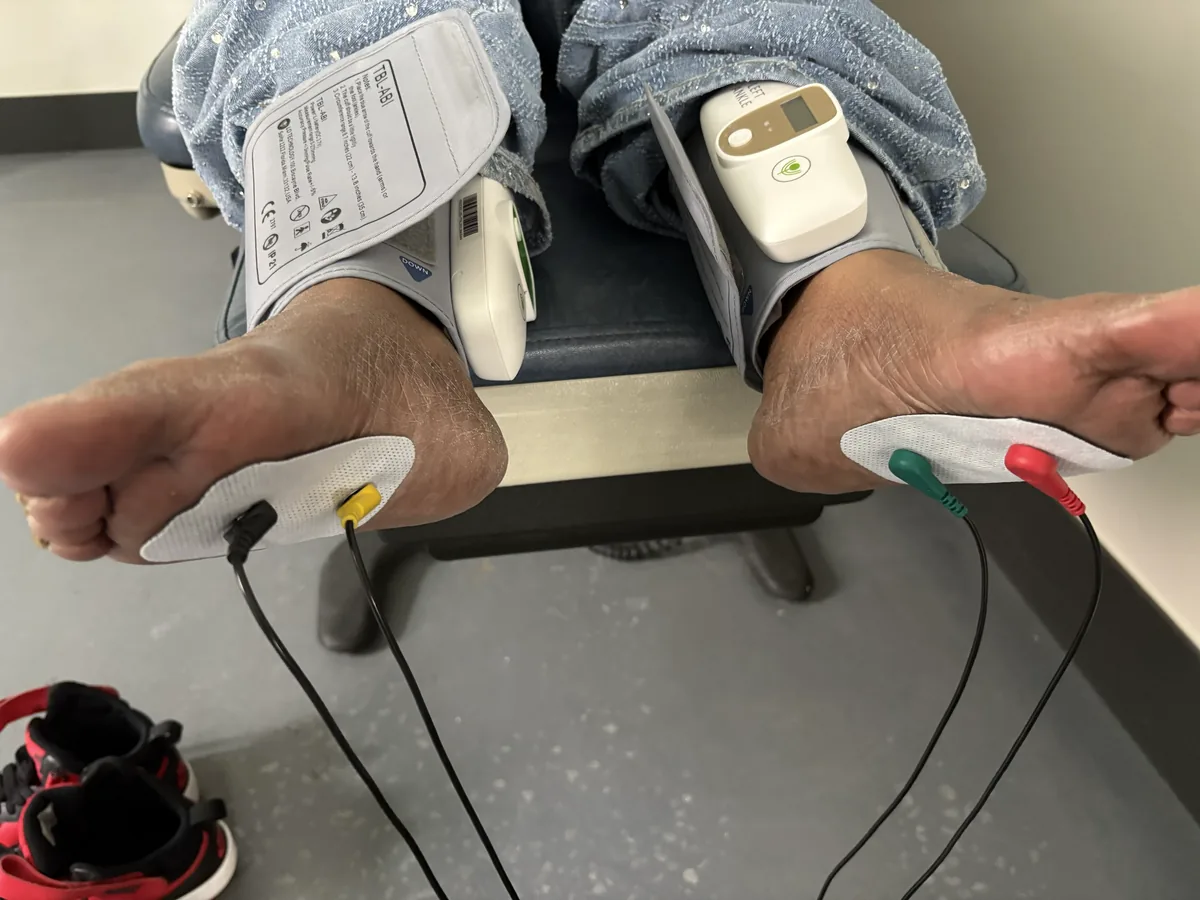
We do electrodiagnostic testing (EMG and nerve conduction studies) on site. We read it alongside where your symptoms are, the exam and the likely causes. CIDP is uncommon and length-dependent causes are not. So the order of the workup follows your pattern and timeline, not a fixed checklist.
When the pattern points to a metabolic, nutritional, toxic or structural cause, testing and diagnosis drive the plan, not the other way around. That sequence is set out in the Regenerve Protocol for peripheral neuropathy.
How we use the diagnosis
We treat the cause behind the label, not the label. We do not promise nerve regeneration or reversal of established nerve damage. If the pattern suggests an immune process such as CIDP, that belongs with the clinicians who manage immune therapy. Our role is to help get the question asked.
Frequently asked questions
How long do symptoms have to last before CIDP is considered?
At least eight weeks. CIDP symptoms must last at least 8 weeks for the diagnosis [1]. The typical picture is weakness on both sides that keeps getting worse, near the trunk and far out in the limbs, with numbness at the far ends, building over that time [2]. Burning that comes and goes over days is a different question. See small fiber neuropathy symptoms and testing.
Does burning in my feet point toward CIDP?
Usually the opposite. CIDP hits position and vibration sense more than pain and temperature [1]. Burning and other painful dysesthesias are the early small-fiber symptoms of distal symmetric polyneuropathy [3]. What follows from that difference is covered in peripheral neuropathy treatments for the feet.
Is CIDP common?
No. New cases are estimated at 0.15 to 1.6 per 100,000 person-years. Prevalence is estimated at 0.67 to 10.3 per 100,000 people. It usually starts between ages 40 and 60, and men get it about twice as often as women [2]. Because it is so rare, the more common causes are usually worked through first. Our sequence is described in our neuropathy services.
Should I bring my medication list to the evaluation?
Yes, and bring the full list, including anything started or stopped in the last few years. Medicine history is one of the groups we review, along with metabolic, nutritional, toxic and autoimmune causes. Our discussion of the medicines patients ask about most is at statins, metformin and nerve health.
What are the first signs of CIDP?
The typical picture is weakness on both sides of the body that keeps getting worse. It hits the muscles near the trunk as well as the hands and feet, with numbness at the far ends of the limbs. It builds over at least eight weeks [2]. Many people notice unsteadiness and trouble sensing where their feet are before they notice pain. That is because position and vibration sense take the biggest hit [1].
Is CIDP a type of peripheral neuropathy?
Yes, but a rare one that works differently. CIDP is immune-driven inflammation of the nerve roots and the limb nerves. It strips and rebuilds the nerve’s insulating coating in repeated cycles [1]. The far more common length-dependent pattern follows the length of the nerve fiber instead. It starts in the toes, climbs, and tracks a metabolic, nutritional, toxic, autoimmune or structural cause [3].
What causes CIDP?
CIDP is immune-mediated. The body’s own inflammation targets the nerve roots and the limb nerves [1]. The damage is repeated loss and repair of the myelin coating. That leaves layered Schwann cells known as onion bulbs [1]. When your pattern points to an immune process like this, it belongs with the clinicians who manage immune therapy. Our job is to make sure the question gets asked.
Can CIDP symptoms come and go?
They can. CIDP can run a single course, relapse, or keep getting worse. About one-third of patients have a relapsing-remitting pattern [1]. A course that flares and then settles is one of the features that should raise the CIDP question. Steady worsening that starts in the toes and climbs fits the length-dependent pattern much better [3].
Start with the Nerve Damage Score
The Nerve Damage Score is a free five-question check. It helps find which cause is most likely behind your symptoms. That way your workup starts with a direction instead of a guess.
Regenerve, 4477 Woodson Rd #104, St. Louis, MO 63134. Serving the St. Louis region, Missouri and Illinois, minutes from St. Louis Lambert International Airport.
Sources
- Gogia B, Rocha Cabrero F, Khan Suheb MZ, Lui F, Rai PK. “Chronic Inflammatory Demyelinating Polyradiculoneuropathy.” In: StatPearls [Internet]. Treasure Island (FL): StatPearls Publishing. Last updated 4 March 2024. https://www.ncbi.nlm.nih.gov/books/NBK563249/ — cited for the requirement that symptoms persist at least 8 weeks to establish the diagnosis; inflammation of nerve roots and peripheral nerve; segmental demyelination and remyelination producing onion bulbs; the monophasic, relapsing and progressive courses with about one-third relapsing-remitting; and involvement of position and vibration sense more than pain and temperature.
- “Diagnosis of Chronic Inflammatory Demyelinating Polyneuropathy.” Practical Neurology, April 2024 issue. https://practicalneurology.com/diseases-diagnoses/neuromuscular/diagnosis-of-chronic-inflammatory-demyelinating-polyneuropathy/32112/ — cited for the typical presentation of symmetric progressive proximal and distal muscle weakness with distal numbness evolving over at least 8 weeks; the progressive, monophasic and relapsing-remitting courses; incidence of 0.15 to 1.6 cases per 100,000 person-years; prevalence of 0.67 to 10.3 per 100,000; onset around 40 to 60 years; and the approximately 2:1 male-to-female ratio.
- Pop-Busui R, Boulton AJM, Feldman EL, Bril V, Freeman R, Malik RA, Sosenko JM, Ziegler D. “Diabetic Neuropathy: A Position Statement by the American Diabetes Association.” Diabetes Care, 2017;40(1):136–154. DOI: 10.2337/dc16-2042. https://pmc.ncbi.nlm.nih.gov/articles/PMC6977405/ — cited for assessment following the typical distal symmetric polyneuropathy pattern starting distally at the dorsal aspect of the great toe on both sides and moving proximally; small-fiber symptoms of pain and burning dysesthesias described as burning, lancinating, tingling or shooting; large-fiber symptoms of numbness, tingling without pain and loss of protective sensation; and prevalence of at least 20% in people with type 1 diabetes after 20 years and 10–15% of newly diagnosed type 2 patients rising to 50% after 10 years.