

Autonomic neuropathy is damage to the nerves that run the body’s automatic functions. It goes unnoticed for years because its symptoms show up looking like organ problems. Feeling lightheaded on standing, feeling full after a few bites, a change in sweating, bladder trouble, and pupils slow to adjust between light and dark are all known autonomic symptoms [1]. Each one usually gets sent to a different specialist before anyone asks whether one set of nerves ties them together.
These nerves control heart rate and blood pressure, digestion, bladder and sexual function, sweating and body heat, and the pupils [1]. When those signals fail, the body looks like it has several unrelated problems at once.
Why is autonomic neuropathy so often missed?
Autonomic symptoms are scattered by nature. The autonomic nervous system reaches nearly every organ. So damage to it causes complaints in nearly every clinic, and each complaint makes sense on its own.
That is why diagnosis takes so long. The symptoms are not vague. They are spread out. And spread-out symptoms get split up instead of added together.
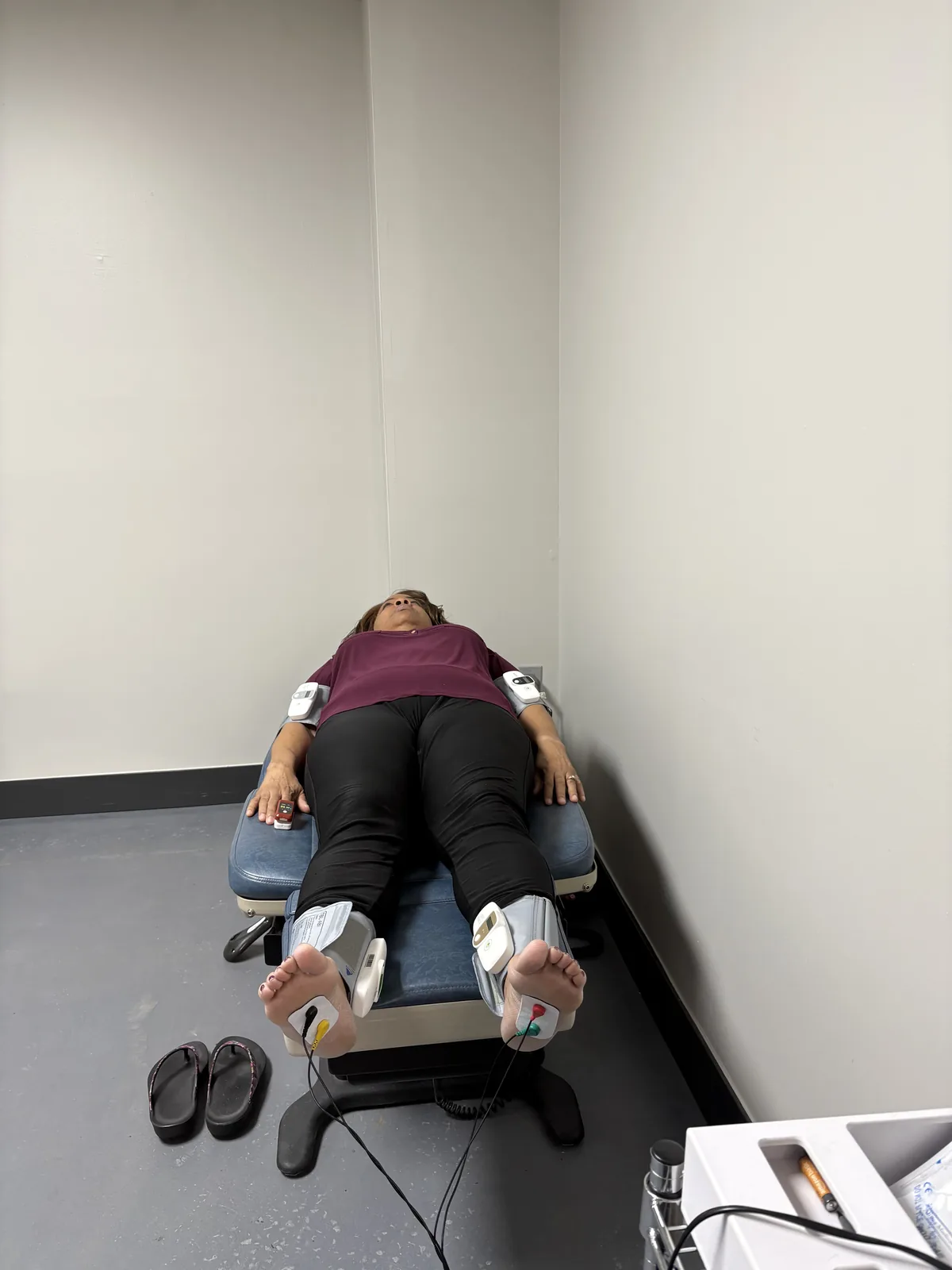
Can autonomic neuropathy make you dizzy when you stand up?
Nerve damage can make you feel dizzy or faint when you stand up or exert yourself. It can also cause a fast heart rate or sudden heart-rate changes [1]. In some people it blocks the chest pain that would normally warn of a heart problem [1].
Why it is usually blamed on dehydration
Feeling lightheaded (woozy or faint) on standing can look like low blood volume or a side effect of blood pressure pills, and sometimes it is. When it keeps coming back after fluids and pill changes, it is time to ask whether the reflex itself still works.
What are the digestive symptoms of autonomic neuropathy?
Autonomic damage can cause bloating, fullness and nausea, constipation, vomiting, and diarrhea that is often worse at night [1]. It may also cause gastroparesis, which slows or stops food moving from the stomach into the small intestine [1].
Why the workup usually starts elsewhere
Reflux care, bowel workups and gallbladder scans are fair first steps, and most people get them. They are also why the nerve cause often waits years for its turn. That is truest when the feet were the only thing anyone linked to neuropathy.
Can autonomic neuropathy hide low blood sugar?
Hypoglycemia unawareness means you do not feel the signs of low blood sugar. So a low can turn severe before anyone notices [1]. This is a safety problem, not just a comfort problem.
The shakes and sweats that normally warn of a low are themselves autonomic signals. When that wiring is damaged, the alarm stays quiet even though the emergency is real.
Sweating and temperature control
Autonomic damage can cause heavy sweating at night or while eating. Or the sweat glands may stop working at all, so the body cannot control its temperature well [1].
Patients often describe this as hot flashes, a drug side effect or sensitive skin. What sorts it out is the timing of the sweating, and whether it shows up with the other symptoms on this page.
Pupils that adjust slowly, and trouble driving at night
Nerve damage can make the pupils slow to react to light and dark. That makes it hard to adjust in dark rooms and hard to handle oncoming headlights when driving at night [1].
People nearly always take this to an eye clinic first, and the vision problem is real. But the cause behind it, in this case, is in the nerves.
Bladder and sexual function
Nerve damage can make it hard to tell when the bladder needs emptying and when it is empty. That can lead to holding urine too long and to infections, or to leaking [1]. In men it can block erections and cause ejaculation problems. In women it can reduce lubrication, feeling and the ability to reach orgasm [1].
When should you be screened for autonomic neuropathy?
The American Diabetes Association position statement on diabetic neuropathy gives clear advice. It says all patients should be checked for distal symmetric polyneuropathy starting at diagnosis of type 2 diabetes. For type 1 diabetes, checks start five years after diagnosis. After that, checks should happen at least once a year [2]. It also advises checking for symptoms and signs of autonomic neuropathy in patients who have small-vessel and nerve complications [2].
Say you already have neuropathy in your feet and any of the symptoms above. That guidance puts you squarely in the group your doctor should ask about autonomic function, without waiting for you to bring it up.
What we do with the pattern
Neuropathy is a category, not a diagnosis. We work to find the specific cause: metabolic, nutritional, autoimmune, toxic or structural. The cause decides the plan. Our approach to the causes that most often get missed is in the hidden drivers of peripheral neuropathy.
What testing adds, and what it does not
We do electrodiagnostic testing (EMG and nerve conduction studies) on site. Those studies check nerves in the arms and legs. They do not measure autonomic function. So they narrow the question but do not answer it.
When dizziness needs sorting out, we use VNG (videonystagmography), a test of inner-ear balance. VNG is a test only. It tells us whether the inner ear plays a part in your dizziness. It does not treat anything.
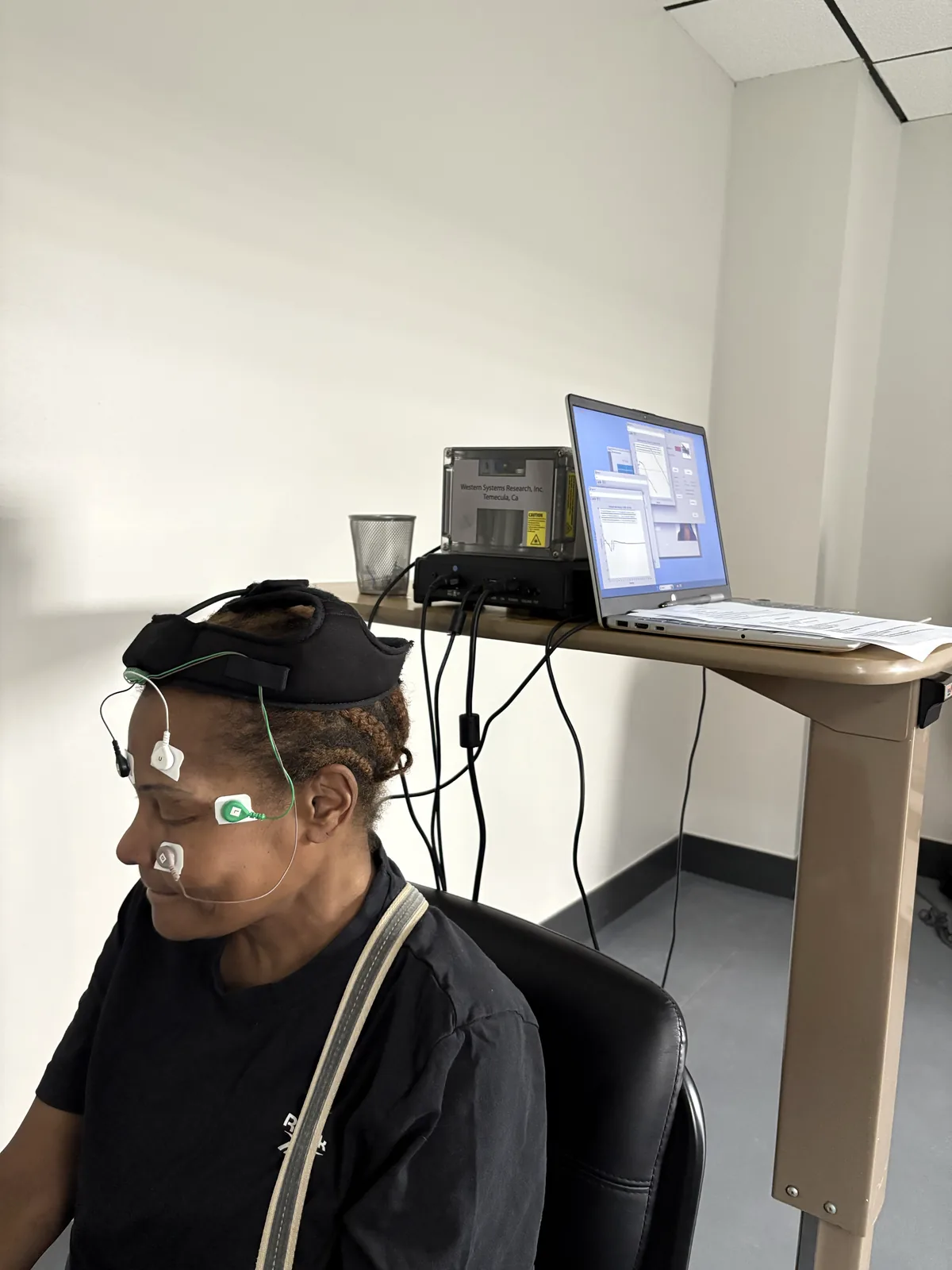
What comes before treatment
The first job is your history and symptom pattern. When do the symptoms happen? What sets them off? What is your history with diabetes, alcohol, medicines and nutrition? Bring that timeline to the visit. It is the most useful thing you can bring, and no test can supply it.
Early fullness, bloating and vomiting after meals can be the gut version of this problem. See gastroparesis as a sign of autonomic neuropathy.
Frequently asked questions
How is autonomic neuropathy different from the neuropathy in my feet?
The neuropathy most people know affects feeling in the feet and hands: burning, numbness, pins and needles. Autonomic neuropathy affects the nerves that run the body on autopilot. These control blood pressure on standing, stomach emptying, bladder emptying, sweating and the pupils [1]. The two often show up together in the same person. See peripheral neuropathy of the feet, symptoms and patterns.
Why do these symptoms get blamed on something else for so long?
Because each one lands with a different specialist. Feeling lightheaded on standing looks like a heart problem. Early fullness and nausea look like a gut problem. Slow pupils look like an eye problem. So the shared nerve cause is rarely the first thing anyone tests for. Small nerve fibers carry much of this traffic. See small fiber neuropathy symptoms and testing.
When should someone with diabetes be screened?
The American Diabetes Association position statement advises checking all patients for distal symmetric polyneuropathy starting at diagnosis of type 2 diabetes. For type 1, it starts five years after diagnosis, and then at least once a year. It also advises checking for symptoms and signs of autonomic neuropathy in patients who have small-vessel and nerve complications [2]. Our workup when diabetes is the cause is on our diabetic peripheral neuropathy treatment page.
What if I do not have diabetes and no one can find a cause?
Autonomic symptoms still have a cause. Idiopathic usually means the cause has not been found yet. Low nutrients are one group worth ruling in or out before the label sticks. See functional B12 deficiency and neuropathy.
What testing does Regenerve perform on site?
We do electrodiagnostic testing (EMG and nerve conduction studies) on site. When dizziness needs sorting out, we use VNG (videonystagmography), a test of inner-ear balance. VNG is a test, not a treatment. The full list is on our neuropathy services page.
What causes autonomic neuropathy?
Autonomic neuropathy has the same kinds of causes as neuropathy in the feet: metabolic, nutritional, autoimmune, toxic, or structural. Diabetes is the best known. That is why the American Diabetes Association advises checking for autonomic symptoms in people with diabetes-related nerve and small-vessel complications [2]. Alcohol, medicines, and nutrition history belong in the workup too, because the cause decides the plan.
How is autonomic neuropathy diagnosed?
It starts with the pattern. Which symptoms on this page do you have? When do they happen, and what sets them off? We weigh that with your history of diabetes, alcohol, medicines, and nutrition. Standard nerve conduction studies test the nerves in the limbs. They do not measure autonomic function, so they narrow the question but do not answer it. Your symptom timeline is the part no test can supply.
Can autonomic neuropathy hide a heart problem?
Yes. Autonomic nerve damage can cause a fast heart rate or sudden heart-rate changes. In some people it blocks the chest pain that would normally warn of a heart problem [1]. That is one reason not to write off lightheadedness on standing, or trouble with exertion, as dehydration when it keeps coming back.
Start with the Nerve Damage Score
The Nerve Damage Score is a free five-question check. It helps find which cause is most likely behind your symptoms. That way your workup starts with a direction instead of a guess.
Regenerve, 4477 Woodson Rd #104, St. Louis, MO 63134. Serving the St. Louis region, Missouri and Illinois, minutes from St. Louis Lambert International Airport.
Sources
- National Institute of Diabetes and Digestive and Kidney Diseases (NIDDK), National Institutes of Health. “Autonomic Neuropathy.” Last reviewed February 2018. https://www.niddk.nih.gov/health-information/diabetes/overview/preventing-problems/nerve-damage-diabetic-neuropathies/autonomic-neuropathy — cited for the cardiovascular symptoms (lightheadedness or faintness on standing, rapid or sudden changes in heart rate, absent chest pain), the digestive symptoms and gastroparesis, hypoglycemia unawareness, sweating and temperature-control changes, bladder and sexual dysfunction, and the slow pupil response and night-driving difficulty.
- Pop-Busui R, Boulton AJM, Feldman EL, Bril V, Freeman R, Malik RA, Sosenko JM, Ziegler D. “Diabetic Neuropathy: A Position Statement by the American Diabetes Association.” Diabetes Care, 2017;40(1):136–154. DOI: 10.2337/dc16-2042. https://pmc.ncbi.nlm.nih.gov/articles/PMC6977405/ — cited for the recommendation to assess all patients for distal symmetric polyneuropathy starting at diagnosis of type 2 diabetes and five years after diagnosis of type 1 diabetes and at least annually thereafter, and to assess symptoms and signs of autonomic neuropathy in patients with microvascular and neuropathic complications.