

B12 is not the only nutrient whose absence damages peripheral nerves. A 2026 review in Current Nutrition Reports describes how a thiamine (vitamin B1) shortage causes conditions such as beriberi and Wernicke’s encephalopathy. It concludes that thiamine and B12 shortages are established risk factors for neuropathy. Vitamin B6 behaves differently: too much B6, not too little, is what correlates with nerve effects.1 That is why “it must be B12” is often the wrong starting guess. The practical work is naming which cause is active before anything is prescribed.
The short version
- Beyond B12 means B1 and B6 first. Too little thiamine and too much B6 are both known nerve problems.
- More supplement is not the answer. With B6, more is the mechanism of injury.
- Nutrition rarely acts alone. It sits alongside metabolic, autoimmune, toxic, and structural causes.
- Absorption matters as much as intake. Alcohol use, weight-loss surgery, and metformin are all in the picture.
- Idiopathic is not a stopping point. It usually means the active cause has not been named yet.
Is B12 deficiency the only vitamin problem that causes neuropathy?
Vitamin B12 deficiency is a real and important pathway. A cobalamin (B12) shortage impairs DNA building and myelin formation. That is why it causes nerve and brain problems.1 But it is one pathway among several.
This matters because medicine that quiets the signal does not repair the wiring. If the cause is nutritional, metabolic, toxic, autoimmune, or structural, the nerve stays under stress while the symptom is managed.
Which B vitamins besides B12 cause neuropathy?
The common mistake is assuming a low vitamin is always the same vitamin. B-vitamin balance can fail in both directions. The direction changes what you should do next.
Vitamin B1 (thiamine): shortage with real neurologic consequences
A thiamine shortage causes conditions including beriberi and Wernicke’s encephalopathy.1 The practical point for nerves is that nutrition causes beyond B12 can be serious. They are not just a slightly abnormal number on a panel.
Diet, alcohol use, poor absorption, and times of higher nutrient need all belong in the history, because they are what put thiamine at risk in the first place.
Vitamin B6 (pyridoxine): excess is the nerve problem
Here the direction flips. The review reports that too much pyridoxine (B6), not too little, correlates with nerve effects. It adds that the B6 link remains uncertain overall, but extra B6 carries a risk of nerve poisoning.1
This is what a supplement-first approach tends to miss. If you take a high-dose B6 product, the nutrition part of your neuropathy may come from too much, not too little. Then the plan changes right away.
Absorption and metabolism travel together
Gut and metabolic problems disrupt how nutrients are absorbed and used. That is why nutrition is treated here as part of the whole workup, not as a one-time supplement fix.
Who is most at risk for nutritional neuropathy?
A 2026 review in Neurological Research and Practice describes polyneuropathy as a common nerve disorder that is becoming more frequent, especially among older people. It names B-vitamin deficiencies, prediabetes, diabetes mellitus, obesity, and treatment-induced neuropathies as key risk factors.2 It also notes that these factors often interact, which makes care harder.
That is the real-world reason behind mapping causes. More than one is usually at work. Naming only the loudest one leaves the rest in place. Several of the causes that get overlooked are covered in our review of the hidden drivers behind peripheral neuropathy.
What does vitamin deficiency neuropathy feel like?
Timing and location give useful clues. An even pattern that hits the longest nerves first, toes first and then up the foot, points to a whole-body or metabolic cause, not a single local injury.
Nutrition causes can also show small-fiber features: burning, hot-coal feelings, and symptoms that are worse at night. When the pattern and the lab results do not line up, that mismatch is itself a clue.
Why standard testing can look unremarkable
Standard nerve conduction studies measure the larger fibers. Someone with strong burning and normal-looking studies is not a contradiction. It is a limit of what that test was built to see.
Medication, surgical, and medical history belong in the evaluation
Some situations raise nutrition risk directly. The Current Nutrition Reports review notes that these shortages are still common in developing regions. In wealthier nations, alcohol abuse, weight-loss surgery, and metformin use increasingly drive them.1
So the history has to cover medicines, gut and surgery history, and what you actually eat, not only the nerve symptoms. None of that is a reason to stop a prescribed medicine on your own.
Chemotherapy and nutritional status together
Chemotherapy can injure nerves directly, and nutrition levels often change during and after cancer treatment. When both are present, they are treated as two causes, not one.
How we evaluate a suspected nutritional driver
Neuropathy is rarely caused by blood sugar alone. It is rarely explained by a single lab value. The workup is built to decide which cause is doing the most damage right now.
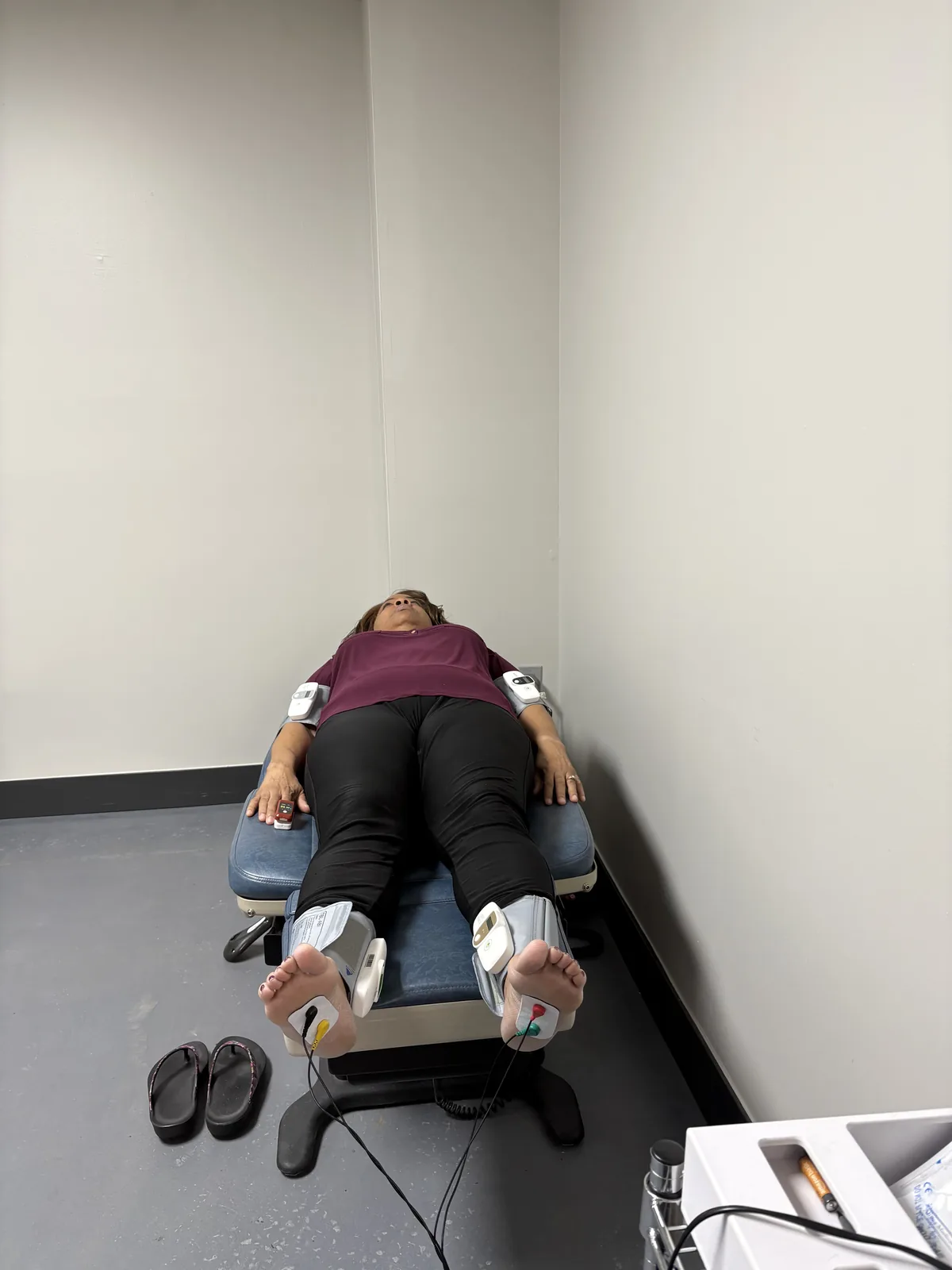
We do electrodiagnostic testing (EMG/NCS) on site. VNG (videonystagmography) is available as a test of inner-ear balance when dizziness or unsteadiness is part of the picture. It is a test, never a treatment. Metabolic and nutrition checks run alongside both.
How is nutritional neuropathy treated?
We do not promise nerve regeneration, reversal, or a cure. The work is cutting what is damaging the nerve and supporting the conditions in which function can improve.
Depending on the cause, the plan may include class 4 photobiomodulation, class 3B cold laser, or whole-body infrared alongside metabolic and nutrition care. Orthobiologic injections (PRP and BMAC) are offered here. No success rate is published for any of it.
When nutrition is the main cause, the goal comes in three steps, in this order. Find the specific pattern. Avoid a supplement that makes things worse. Then support the conditions for repair.
Where we are and how to start
Regenerve is located at 4477 Woodson Rd #104, St. Louis, MO 63134, minutes from St. Louis Lambert International Airport, and we see patients from across the St. Louis region, Missouri and Illinois. You can call (314) 886-5739 or text (314) 886-5902, or email info@regenerve.com.
The free Nerve Damage Score is a five-question starting point. It will not diagnose a vitamin problem. But it sorts out the cause question, so the first visit can go somewhere useful.
If B12 is still on your list, read how a stomach that stops absorbing B12 causes burning feet. For a nerve-support nutrient with its own trial record, see alpha-lipoic acid for peripheral neuropathy.
Frequently asked questions
Which nutritional deficiencies besides B12 can damage peripheral nerves?
Thiamine (vitamin B1) is the clearest one. A 2026 review in Current Nutrition Reports describes how a thiamine shortage causes beriberi and Wernicke’s encephalopathy. It lists thiamine and B12 deficiencies as established risk factors for neuropathy.1 Vitamin B6 is the opposite problem, because too much, not too little, is what correlates with nerve injury. See why a “normal” B12 result can still be misleading.
Can too much vitamin B6 really cause neuropathy?
That is what the review reports. Too much pyridoxine, not too little, correlates with nerve effects. The B6 link overall remains uncertain, but extra B6 poses a risk of nerve poisoning.1 It is worth reviewing every supplement you take before adding another one. See the drivers that are most often missed.
Can gluten sensitivity affect nerves even if my celiac test was negative?
A negative celiac test rules out celiac disease, but not every gluten-related process. Immune and absorption pathways can overlap. We look at the whole picture instead of stopping at one result. See what a negative celiac test does and does not settle.
Do statins, metformin, or weight-loss surgery matter here?
The Current Nutrition Reports review notes that alcohol use, weight-loss surgery, and metformin use are increasingly driving B-vitamin shortages in higher-income countries.1 That is a reason to review medicine and surgery history, not a reason to stop a prescribed medicine on your own. See how statins and metformin intersect with nerve health.
Why do my feet still burn when my labs look normal?
One normal value does not settle the nutrition question, and mixed causes are common. A nutrient gap can sit alongside a metabolic, autoimmune, or toxic cause. Burning at night in particular often reflects small-fiber damage, which standard nerve conduction studies do not measure. See small fiber neuropathy symptoms and testing.
What are you lacking if you have neuropathy?
It may be thiamine (vitamin B1) or B12, since shortages of both are established risk factors for neuropathy. With vitamin B6, the problem can run the other way: too much, not too little, is what correlates with nerve injury. Nutrition also rarely acts alone. It usually sits beside blood sugar, autoimmune, toxic, or structural causes. So we name every active cause before anything is prescribed.
What vitamin helps stop neuropathy?
No single vitamin stops neuropathy, and adding supplements blindly can backfire. With vitamin B6, more is what causes the injury, so a high-dose B6 product can be part of the problem. When nutrition is the main cause, the plan is to find the specific pattern and avoid any supplement that makes things worse. Then we support the conditions in which nerve function can improve.
What are the most common causes of neuropathy?
A 2026 review in Neurological Research and Practice names B-vitamin deficiencies, prediabetes, diabetes, obesity, and treatment-induced neuropathies as key risk factors. It notes that polyneuropathy is becoming more common, especially in older people.2 These causes often overlap, so more than one is usually at work at the same time. Naming only the loudest one leaves the rest in place.
Can nerve damage from a vitamin deficiency be reversed?
We do not promise nerve regeneration, reversal, or a cure, and no success rate is published for any treatment we offer. What we can do is find the cause that is still injuring the nerve, such as a thiamine shortage or too much B6 from a supplement. Then we correct it and support the conditions in which function can improve. Stopping the ongoing damage comes first.
Sources
- B Vitamin Deficiencies and Associated Neuropathies. Current Nutrition Reports. 2026. https://doi.org/10.1007/s13668-025-00723-3 (thiamine shortage producing beriberi and Wernicke’s encephalopathy; cobalamin deficiency impairing DNA synthesis and myelin formation; excess rather than inadequate pyridoxine correlating with neuropathic effects; alcohol abuse, weight-loss surgery, and metformin use increasingly driving these deficiencies in wealthier nations).
- Targeting risk factors and strategies for prevention of peripheral neuropathy: focus on B-vitamin deficiencies and metabolic diseases. Neurological Research and Practice. 2026. https://doi.org/10.1186/s42466-026-00466-8 (rising incidence of polyneuropathy, especially among older people; B-vitamin deficiencies, prediabetes, diabetes mellitus, obesity, and treatment-induced neuropathies as key risk factors).