

When neuropathy has taken your protective feeling, foot ulcer prevention stops being a hygiene habit and becomes a swap. You replace the warning your nerves used to give with a daily visual check and careful control of pressure. Diabetic peripheral neuropathy occurs in up to 50% of patients with diabetes mellitus [1][4]. In that group, an injury can form well before anything hurts.
That is the whole logic of prevention here. Look, because you can no longer feel. And control the pressure and rubbing that cause the injury in the first place.
Why does neuropathy make foot ulcers more likely?
Metabolic neuropathy is length-dependent, so it reaches the longest nerve fibers first. That causes the familiar pattern that starts at the toes and moves upward. It brings burning, tingling or numbness that is often worse at night.
The result is mechanical. Every step still stresses the skin, but the alarm is weaker. So a blister or a crack has time to become a chronic wound before anyone notices. Once skin is open, bacteria have a way in. That is why prevention is really about keeping that door shut and catching any opening early [2].
How do you prevent diabetic foot ulcers every day?
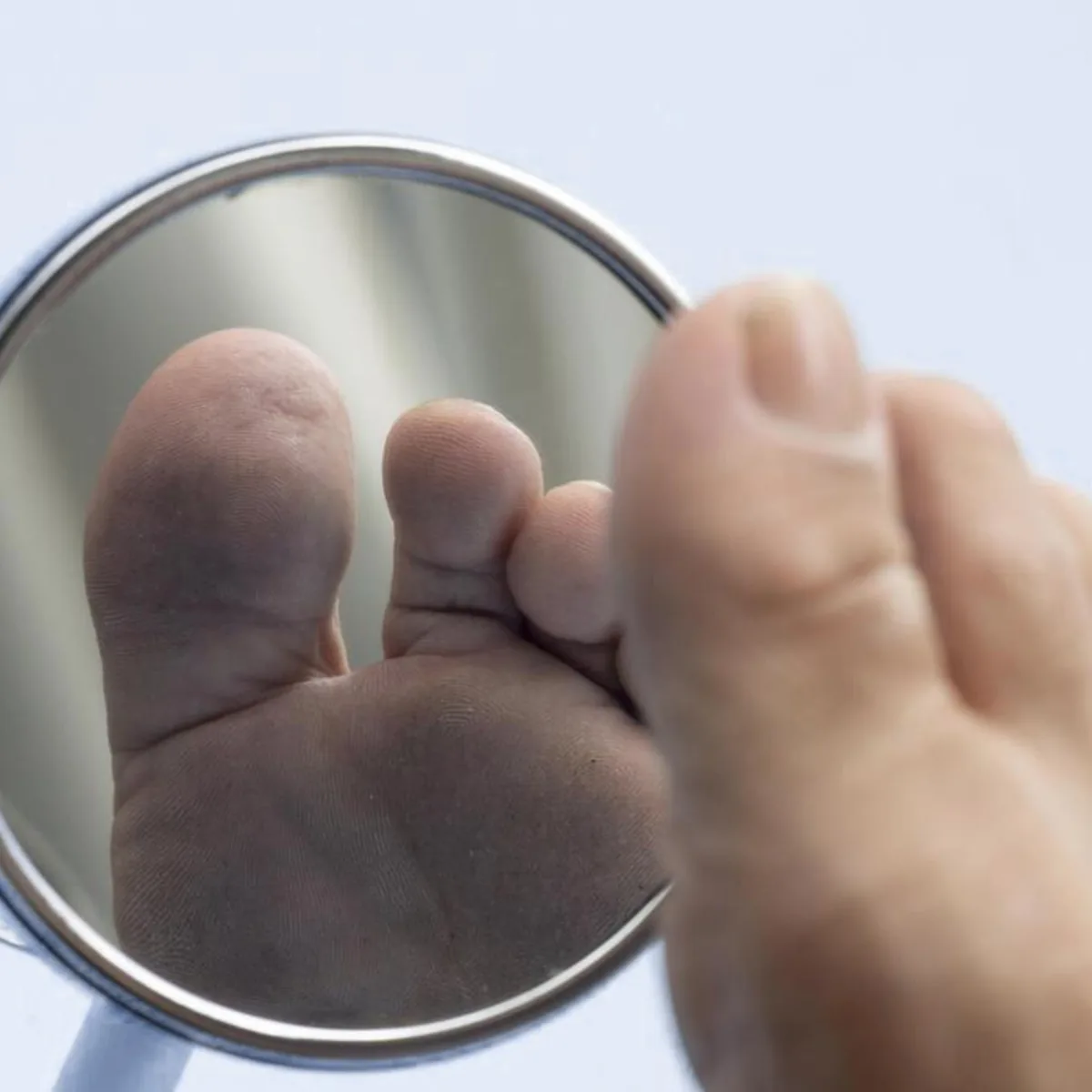
Check your feet every day
Not when there is time. Do it daily, as a fixed routine, because it is doing the job that feeling used to do [3].
- Use bright light and a mirror for the soles and between the toes.
- Look for redness that does not fade, new callus, blisters, cracks, drainage or a new odor.
- Note changes in writing, and photograph anything you want to compare next week.
Keep pressure and friction under control
Pressure is the part people get backward. Patients with numb feet may choose shoes half a size too small, because they need more pressure before the shoe feels like it fits. That creates the pressure points that turn into skin breakdown [5].
- Buy for measured length and width, not for how snug the shoe feels.
- Check inside the shoe before putting it on. A seam, a pebble or a shifted insert is enough.
- Do not walk barefoot outdoors, and do not stay in wet socks.
Map the driver instead of guessing
Neuropathy is a category, not a diagnosis. Blood sugar is rarely the only thing acting on the nerve. Some causes are metabolic, some nutritional, some toxic, some autoimmune or structural. Each one responds to different levers.
That matters for prevention, because the causes decide how well tissue handles stress and how fast it repairs. If the cause is still active, the skin you are protecting has a thinner safety margin.
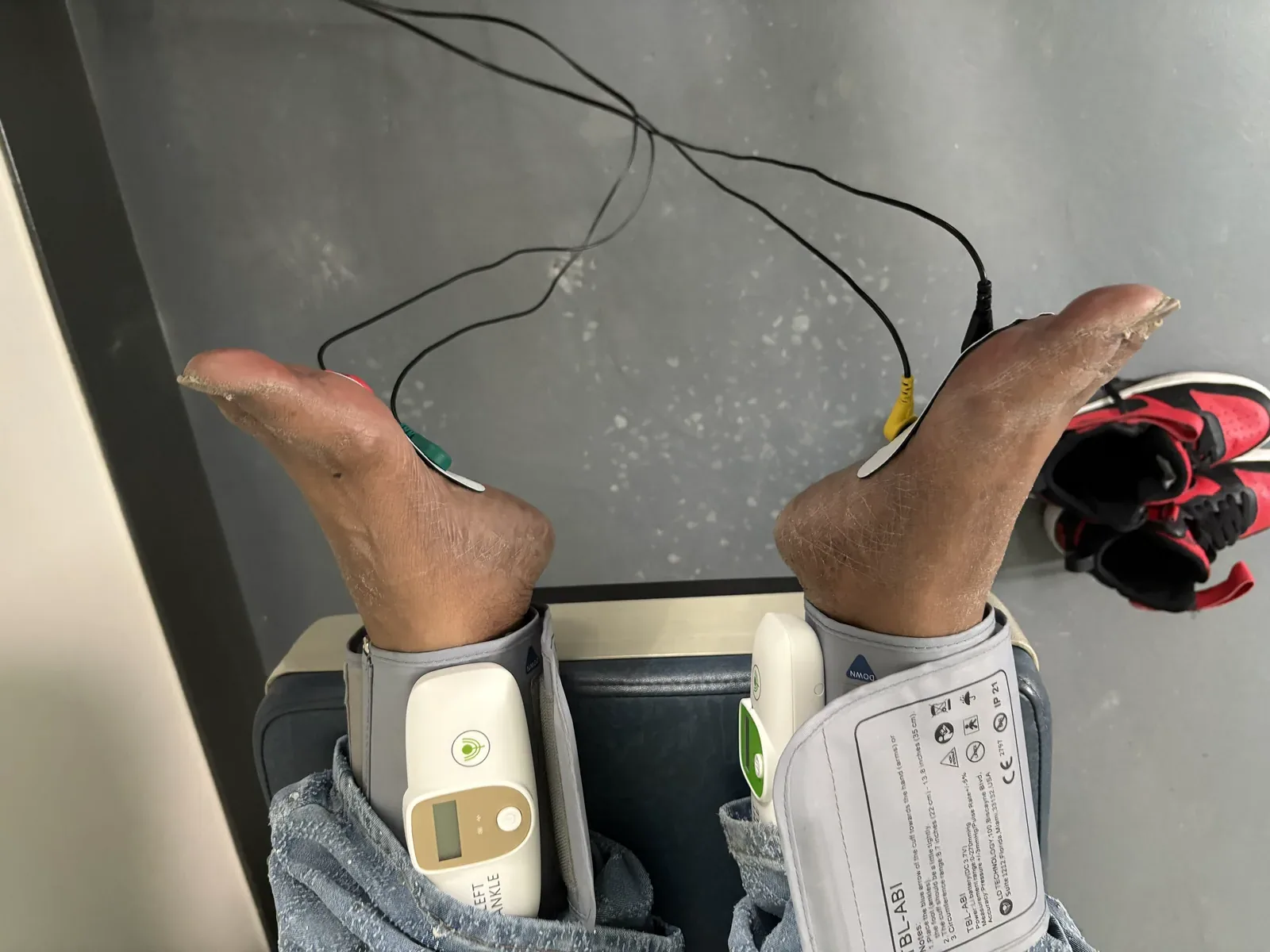
Testing that changes the plan
Electrodiagnostic testing, done on site, can map nerve damage when symptoms are unclear or changing. When blood flow is in question, a vascular check looks at whether poor tiny-vessel circulation is part of why healing is slow. Both are worth doing when the answer would change what you do at home.
Does exercise help prevent foot ulcers?
Exercise works on the systems that decide how much stress your feet can take. These are insulin sensitivity and sugar handling, blood fats, blood vessel function, and blood flow to the vasa nervorum, the tiny vessels that feed the nerve itself.
The program at Regenerve combines endurance work, balance and body-awareness training, strength work, and daily foot and ankle mobility. The weekly plan, and how to step it up without setting off flares, is in exercises for peripheral neuropathy in the feet.
What we do in clinic, and what it is not
Medicine that quiets the pain signal does not repair the nerve’s environment. The work in clinic aims at the terrain. That means restoring tiny-vessel blood flow so oxygen reaches the nerve, cutting the metabolic pathways that cause glycation damage, and supplying the raw materials nerves need. All of it happens under a physician’s evaluation.
Light-based therapies
Class 4 photobiomodulation and class 3B cold laser are part of neuropathy care. They go alongside the metabolic work, not in place of it. Whole-body infrared is also offered.
Orthobiologic injections at Regenerve
When orthobiologic injections are considered, the cause-focused plan stays first.
When you find something
This is where prevention is won or lost. Waiting for pain in a foot that cannot feel means waiting for the ulcer to show itself some other way.
- Stop walking on it. Keep weight and pressure off the area entirely.
- Clean gently. Do not scrub broken skin or apply anything abrasive.
- Call your clinician the same day for evaluation, not next week.
Ulcers come back after a first one often enough that prevention has to go on after healing, not stop with it [2]. The routine is for life.
Ulcer risk starts with a loss of feeling that is easy to miss. So it helps to know the early signs of diabetic peripheral neuropathy.
Frequently asked questions
What does a daily foot check for neuropathy actually involve?
Bright light, a mirror for the soles, and a look between every toe. You are watching for redness that does not fade, new callus, blisters, cracks, drainage or a new odor. It replaces the warning that protective feeling no longer gives you. See peripheral neuropathy of the feet symptoms.
Why do people with numb feet often end up in shoes that are too small?
Because pressure is what still registers. Patients with numb feet may pick shoes half a size too small so they can feel that the shoe fits. That creates the pressure points that lead to skin breakdown [5]. Buy for measured length, not for how the shoe feels. See the hidden drivers of peripheral neuropathy.
Do I need nerve testing to prevent a foot ulcer?
No test replaces the daily check. But electrodiagnostic testing can show which fibers are involved when the pattern is unclear or changing. That in turn sharpens what you are preventing. See the neuropathy services offered at Regenerve.
What if the problem is not diabetic neuropathy at all?
It happens. Pinched-nerve problems such as carpal tunnel and sciatica can cause numbness and burning that get filed under diabetic neuropathy. And the prevention plan is different. See carpal tunnel, sciatica and double crush.
What causes diabetic foot ulcers?
Neuropathy takes away the warning. Every step still stresses the skin. But a blister or crack no longer hurts enough to notice, so it has time to become a chronic wound. Pressure makes it worse. People with numb feet often choose shoes half a size too small, because a tight shoe is the only one that feels like it fits. Once the skin opens, bacteria have a way in.
What should you never do to the feet of someone with diabetes?
Never walk barefoot outdoors or stay in wet socks. Never buy shoes by how snug they feel. Buy for measured length and width, and check inside each shoe before putting it on. Never scrub broken skin or put anything rough on it. And never wait for pain before acting on a change you can see, because a foot that cannot feel will not warn you in time.
How can I treat a foot ulcer at home?
Home care is first aid, not treatment. Stop walking on the area and keep weight and pressure off it entirely. Clean it gently without scrubbing. Call your clinician the same day, not next week. After it heals, keep up the daily foot check and pressure control for good, because ulcers often come back after a first one.
Find out what is driving it
Prevention gets easier when you know which cause is doing the damage. The free five-question Nerve Damage Score at regenerve.com/assessment is the starting point. It takes a few minutes.
Sources
- Bragg S, Tucker Marrison S, Haley S, Diabetic Peripheral Neuropathy: Prevention and Treatment, American Family Physician, 2024;109(3):226–232, https://www.aafp.org/afp/2024/0300/diabetic-peripheral-neuropathy.
- Parveen K, Hussain MA, Anwar S, Elagib HM, Kausar MA, Comprehensive review on diabetic foot ulcers and neuropathy: treatment, prevention and management, World Journal of Diabetes, 2025;16(3):100329, https://pmc.ncbi.nlm.nih.gov/articles/PMC11885961/.
- Centers for Disease Control and Prevention, Diabetes and Your Feet, https://www.cdc.gov/diabetes/diabetes-complications/diabetes-and-your-feet.html.
- University of Michigan Medical School, The Burden of Diabetic Peripheral Neuropathy, https://medresearch.umich.edu/research-news/burden-diabetic-peripheral-neuropathy.
- Kowalick C, Advances in preventing and treating diabetic neuropathy, Magazines of the Schools at UT Health San Antonio, December 1, 2025, https://magazines.uthscsa.edu/schools/2025/12/01/advances-in-preventing-and-treating-diabetic-neuropathy/.