

Too much vitamin B6 can injure peripheral nerves, and the dose it takes is lower than most people assume. Health Canada’s safety review found a possible link between vitamin B6-containing non-prescription natural health products and peripheral neuropathy at daily doses of 10 mg or higher [1]. The catch is that no blood level settles the question, so this is found through your exposure history and symptom timeline, not a single lab result.
It is also one of the drivers most easily missed, because patients do not describe it as a supplement problem. They describe burning, numbness or electric feelings in the feet. Every other neuropathy driver uses those same words.
Key points
- Pyridoxine toxicity causes a length-dependent, sensory-predominant axonal polyneuropathy [2]. In plain terms, it hits the longest nerves first and mostly affects feeling.
- Health Canada found a possible risk signal at daily doses of 10 mg or higher. This was in non-prescription natural health products [1].
- In a 261-patient cohort, plasma B6 level did not correlate with how bad the neuropathy was, so the number alone does not confirm or rule out the cause [2].
- Toxic effects have been reported at normal multivitamin doses taken for years [3].
- Neuropathy is a category, not a diagnosis. B6 excess can be one driver among several in the same person.
How much vitamin B6 is too much?
Health Canada reviewed vitamin B6-containing health products for a possible link to peripheral neuropathy. Published international cases at daily doses under 100 mg prompted the review. So did assessments from foreign regulators [1].
The review found 17 cases of peripheral neuropathy (15 Canadian and 2 international). These patients were taking vitamin B6-containing non-prescription health products (14 cases) or vitamin B6-containing prescription drugs (3 cases) [1]. Fifteen of those 17 did not meet the criteria for further assessment. In the two that did, confounders (other possible causes) and missing clinical information limited the analysis, so a link could not be excluded rather than confirmed [1].
Health Canada’s conclusion separates product types. It found a possible link for the non-prescription natural health products at daily doses of 10 mg or higher. It did not find enough evidence to establish a link for vitamin B6-containing prescription drugs [1]. Nine supporting articles in the scientific literature were reviewed alongside the case data [1].
Why a blood level does not settle it
This is the part that surprises people. The Peripheral Neuropathy Research Registry enrolled 261 patients with chronic idiopathic axonal polyneuropathy. In them, plasma vitamin B6 level was not related to how severe the neuropathy was [2].
A high plasma B6 level showed no link to nerve conduction study results. It showed no link to exam findings, including toe strength, vibration sense and deep tendon reflexes. It showed no link to patient-reported numbness or pain intensity [2]. The authors concluded that moderately elevated levels, even in the 100 to 200 µg/L range, were not associated with significantly worse signs or symptoms. Very few patients in the study were above 300 µg/L [2].
So a mildly high number is not proof. A normal number does not rule it out. The exposure history and the timeline do more work than the lab test.
Ordinary doses, taken long enough
A published case report describes a 73-year-old man with three years of numbness and tingling in both legs that kept getting worse. He also had new lightheadedness and dizziness. He was taking a standard daily multivitamin supplying 6 mg of vitamin B6 [3].
His serum B6 was 259.9 nmol/L against a reference range of 20 to 125 nmol/L. One month after stopping the multivitamin, he reported that the dizziness had resolved. The numbness and tingling had improved slightly [3]. One case is not a rule. But it is a reason to read the label and not assume a common product is harmless.
How is vitamin B6 toxicity diagnosed?
Exposure mapping
We ask about every daily multivitamin, B-complex, energy formula and anything else that lists pyridoxine. We record the milligram amount and how long it has been taken. Then we line that up against when the symptoms started and how they progressed.
Supplements are the category patients most often leave out of a medication history, because they do not think of them as drugs.
Pattern mapping
Small fiber involvement causes burning and changes in feeling. Large fiber involvement shows up as numbness, unsteadiness and lost position sense. Which pattern leads decides which testing is worth running.
We do electrodiagnostic testing (EMG/NCS) on site. It measures large-fiber involvement. It can be normal in small fiber neuropathy, so a normal study does not close the file.
The other drivers in the same room
Excess B6 rarely comes alone. Metabolic injury, vitamin B12 deficiency, gluten-related mechanisms, chemo, alcohol and heavy metals all cause overlapping symptoms. Two drivers in one person is common. The full set is laid out in the hidden drivers of peripheral neuropathy.
Videonystagmography (VNG) is a diagnostic test of inner-ear balance. We use it when unsteadiness is part of the picture. It is a test, not a treatment.
When should B6 neuropathy symptoms be checked right away?
Fast-worsening numbness, significant balance loss or new weakness should be checked promptly, not watched. So should changes in feeling that are starting to get in the way of walking.
Waiting to see if it settles on its own is the most common reason people arrive later than they should have.
How is vitamin B6 neuropathy treated?
The first move is to cut back or stop the exposure and confirm whether anything else is adding to it. That is driver-level work. Nothing else in the plan takes its place.
After that, the work is the terrain the nerve depends on. That means blood flow (perfusion) so oxygen reaches the nerve. It means the metabolic pathways that keep causing injury. It means the raw materials (substrates) repair needs. Class 4 photobiomodulation, class 3B cold laser and whole-body infrared are used as supporting parts matched to the clinical picture. They are not stand-alone answers.
Orthobiologic injections (PRP and BMAC) are offered in selected situations. Qutenza (capsaicin 8% patch) is FDA-approved in adults for neuropathic pain from postherpetic neuralgia and from diabetic peripheral neuropathy of the feet. A clinician applies it in the clinic. It is repeated no more often than every three months.
None of this is a promise of nerve regeneration or reversal. Recovery after a toxic exposure is variable and often partial.
Frequently asked questions
Can a daily multivitamin cause vitamin B6 toxicity?
It has been reported. In a published case report, a 73-year-old man developed numbness and tingling in both legs that worsened over three years. He was taking a standard daily multivitamin. His serum B6 was 259.9 nmol/L against a normal range of 20 to 125 nmol/L. What matters is the pyridoxine amount on the label and how long it has been taken. We do the testing that sorts this out on site; see our services and on-site testing.
Will a blood level tell me whether B6 is the cause?
Not by itself. In 261 patients with chronic idiopathic axonal polyneuropathy, plasma B6 level was not related to how severe the neuropathy was. It was not related to exam findings or nerve conduction results either. Exposure history and symptom timeline carry more weight than a single number. See functional B12 deficiency and neuropathy.
What do the symptoms look like?
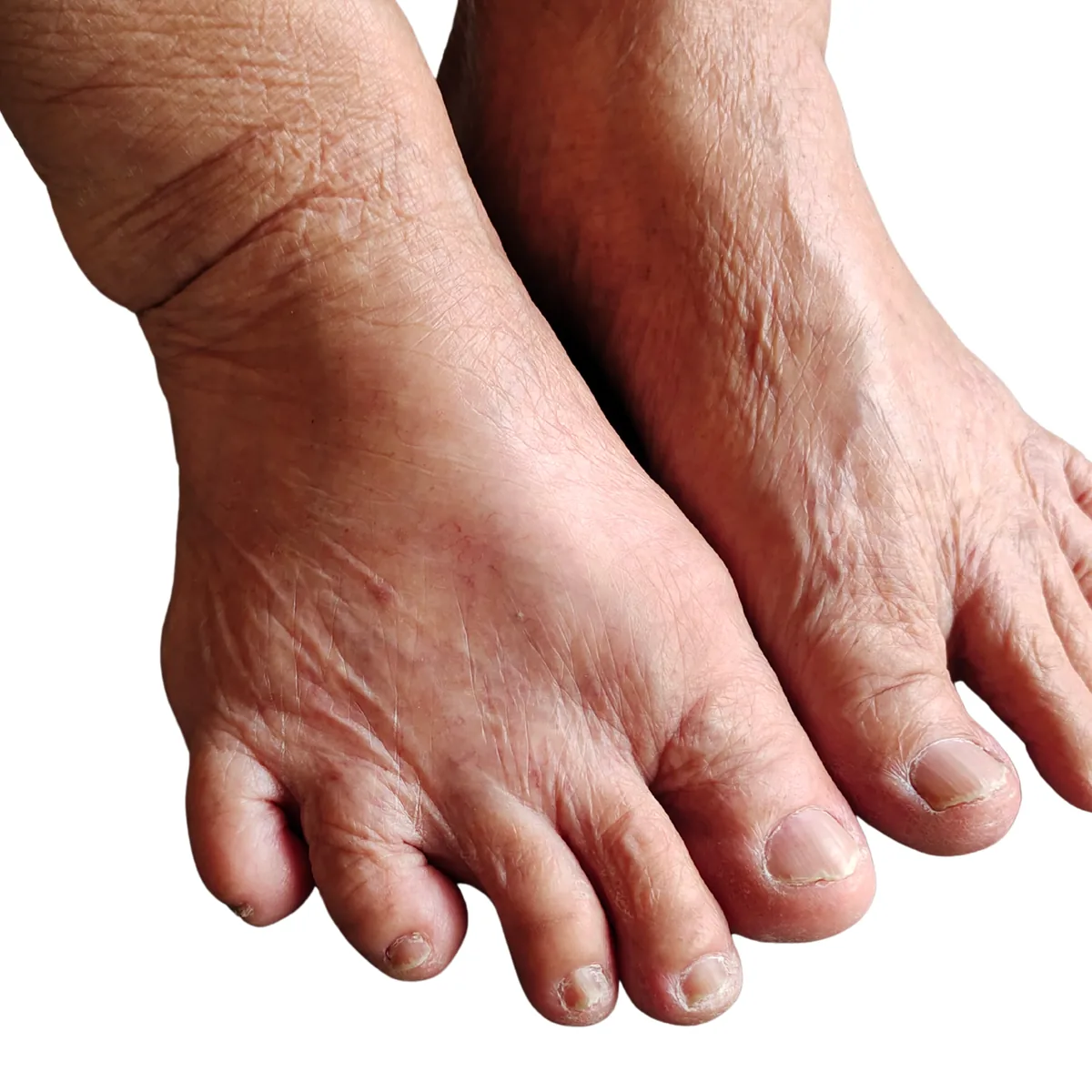
Pyridoxine toxicity is known to cause a length-dependent, sensory-predominant axonal polyneuropathy (damage that starts in the longest nerves and mostly hits feeling), so numbness, burning and changes in feeling that start in the feet are the usual picture. That pattern overlaps with several other drivers, which is why the exposure history matters. See small fiber neuropathy symptoms and testing.
What should I ask a clinic that is evaluating me for this?
Ask whether they will check every supplement label for pyridoxine. Ask how they will build the exposure timeline. Ask what testing they will use to measure the nerve involvement. A workup that skips the supplement bottle is not a workup. See how to choose a neuropathy specialist.
If I stop the supplement, will the symptoms go away?
It is not that predictable. In the published case report, dizziness resolved one month after the multivitamin was stopped. The numbness and tingling improved slightly. Recovery varies, and no one should promise reversal. See peripheral neuropathy of the feet symptoms.
Is B6 or B12 better for neuropathy?
They are not two versions of the same fix. Too much vitamin B6 can itself injure peripheral nerves. Vitamin B12 deficiency is a separate driver of neuropathy. Both can cause the same burning and numbness in the feet, and two drivers in one person is common, so the workup checks for each one instead of adding another supplement on a guess.
Which supplements contain vitamin B6?
Look for pyridoxine on the label. It shows up in daily multivitamins, B-complex products, energy formulas and other products. Supplements are the category patients most often leave out of a medication history. Write down every product that lists it, the milligram amount and how long you have taken it. Bring that list to your visit.
Can too much vitamin B6 cause dizziness?
It has been reported. In a published case, a 73-year-old man taking a standard multivitamin with 6 mg of B6 had three years of numbness and tingling in both legs. He also had new lightheadedness and dizziness. One month after he stopped the multivitamin, the dizziness resolved. One case is not a rule, and unsteadiness has other causes, so balance testing may be part of the workup.
Next step
Did your symptoms start or get worse after you began a B-complex or multivitamin? That timeline is worth taking seriously. Five questions identify which driver is doing the most damage right now.
Sources
- Health Canada. Summary Safety Review – Vitamin B6 Health Products – Assessing the Potential Risk of Peripheral Neuropathy. Drug and Health Products Portal, Government of Canada. Reviews conducted 2024-2025. https://dhpp.hpfb-dgpsa.ca/review-documents/resource/SSR1773147434487
- Stewart SL, Thomas S, Höke E, Simpson D, Singleton JR, Höke A. Vitamin B6 levels do not correlate with severity of neuropathy in chronic idiopathic axonal polyneuropathy. Journal of the Peripheral Nervous System. 2022;27(1):31-37. doi:10.1111/jns.12480. https://pubmed.ncbi.nlm.nih.gov/34931740/
- Paluszny A, Qiu S. Vitamin B6 toxicity secondary to daily multivitamin use: a case report. Cureus. 2023;15(11):e48792. doi:10.7759/cureus.48792. https://pmc.ncbi.nlm.nih.gov/articles/PMC10720370/