
Neuropathy treatment options · St. Louis
Our Services
Regenerve combines advanced medical therapies, supportive care, and specialized treatments to address the root causes of neuropathy, not just the symptoms. Every plan is built for you after a physician evaluation at our St. Louis clinic. We are minutes from Lambert International Airport.
How Is Neuropathy Diagnosed?
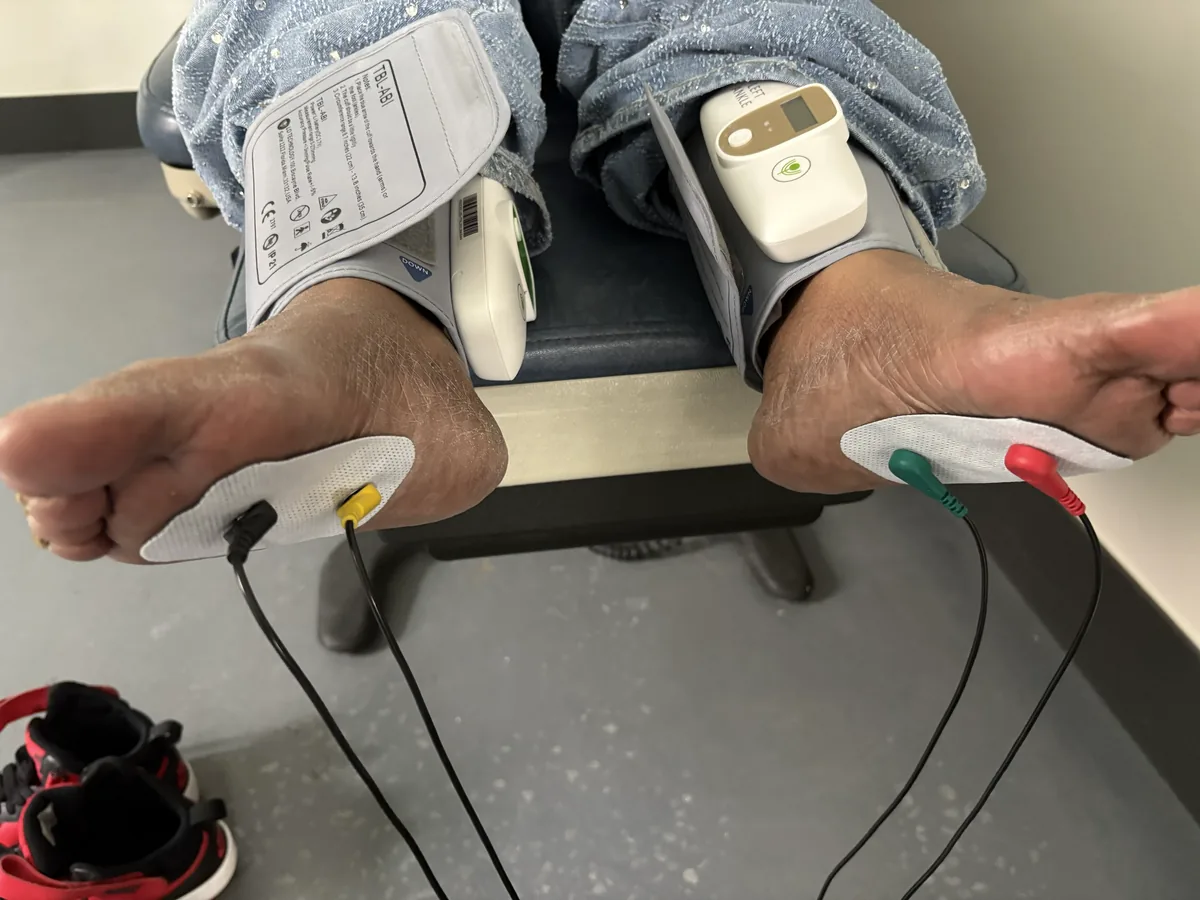
Treatment begins with knowing which nerves are hurt, where along the nerve, and how badly. We measure it. We do not assume it.
Electrodiagnostic Testing (EMG and Nerve Conduction Studies)
Done on site at our St. Louis clinic. Nerve conduction studies measure how fast and how strong a signal travels along a nerve. Needle electromyography (EMG) records the electrical activity of the muscle that nerve feeds. Together they help find nerve damage and pin down where it is. They also tell a compressed or entrapped nerve apart from a metabolic neuropathy. That difference changes the treatment plan. Large-fiber testing can be normal in small-fiber neuropathy. So we always read results alongside your history, your exam, and the broader root-cause workup.
VNG Balance Testing
Videonystagmography records eye movement. It measures how well the balance organs of the inner ear are working. Neuropathy weakens the signal your feet send to your brain. But it is not always the only reason a person is unsteady. The difference changes what balance work should target. How VNG testing works and what the result changes.
What Advanced Treatments Are Available for Neuropathy?
Vagal Nerve Stimulation (NS100 Protocol)
Low-level electrical pulses go to the vagus nerve to modulate (tune) pain signaling and support nerve function. For painful diabetic neuropathy we use the NS100, an FDA-cleared Class II programmable peripheral electrical nerve stimulator. Four small electrode arrays are placed percutaneously (through the skin) in a roughly 30-minute office procedure. Topical anesthesia numbs the skin. The arrays go on the auricular branches (the nerve branches of the ear). That way the device acts as a vagal stimulator alongside the trigeminocervical complex. They stay in place for a 20-day course. Then we remove them at a follow-up visit. Nothing is permanently implanted. Coverage depends on your plan and on documented medical necessity. We verify benefits before scheduling. See how it fits into diabetic neuropathy care.
Exosome-Based Nerve Support
Exosomes are used to support the tissue around damaged nerves. Within the treatment options we have, the goal is to ease your symptoms and help you function better.
Orthobiologic Injections (PRP and BMAC)
Platelet-rich plasma (PRP) and bone marrow aspirate concentrate (BMAC). Both are made from your own blood or marrow and placed under image guidance. Platelets carry growth factors involved in healing and in forming new blood vessels. For peripheral nerve repair specifically, the evidence is at an earlier stage than it is for joints and tendons. It comes from preclinical models and small clinical series, not large randomized trials. We offer them only as part of a physician-directed plan built for you. They are never a guaranteed therapy. Read how orthobiologics fit into the Regenerve Protocol.
Peripheral Nerve Stimulation
Sending targeted electrical pulses to peripheral nerves to ease long-term pain.
Cannabinoid-Based Therapies
Using medical cannabis products to manage the pain and inflammation that come with neuropathy.
Neuromodulation with Closed-Loop Technology
Using advanced neuromodulation systems. They adjust stimulation in real time based on feedback from the nerves to get the best pain relief.
Palmitoylethanolamide (PEA) and C-15 Lipid Supplementation
Giving supplements known to fight inflammation and protect nerves. They support nerve health.
Endoscopic Nerve Decompression
Doing minimally invasive procedures to take pressure off compressed nerves. This cuts pain and improves function.
Class 4 Photobiomodulation (High-Power Laser Therapy)
Therapeutic laser light at class 4 power. It targets cytochrome c oxidase, the enzyme that drives energy production in the mitochondria (the cell’s power plants) of injured nerve tissue. It also supports blood flow through the damaged vasa nervorum (the tiny vessels that feed the nerve). Class 4 systems are higher in power than the class 3B units often sold as “cold laser,” and we pick them when the light needs to reach deeper.
Low-Level Laser Therapy (Cold Laser)
Class 3B low-level laser used on focal areas of nerve pain. It is lower in power than the class 4 system. We use it where a gentler, more local dose better fits the tissue being treated.
Whole-Body Infrared Therapy
High-intensity infrared from a dedicated treatment table. It gives deep warmth across the whole body. This improves blood flow, helps tissue stretch, and eases muscle guarding (muscles tensing up to protect a sore area). We often use it before rehab or a procedure so treatment is easier to tolerate.
Supportive Therapies
Remote Patient Monitoring (RPM)
Using technology to track your health numbers all the time. This lets us step in early and adjust your care.
Telehealth Services
Offering virtual visits and follow-ups so care is easy to reach.
Lifestyle and Behavioral Coaching
Helping patients build healthy habits and coping skills to manage symptoms.
Physical Therapy & Rehabilitation
Building exercise and rehab programs for each person. They help you move better and hurt less.
Nutritional Counseling
Giving diet guidance to support overall health and back up medical treatment.
Specialized Treatments
Topical Capsaicin Patches
Applying high-concentration capsaicin patches to desensitize (calm) overactive pain receptors in the skin. Qutenza, the 8% capsaicin patch, is applied in the clinic by a clinician. It is FDA-approved for diabetic peripheral neuropathy of the feet. See what the treatment involves and who it suits.
Insulin and Glutathione Infusion Therapies
Giving intravenous (IV) therapies that support metabolism and lower oxidative stress (cell damage from unstable molecules).
Wound Care Management
Special care for wounds caused by neuropathy. It helps them heal and heads off problems.
Balance and Gait Training
Giving targeted care to address balance problems and lower the risk of falls. The inner ear may be playing a part. If so, VNG balance testing finds that before a program is built.
Regenerve brings all these treatments together. We are committed to personal, effective care for people living with chronic neuropathy pain and the problems that come with it.
Frequently asked questions
Is there a nerve stimulator for diabetic neuropathy that is not implanted?
Yes. For painful diabetic neuropathy we use the NS100, an FDA-cleared Class II programmable peripheral electrical nerve stimulator. Four small electrode arrays are placed on the ear in a roughly 30-minute office procedure under topical anesthesia. They stay in place for a 20-day course. We remove them at a follow-up visit, so nothing is permanently implanted.
Does insurance cover nerve stimulation for neuropathy?
Coverage for the NS100 depends on your plan and on documented medical necessity. Our team verifies your benefits before the procedure is scheduled. Every treatment plan at Regenerve starts with a physician evaluation at our St. Louis clinic. That evaluation is what documents why a treatment is needed.
What topical treatment helps diabetic nerve pain in the feet?
In the clinic we use Qutenza, the 8% capsaicin patch. It is FDA-approved for diabetic peripheral neuropathy of the feet. A clinician applies it in the office. High-concentration capsaicin desensitizes (calms) the overactive pain receptors in the skin that keep sending burning signals.
What is the difference between Class 4 laser and cold laser for neuropathy?
Power and depth. Class 4 photobiomodulation sends higher-power laser light that reaches deeper tissue. It targets cytochrome c oxidase, the enzyme that drives energy production in the mitochondria of injured nerves. It also supports blood flow through the damaged vessels that feed them. Class 3B cold laser is lower in power. We use it on focal areas of nerve pain where a gentler, more local dose fits the tissue better.
Which Treatment Is Right for You?
Start with your free Nerve Damage Score. Or schedule a consultation, and we will build your plan together.